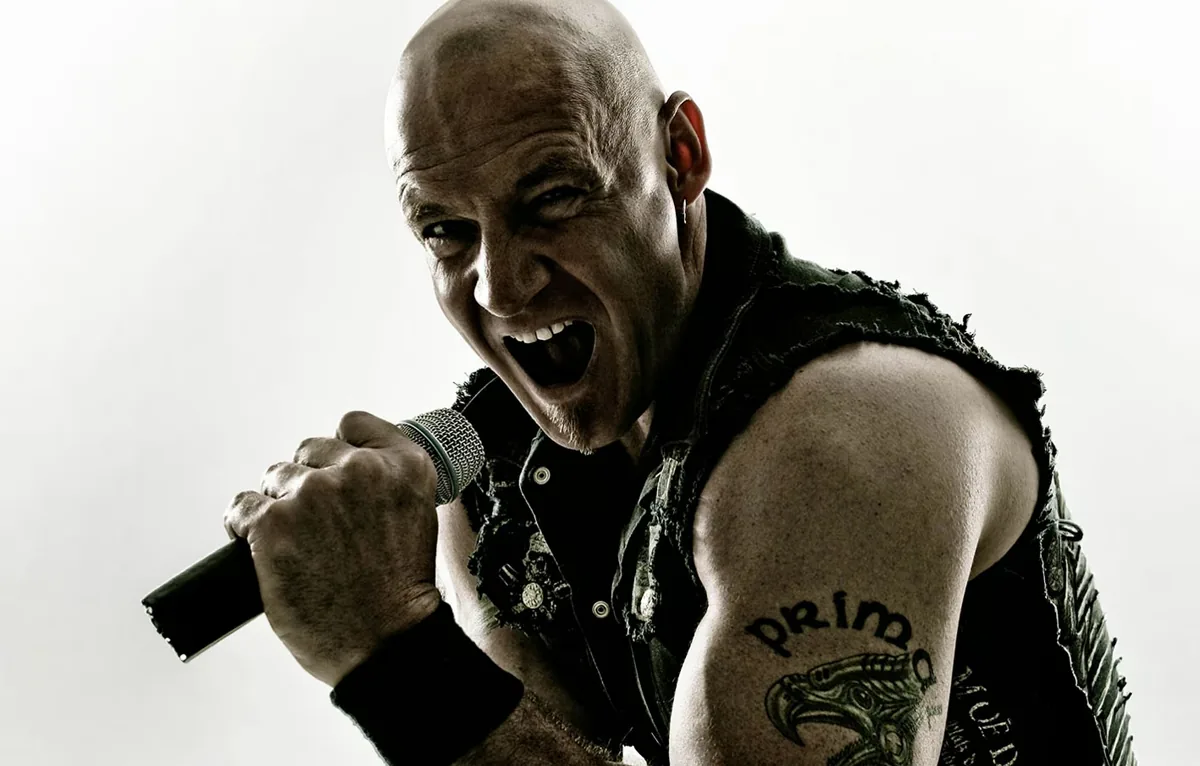

Listening back to these raw archival tapes from early 2011, you can hear the energy crackling down the line from Germany. It was the eve of Ralf Scheepers finally, after decades of fronting some of metal’s most respected outfits, stepping out alone. His debut solo record, aptly titled Scheepers, was about to drop and the anticipation was thick. But this wasn't some ego-driven departure. It was a creative necessity, a pressure valve for a decade's worth of ideas that didn't quite fit the mothership.
Primal Fear has always been a well-oiled, democratic machine. And that's both a strength and a limitation. Scheepers laid it out with blunt honesty. “As it is in a band, you always have a pool of 20, 25 songs and we always decide in a very democratic way which song is going to be on the album and which is not,” he says. That process, while essential for band cohesion, inevitably leaves strong material on the hard drive. This solo album became the home for those orphans.
These weren't just B-sides or rejects. They were ideas that deviated from the Primal Fear “red thread” as he calls it. Songs that explored different textures, moods and arrangements. For any prolific writer in a long-running band, this is the inescapable reality. A solo project isn't a threat. It’s a vital outlet for the material that would otherwise be lost to the unforgiving logic of a tracklist.
But the album we got was nearly something else entirely. The initial concept was a stark departure. “My intention at the very first thought was to record a ballad only album,” Scheepers admits. Let that sink in. The man whose voice could strip paint off a battleship considered an entire album of ballads. It was a bold, if commercially suicidal, idea. And it took the pragmatic hand of his Primal Fear bandmate Mat Sinner to steer the ship back towards heavier waters.
Sinner’s advice was brutally simple and absolutely correct. “He convinced me, and he's totally right, that my name Scheepers stands for heavy metal, right?” Ralf says. This was the critical intervention. Scheepers is a brand, a vocal signature synonymous with screaming highs and a relentless mid-range attack. To abandon that would be to alienate the very audience he had spent a career building. The result was a metal album, but one with far more dynamic range than his main gig.
The record became a showcase for that diversity. Songs like “Compassion” or the gothic-tinged “The Pain of the Accused” would never have survived the democratic process of a Primal Fear session. They simply don't fit the power metal mould the band perfected. And that’s the entire point of the record. It allowed him to explore the sonic territory his day job required him to bypass.
The recording process itself speaks volumes about the project's nature. This wasn't a band hunkering down in a single studio. It was a modern, distributed effort. “I have so many guests so there was no chance to invite everybody to one studio,” he explains. This was 2011, long before remote collaboration became the industry standard out of pandemic necessity. It was a logistical beast, managed by file sharing and trust.
Being too obvious would be writing a book of my life somehow. So sometimes I add a little bit of illusion in the story here and there.
While efficient, this method presents its own artistic challenges. The lack of immediate, in-person chemistry can sometimes leave a recording feeling sterile or stitched together. It’s the one valid critique one could level at certain moments on the album. There's an undeniable energy that comes from musicians sweating it out in the same room, pushing and pulling on a track in real time. But Scheepers, ever the professional, made it work.
And he’s self-aware about this tension between old-school methods and new technology. He’s comfortable tracking vocals in his home studio, a common practice for years. But for songwriting, the magic still happens when the band is together. “I'm also pretty much an old school guy who's spending the time with the guys in the rehearsal room and set up the songs,” he states. It’s this hybrid approach that keeps the music grounded.
Lyrically, the album peeled back a few layers, moving beyond the usual metal tropes. Scheepers describes it as a collection of personal stories, albeit veiled in metaphor. “Being too obvious would be writing a book of my life somehow,” he says, explaining his method. “So sometimes I add a little bit of illusion in the story here and there.” This isn’t the diary of a tortured artist. It’s the work of a storyteller using personal truth as a foundation for broader, more fantastical narratives.
Nowhere is his personal taste more evident than in the choice of a cover song. He didn't pick a fist-pumping Judas Priest anthem. Instead, he chose “Before the Dawn” from 1978's Killing Machine. It was a masterstroke. It’s a deep cut, a moody and atmospheric ballad that showcases a different side of Priest and a different dimension of Scheepers’ voice.
His reasoning was pure fandom. “I didn't want to record Painkiller number 2,500 whatever,” he says with a laugh. That single line reveals a musician with a genuine connection to his influences, not just a desire to replicate their biggest hits. It showed a respect for the catalogue and a confidence to tackle a song that relies on vibe, not sheer power.
The album is also notable for its guest appearances, particularly from fellow vocal titan Tim “Ripper” Owens and guitarist Metal Mike Chlasciak. The Priest connection is impossible to ignore. But Scheepers insists the collaborations were born of genuine friendship, not strategic marketing. “I think that's the first place, that's the most important thing for me,” he stresses. The duet with Owens on “Remission of Sin” is a highlight, a fascinating clash of two singers with remarkably similar vocal timbres and intertwined histories.
One of the most personal tracks, “Compassion”, was born from watching the news. The catalyst was the devastating 2010 earthquake in Haiti. “I was watching television, saw all those poor people and I immediately donated some money there,” he recalls. The song is a direct, heartfelt plea, a moment of real-world commentary that stands in stark contrast to the escapism often found in the genre.
He also reached deep into his own history to resurrect “Saints of Rock” a song he wrote back in 1986 for his pre-Gamma Ray band, Tyran' Pace. It was a chance to reclaim a piece of his past and update it with modern production. A history lesson for newer fans and a nod to the loyalists who had been there from the beginning.
Throughout the conversation, Scheepers is adamant about one thing: Primal Fear remained his absolute focus. “That's still top priority and always will be,” he says, a promise he has unequivocally kept in the decade since. He saw no conflict, only opportunity. With the band’s schedule locked in, the solo work was something he could pursue in the gaps.
Looking back, the Scheepers album was more than just a side project. It was a necessary declaration of artistic identity. It allowed him to clean out his creative closet, giving a home to ideas that were too personal or too stylistically adventurous for his main band. It wasn't the start of a new career but a reinforcement of the old one. It proved that even within the tight-knit confines of a veteran metal band, there was still room for one man’s singular voice to cut through the noise.
519 Magazine Archive: We are thrilled to officially unearth the Rockstar Weekly Digital Vault. This isn't just a re-post; it's a high-fidelity restoration of a pivotal era in music journalism. By pairing original print dates with modern retrospectives, we’re bridging the gap between historical rock-and-roll grit and the lightning-fast performance of today’s web. These stories—once locked in physical print and lost URLs—are now back, fully searchable, and optimized for a new generation of fans.
We are thrilled to officially unearth the 519 Magazine Digital Vault. This isn't just a re-post; it's a high-fidelity restoration of a pivotal era in music journalism. By pairing original print dates with modern retrospectives, we're bridging the gap between historical rock-and-roll grit and the lightning-fast performance of today's web. These stories—once locked in physical print and lost URLs—are now back, fully searchable, and optimized for a new generation of fans.