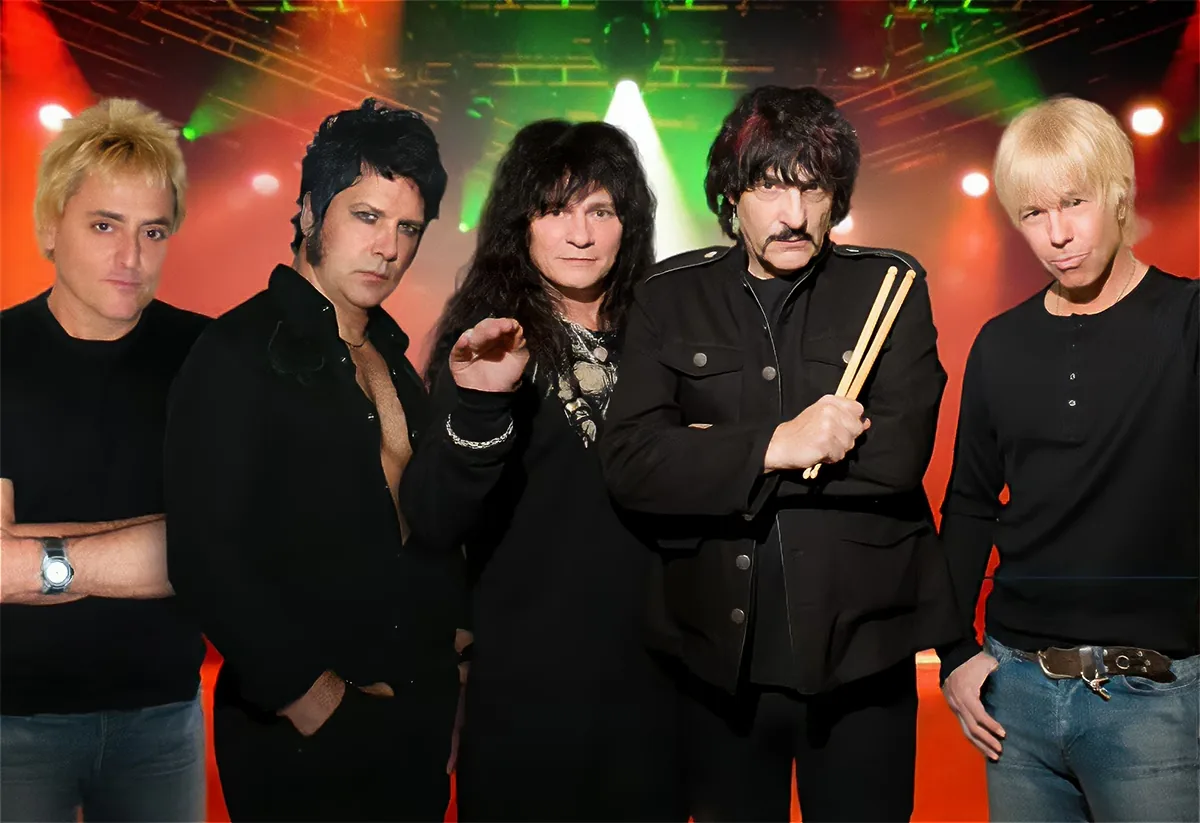

Looking back at these archival tapes from Jan. 26, 2012, is a trip. The digital hiss on the line can’t quite mask the raw, unfiltered pragmatism of Carmine Appice. Here was a legend, a founding father of heavy metal drumming, talking about resurrecting King Kobra, a band that was pure 1980s peroxide and posture. But the conversation wasn’t about recapturing glory. It was about survival, logistics and the cold, hard math of the modern music business.
The whole thing started, as these things often do, by accident. A chance dinner, a detour to a studio. It wasn’t some grand strategy cooked up in a boardroom. It was organic. And that’s what makes this period of King Kobra so interesting. Appice was in Los Angeles, connecting with original guitarist David Michael-Philips, who was in town for his day job as a computer programmer—a detail that speaks volumes about the state of rock and roll for anyone not in the top one percent.
Appice lays out the scene with the casual air of a guy ordering a coffee. “It wasn't really something that was a planned thing. It was really a spontaneous thing,” he says. They dropped in on producer Pat Regan, who was mixing a Keel album. The idea was floated right there in the studio. Why not do a new King Kobra record? A seed was planted. It’s a story that feels almost quaint now, a reminder of a time when deals could still be sparked by a simple 'what if' between old friends.
The subsequent deal with Frontiers Records was a no-brainer. In the early 2010s, Frontiers was the de facto sanctuary for melodic rock acts of a certain vintage. They understood the market, the audience and the sound. They weren't trying to reinvent the wheel; they were putting new tires on a classic chassis. Appice knew this, recognizing that the label was deeply “tied into the eighties” and a better fit than any major could ever be at that point.
But this wasn't going to be the King Kobra of the ‘Iron Eagle’ soundtrack. The biggest shift was shedding the aesthetic that had defined them. The band was a visual project as much as a musical one, a sea of coordinated blonde manes designed for maximum MTV impact. Appice is refreshingly blunt about leaving that behind.
“The earlier version was more of a band that had a heavy duty image,” he admits. “Everybody had to have the blonde hair and the colours in their hair to make this MTV kind of image. But obviously, we're not doing that.” This new incarnation was about maturity, experience and the simplified process of making a record when you’ve been doing it for 40 years. No outside writers angling for a piece of the publishing, no producer-driven drama. Just the core guys.
The key to it all was new vocalist Paul Shortino. He brought not just a huskier, more blues-rock-oriented voice but also a crucial technical skill set. “He also brought his engineering skills, his Pro Tools engineering, which was very important in this record because we did this record all through the Internet,” Appice explains. With the band scattered across different cities, Shortino’s studio in Las Vegas became the project’s digital home base. It’s a perfect snapshot of how legacy bands adapted, trading sprawling soundstages for file sharing and remote tracking.
That era wasn't a business yet. We were like an underground group and Jimi Hendrix and The Cream and The Who. We were all like underground... It was great because it was all about the music.
Despite the new methods, the sound was effortless to recapture. According to Appice, the musical DNA he shared with David Michael-Philips was the band’s true north. “Anytime we work together with King Kobra, we always know how to get that King Kobra sound, and it's not very difficult,” he states. “We know what kind of tempos we look for. We know what kind of chord structures we're looking for, what kind of melodies, kind of hooks.” It was muscle memory, a shared language developed when David Michael-Philips was just a kid living in Appice’s house decades earlier.
Hearing him talk about the past is where the interview hits its stride. He recalls the absurdity of the ‘Iron Eagle’ video shoot, where Hollywood magic was employed to make it look like the band was getting military buzz cuts. “They plastered it up and put wigs on us... to make us look like we were joining the army,” he laughs. “Everybody thought when we hit the road with the KISS tour that we actually did cut our hair. And when they saw us, they said, ‘Man, your hair grows fast.’” It was all theatricality, a perfect 80s moment.
Then there’s the classic Paul Stanley story. In the mid-70s, before KISS unmasked, Appice was the recognizable face. He recounts a trip to Midas Muffler with Stanley, where a young employee recognized neither of them. “We both cracked up laughing. He should only know who was in his shop here. He had Paul Stanley from KISS and Carmine Appice from the Rod Stewart band.” It’s a brilliant anecdote about the strange hierarchies of rock fame in a pre-internet world.
But the warmth of nostalgia quickly gives way to a cold dose of reality when the topic turns to touring. This is the interview’s most vital moment, a stark look behind the curtain. King Kobra was never a stadium act. They were a solid mid-card band, and in 2012, the economics for that tier were brutal. Promoters weren't biting.
“The money being offered is, to get out on the road, we'd have to lose money,” Appice says, his tone flat and matter-of-fact. “I don't wanna do what I did in the eighties, I lost a lot of money, like $100,000 or $200,000. I'm not about to do it again.” It’s a painful but necessary truth. The business model had collapsed. With even giants like Whitesnake selling a modest 50,000 records, the financial incentive to hit the road in a van just wasn't there. It’s the single biggest critique of the entire reunion model: the passion is there, but the infrastructure isn't.
This pragmatism extends to his other projects. The Vanilla Fudge farewell tour wasn’t a grueling slog across the continent; it was a series of surgical weekend strikes. “Everybody in the band is too old to wanna go out on a grueling tour,” he says. The goal was to make it fun and memorable, not a punishing labour.
He speaks of that original 60s era with a certain reverence, a time before rock became a corporate behemoth. “That era wasn't a business yet,” he reflects. “We were like an underground group and Jimi Hendrix and Cream and The Who. We were all like underground... It was great because it wasn't a business yet. It was all about the music.” You can hear the longing for that purity, a stark contrast to his later comments about digital piracy and the industry’s decline.
Of course, the perennial question of a Blue Murder reunion comes up. At the time, there was a flicker of hope. “The management part has actually been talking to John Sykes about doing that,” Appice reveals. Listening now, we know that flicker never quite caught fire in a meaningful way, making this part of the conversation a poignant ‘what could have been.’
Ultimately, the tape reveals an artist fully cognizant of his place in the rock pantheon but entirely unsentimental about the industry that surrounds it. He is a founder of a style, the man who turned his sticks around and played with his whole body out of sheer necessity, setting a template for John Bonham and Ian Paice. But he’s also a working musician who understands profit and loss. He’s a showman, an idol to drummers everywhere, but he’s not willing to lose his shirt for the sake of nostalgia.
The interview ends on that note of grounded reality. The new King Kobra record was a creative success, a project born of friendship and modern technology. But whether it could translate to the stage was a question mark governed by spreadsheets, not sentiment. And in that, Carmine Appice gave one of the most honest assessments of being a legacy rocker in the 21st century you’re ever likely to hear.
519 Magazine Archive: We are thrilled to officially unearth the Rockstar Weekly Digital Vault. This isn't just a re-post; it's a high-fidelity restoration of a pivotal era in music journalism. By pairing original print dates with modern retrospectives, we’re bridging the gap between historical rock-and-roll grit and the lightning-fast performance of today’s web. These stories—once locked in physical print and lost URLs—are now back, fully searchable, and optimized for a new generation of fans.
We are thrilled to officially unearth the 519 Magazine Digital Vault. This isn't just a re-post; it's a high-fidelity restoration of a pivotal era in music journalism. By pairing original print dates with modern retrospectives, we're bridging the gap between historical rock-and-roll grit and the lightning-fast performance of today's web. These stories—once locked in physical print and lost URLs—are now back, fully searchable, and optimized for a new generation of fans.