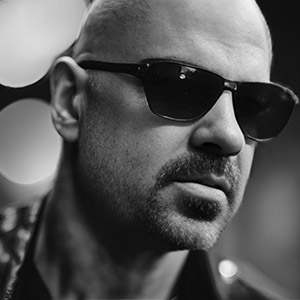
Looking back at these archival tapes from 2011, the analogue hiss feels like a fitting overture. The voice that cuts through it is Terry David Mulligan’s, a voice that has been a permanent fixture in the Canadian cultural firmament for decades. Even then, deep into a legendary career, the conversation wasn’t about resting on laurels. It was about the next project, the next show, the next story. It was about the hustle.
His passion project at the time, his Saturday rock and roll show on Alberta’s CKUA, was a perfect microcosm of his entire ethos. He talks about it not just as a job but as a sanctuary. A listener-supported station in an era of crushing corporate playlists felt like a pirate broadcast. And Mulligan was its captain, steering the ship through a sea of mediocrity.
He rattles off the Saturday lineup with the pride of a curator. Allison Brock’s ‘Wide Cut Country’ playing artists mainstream country radio wouldn't touch, followed by a Grateful Dead hour, jazz, blues, and then his own eclectic rock show. This wasn’t a format; it was a statement. “It’s a great run of music and very popular,” he says, noting that listeners paid to sponsor hours and they’d been sold out for years. It was a community, not a commodity.
But to understand the man behind the microphone, you have to go back to the beginning, to one of the most jarring career pivots in Canadian media history. The leap from the RCMP to rock radio is the kind of character arc screenwriters dream of. He was a Mountie in Red Deer, an icon of Canadian order and tradition. And he threw it all away for a turntable and a stack of records.
“I went from being a Mountie to being a disc jockey in the same town, which was really tricky,” Mulligan recalls. “The kids didn't trust me, and the Mounties thought I was just the dark side of the moon. I had turned against them.” This wasn’t just a job change. It was a defection. He tells the story of phoning his father to announce the news. The response was a click and a year and a half of silence. The disappointment was absolute.
He likens his own epiphany to a scene from American Graffiti, watching a local announcer and realizing the power held in that room. It was about the music. It was always about the music. In an era when Kamloops radio quarantined rock and roll to Saturday afternoons for fear it would incite riots, Mulligan saw it as a vital cultural force. He had to be a part of it.
That impulse led him to the frontier of FM radio. In 1968, CKLG-FM in Vancouver sent him on a reconnaissance mission to San Francisco. His target was Tom Donahue, the architect of underground FM rock. Mulligan spent a week soaking it all in, watching a master build a new church from vinyl and attitude. He returned to Vancouver a convert, a man with a mission. He told management to order 2,000 albums. The revolution was coming to the Canadian airwaves.
It was a cultural war fought with 33s and 45s. The police, his former brethren, saw them as enemies. “I remember that we were considered on the same level as the dope dealers,” he says, the memory still sharp. “We were feeding the mind. We were encouraging the use of drugs and talking about it and laughing about it and doing shows stoned, you know, and playing a half side of an album and disappearing.”
I remember that we were considered on the same level as the dope dealers. We were feeding the mind. We were encouraging the use of drugs and talking about it and laughing about it and doing shows stoned.
The critique here, if there is one, is that this beautiful chaos couldn't last. The free-form aesthetic he championed was eventually co-opted and corporatized, creating the very monster he now despises. “Today's radio scares the shit out of me,” he states flatly. “It's gonna kill music. It's just terrible.” He saw the future, and it was a playlist of five Beatles songs on endless repeat.
His career wasn’t confined to radio. The jump to television with Good Rockin’ Tonite cemented his place as a national personality. He laughs remembering J.D. Roberts, who hosted the metal-focused ‘Power Hour’, now the esteemed John Roberts on American network news. “I saw you, like, in bed with W.A.S.P.,” he jokes. It’s a hilarious and pointed reminder of how far the culture has shifted.
And then came the wine. In what seemed like a complete left turn, he partnered with actor Jason Priestley for a television show called Hollywood and Vines. But it was the same Mulligan energy, just a different obsession. He explains the show's dynamic perfectly. Priestley was the obsessive with 4,000 bottles of wine; Mulligan was the curious everyman, the audience’s guide. “He was gonna know everything. I was gonna know nothing,” he explains. “I would be the audience that wanted to know what he knew.” It was brilliant, relatable television.
The 2011 interview catches him in the middle of writing his autobiography, a process he describes as painful and weird. The burden of memory, and the shocking lack of it, hangs over the conversation. He’d forgotten he emceed the first Greenpeace concert with Joni Mitchell and James Taylor. He’d forgotten he introduced The Doors in Vancouver until a live album came out with his voice on it. These weren't just gigs; they were significant cultural moments, lost in the blur of a life lived at breakneck speed.
His biggest regret is a technical one, a sin any archivist would find unforgivable. He taped over his interview with Janis Joplin just two weeks after he recorded it. There was no sense of history, no thought that these moments were fleeting and monumental. “Why didn't I get Hendrix to sign a guitar?” he asks, the frustration palpable. “Why didn't I get Jim Morrison to sign my tape?... Because I thought I'd see them again in six months?”
The stories that he does remember are staggering. Watching a furious Metallica kick over signs outside the Grammys after losing to Jethro Tull. Having Jon Bon Jovi sequester him in a studio to get his opinion on the track sequencing for Slippery When Wet. That detail alone speaks volumes about the trust he commanded. It wasn't just about playing the hits; it was about understanding how the magic was constructed.
He identifies a common thread in the superstars he saw emerge from Canada, specifically Bryan Adams and Michael Bublé. He calls it the “don’t get in my way” attitude. An absolute, single-minded focus on a goal on the horizon. It wasn’t arrogance. It was an unshakeable self-belief, paired with a relentless work ethic instilled by their shared manager, Bruce Allen.
But amid all the rock and roll chaos, one interview stands out for its quiet, devastating power. He speaks of interviewing Roebuck “Pops” Staples, the patriarch of The Staple Singers. Mulligan, aware that Pops and his family were the house band for Martin Luther King Jr., asked a simple question about his legacy.
The result was shattering. “I said to him at the end of the interview, ‘Are you happy with the legacy that you've left us?’ Not just your girls, but your music,” Mulligan recounts. “And he started to cry. He just had tears rolling down his face. And he said, ‘I don't think I've done enough. I think there's more I could do and I think I'm running out of time.’ I was just—I could barely hold the microphone.”
That moment reveals the core of Terry David Mulligan. He might have rubbed shoulders with rock royalty, but he never lost his sense of awe or his profound respect for the artist. He understood the history, the struggle, and the humanity behind the music.
Listening to this tape now, years later, it’s clear the conversation was never just about the past. It was about the enduring connection between a song and a moment in time. Mulligan ends the interview with his own grand theory of everything, the one truth that has guided his entire career.
“The one redeeming factor is you, we all of us carry around the memories of where we were when we heard those songs,” he says. For millions of Canadians, many of those memories are inextricably linked to the sound of his voice, introducing the song that would become the soundtrack to their lives. He wasn't just on the radio. He was the radio.
519 Magazine Archive: We are thrilled to officially unearth the Rockstar Weekly Digital Vault. This isn't just a re-post; it's a high-fidelity restoration of a pivotal era in music journalism. By pairing original print dates with modern retrospectives, we’re bridging the gap between historical rock-and-roll grit and the lightning-fast performance of today’s web. These stories—once locked in physical print and lost URLs—are now back, fully searchable, and optimized for a new generation of fans.
We are thrilled to officially unearth the 519 Magazine Digital Vault. This isn't just a re-post; it's a high-fidelity restoration of a pivotal era in music journalism. By pairing original print dates with modern retrospectives, we're bridging the gap between historical rock-and-roll grit and the lightning-fast performance of today's web. These stories—once locked in physical print and lost URLs—are now back, fully searchable, and optimized for a new generation of fans.