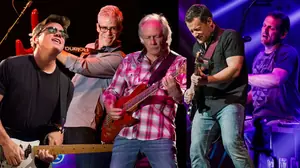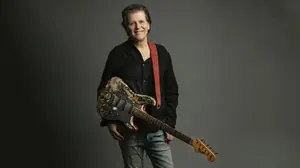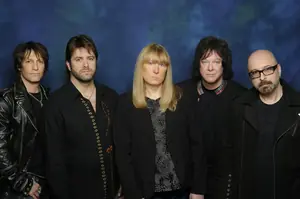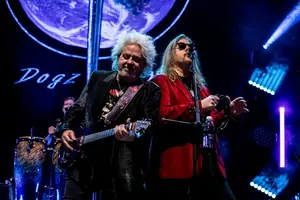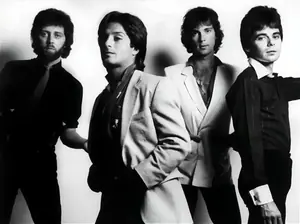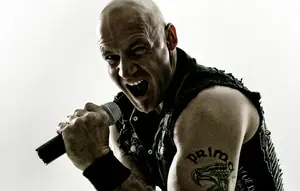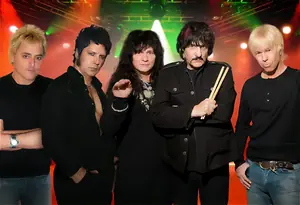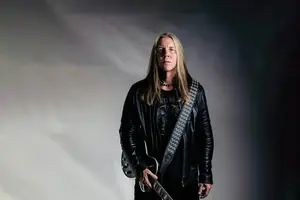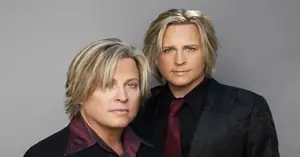
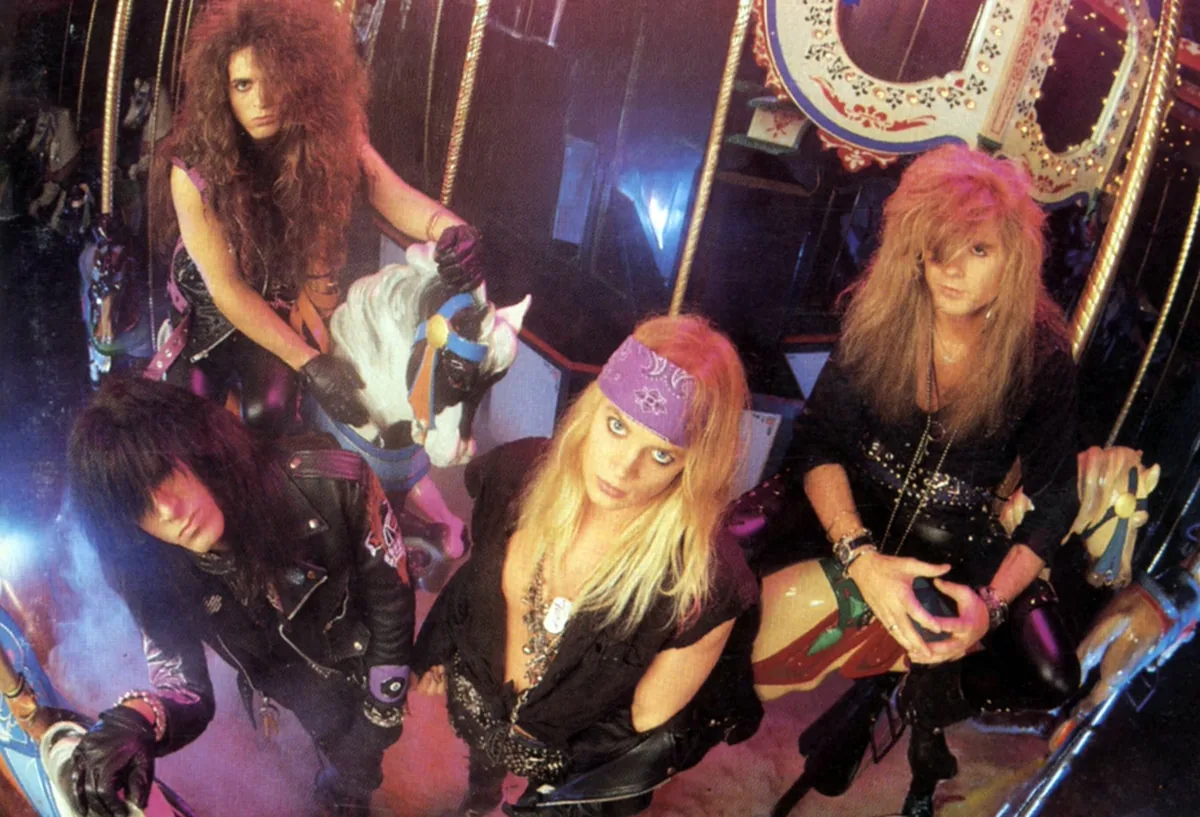

Looking back at these archival tapes from Jun. 11, 2009, always feels like a bit of sonic archaeology. You can hear the exhaustion in Ted Poley’s voice. He’s jet-lagged, running on fumes after a late-night studio session, but the frontman for Danger Danger is still sharp, still hustling. This was a pivotal moment. The band was on the verge of releasing Revolve, their first album with Poley back on the mic in over 15 years, and the air was thick with a mix of anticipation and the familiar grind of a legacy act navigating a new decade.
The first order of business was their big summer plan, which was, frankly, hilarious. A single festival date. Poley, with a deadpan delivery that only comes from years on the road, lays out the band’s grand strategy. “It is actually the start of our one day summer tour,” he says. “So we will be at Rocklahoma and that's gonna be a great gig and I believe that is the start and end of Danger Danger this summer.” It was a punchline that wrote itself. The shortest tour on Earth.
But this wasn't just a gag. It was a snapshot of the industry in 2009. Bands like Danger Danger weren't living in a tour bus anymore. They were strategic strikers, hitting major festivals like Rocklahoma where they could play to thousands of dedicated fans without the financial drain of a full North American slog. They were concentrating their fire. Poley admits they had neglected booking dates to finish the new record, a record he was fiercely protective of.
And he was absolutely cagey about that album. When asked for details, he put up a wall of industry-mandated secrecy. “I can't get into specifics because I am bound by our, you know, by the secrecy of the band and the fact that they will beat the crap out of me if I open my mouth at this point,” he explains. It’s a classic move, but you can hear the genuine excitement underneath the deflection. “It's my favorite Danger Danger CD. Sounds like a million bucks… It's everything that you want in a Danger Danger CD and more.”
Looking back, he was talking about Revolve. Did it live up to the hype? For the faithful, absolutely. It was a slick, modern-sounding melodic rock record that proved the core chemistry was still there. But Poley’s tight-lipped approach in this interview is the only real critique. It highlights the frustrating dance artists have to do with labels, where promotion begins with a promise rather than a product.
The label in question was Frontiers Records, the Italian powerhouse that became a sanctuary for melodic rock acts in the 2000s. Signing with Frontiers was a signal that you were serious about the European market. Poley confirms the deal, noting, “Frontiers seems to be the label of the moment for melodic rock bands such as ourselves.” It was a lifeline, providing distribution and a home for a genre that major labels in North America had long since abandoned.
While Danger Danger was locked in the studio, Poley was anything but idle. He speaks with real passion about his burgeoning solo career, which was taking him to unexpected corners of the globe. “I've been developing a solo career in the meantime in places like Brazil where I've been about four times and in Peru, which is wonderful,” he says. This wasn’t just a vanity project. It was proof that the AOR audience was global and hungry, and Poley was smart enough to go find it.
Everybody, hopefully, well, I'd like to say burn their flannel, but I guess they folded it and put it away for now and shaved their goatees. And now they're back into sort of more of a nostalgia edge, but they like us again and we're back.
The reunion itself, which had been official since 2004, still carried the faint scent of old drama. Poley expertly dodges digging into the breakup, comparing it to a divorce and calling it “personal stuff.” But he offers a moment of pure vulnerability that cuts through the PR shield. “Of course, I wanted to be back,” he admits. “I helped make that band and I love that band. I was sorry to be out. It wasn't my fault, and I was very happy to be asked back.” It’s a powerful, concise summary of a decade of hurt and healing.
When the interviewer brings up the infamous lawsuit, the door slams shut. Hard. “Do we have to? I'd rather not,” he says, his tone shifting immediately. “The negativity is just, it's just stupid. It's water under the bridge.” He’s not wrong. Rehashing old legal battles serves no one, especially when the creative energy is focused on moving forward. It’s a necessary boundary for an artist who spent years in the wilderness.
He’s far more comfortable reminiscing about the glory days. The early '90s were a blur of success, a whirlwind of MTV countdowns and sold-out shows in Japan. He describes life on the road with a simple, evocative image. “I remember living in the box. It was the tour bus,” he recalls. “It was a box on wheels and we basically woke up in a different city every day and it was really fun.” It’s the dream every kid with a guitar has, and Poley got to live it.
But the best story, the one that truly humanizes the rock star, is about Paul Stanley. During Danger Danger’s tour with KISS, a star-struck Poley was too shy to speak to his hero. He blew his chance in a backstage hallway, only for a moment of magic to happen. “At the end of the hallway,” Poley recounts, his voice full of awe even years later, “he sang at the top of his lungs. He sang, ‘Ted Poley.’ And I fell down.”
The story gets better. Stanley broke the ice, and the moment became so legendary that cult artist C.C. Banana wrote a parody song about it to the tune of KISS’s “Unholy.” The chorus? “Ted Poley.” It’s an incredible anecdote, a perfect collision of fan worship and peer respect. “The fact that Paul Stanley sang my name to the tune of the KISS song, that was one of the highlights of my life,” Poley says. It’s a moment of pure, unadulterated joy.
That joy is a core part of his musical DNA. When asked about influences, he skips the usual rock-god litany and goes somewhere far more interesting. “I've been influenced by everything from Willy Wonka and the Partridge Family to KISS,” he reveals. It makes perfect sense. The whimsical, sugary-sweet melodies of those '70s pop culture icons are the bedrock of Danger Danger’s sound, just coated in distortion and swagger.
Poley astutely identifies the shifting cultural tides of the late 2000s, crediting VH1 for bringing his genre back into the spotlight. “All of a sudden, Danger Danger was back in fashion,” he says. “Everybody, hopefully, well, I'd like to say burn their flannel, but I guess they folded it and put it away for now and shaved their goatees... they like us again and we're back.” He hates the term “hairband” but acknowledges its utility in a world hungry for nostalgia.
Perhaps the most surprising turn in Poley’s career is his work on the Sonic the Hedgehog video game soundtracks. A Japanese musician and fan, Jun Senoue, reached out, and a fruitful partnership was born. This opened up an entirely new world. “I have fans coming to Danger Danger shows now that come because of the Sonic music and it's really neat,” he says. It was a prescient move, tapping into a massive and loyal fanbase that exists completely outside the traditional rock circuit.
Hearing this tape now, Poley comes across as a survivor. A lifer. He’s a man juggling the weight of his past with the demands of the present. He’s promoting a one-day tour, a secret album, a solo career and his video game music all at once. The exhaustion is real, but the fire to create and perform is undeniable. He’s the musical equivalent of Willy Wonka, as he jokes, still running his own strange and wonderful factory against all odds.
519 Magazine Archive: We are thrilled to officially unearth the Rockstar Weekly Digital Vault. This isn't just a re-post; it's a high-fidelity restoration of a pivotal era in music journalism. By pairing original print dates with modern retrospectives, we’re bridging the gap between historical rock-and-roll grit and the lightning-fast performance of today’s web. These stories—once locked in physical print and lost URLs—are now back, fully searchable, and optimized for a new generation of fans.
We are thrilled to officially unearth the 519 Magazine Digital Vault. This isn't just a re-post; it's a high-fidelity restoration of a pivotal era in music journalism. By pairing original print dates with modern retrospectives, we're bridging the gap between historical rock-and-roll grit and the lightning-fast performance of today's web. These stories—once locked in physical print and lost URLs—are now back, fully searchable, and optimized for a new generation of fans.