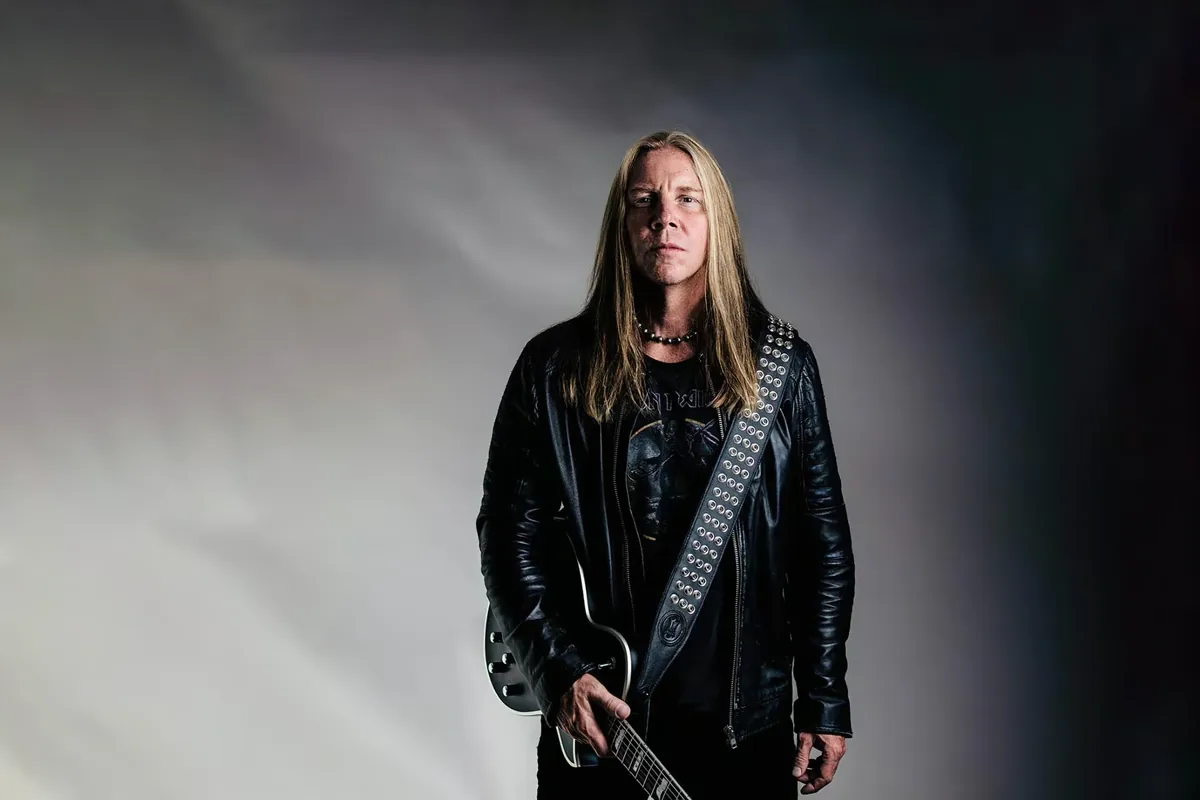
Looking back at these archival tapes from June 2013, the raw energy around Magnus Karlsson is immediate. At the time he was already the undisputed secret weapon of European power metal, the go-to songwriter and six-string virtuoso for Frontiers Records and the then-new engine inside German metal institution Primal Fear. But this was different. This was about his own name finally getting top billing on the marquee.
His first solo project, aptly titled Free Fall, was a moment of reckoning. For years Karlsson had been the man behind the curtain, a prolific force shaping the sound of countless other artists. The idea of a solo record had been percolating for a while, but his initial concept was far from the final product. “In the beginning, I thought maybe to do, you know, a guitar album or something,” Karlsson admits, his voice carrying the calm humility that defined the conversation. “And then I forgot about it because of all these projects and bands and stuff.”
The industry is littered with shred-heavy instrumental albums that serve as little more than vanity projects. Karlsson wisely sidestepped that trap. Instead of a clinic on scales and arpeggios, he pivoted to his greatest strength: songwriting. He decided to build an album around a murderer’s row of vocal talent, a veritable who’s who of the melodic rock and metal scene he helped define. The album became a showcase not just for his guitar work but for his uncanny ability to craft the perfect song for the perfect voice.
But this created a new kind of pressure. The plan was for Karlsson to handle most of the vocals himself, with a few guests sprinkled in. That plan went sideways fast. “I had this list and it just kept getting longer and longer and I really liked all the singers on the list and I wanted them to be on the album,” he explains. This led to a moment of genuine artistic vulnerability, a fear that his own performance wouldn't measure up to the legends he’d invited to the party.
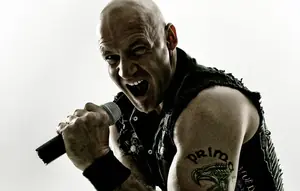
“It's also a little scary when you wanna sing yourself and you are singing the song after Ralf Scheepers or something,” Karlsson confesses. “Even if you sing okay, you are afraid that people will go, ‘Oh, this is not so good.’” It’s a shockingly honest admission from a musician of his calibre and it reveals the core of his creative process. He isn't just a collaborator; he’s a fan first.
This fan-centric approach is the album’s entire operating system. He didn’t just send generic demos to his wish list of singers. He meticulously crafted songs specifically for them, drawing on his deep knowledge of their careers and vocal styles. It was a bespoke service for metal gods. The results speak for themselves.
“I'm a big fan of the first Gamma Ray album with Ralf and I wanted to hear something in that style again,” he says, detailing his method. “So I tried to write something that would sound a little in that style.” This wasn’t a compromise. It was a luxury, a chance for a fan with immense talent to create the exact music he wanted to hear from his own heroes. It’s a dream scenario few musicians ever get to realize.
The album's title itself reflects this artistic leap. It wasn’t just a cool phrase; it was a mission statement. “A lot of the lyrics on the album are about that free fall, to take a step out in the unknown,” Karlsson reveals. “To do something new and you are not really sure if you will make it and that’s a cool thing.” In 2013 he was doing exactly that, stepping away from the safety of his role as a band member and putting his own name under the industry’s microscope.
It’s also a little scary when you wanna sing yourself and you are singing the song after Ralf Scheepers or something. Even if you sing okay, you are afraid that people will go, ‘Oh, this is not so good.’
Of course, none of this would have happened without his long-standing relationship with Italy’s Frontiers Records. He recounts how it all began with his progressive power metal band Last Tribe. It was Frontiers head Serafino Perugino who saw Karlsson’s potential beyond metal, asking him to write an AOR album. Karlsson’s response was classic: “I wasn't really sure what AOR is. I thought, is it like a Journey album? I don't know how to write it.”
He simply wrote in his own melodic style and the result became the first iconic Allen/Lande album, a project that paired vocal titans Russell Allen and Jørn Lande. That record didn't just open doors for Karlsson; it set a new standard for studio projects in the 2000s and cemented his reputation as a melodic rock savant.
The only real critique one could level at the Free Fall model is its inherent nature as a collection. While every track is a masterclass in tailored songwriting, the album can feel more like a brilliant compilation than a singular, cohesive statement from one artist. It’s a minor quibble, however, when the quality is this consistently high. It’s the price of admission for an album built on such diverse and legendary vocal talent.
His main gig at the time, Primal Fear, was its own ‘dream come true’ narrative. He was a longtime fan who got a cold-call email from bassist Mat Sinner after Sinner heard the Allen/Lande material. “I was so surprised,” Karlsson remembers, the disbelief still evident in his voice. “Just after buying their album and everything.” He was initially asked to write for Ralf Scheepers’ solo album before being pulled into the Primal Fear fold and eventually asked to join full-time.
And he was welcomed with a trial by fire. He tells a fantastic story about his first festival show with the band at Sweden Rock. After having trouble getting past security because they didn't believe a Swede was in the famously German band, he made the mistake of telling his new bandmates about another Magnus Karlsson, a famous gay schlager singer in Sweden.
Ralf Scheepers, ever the showman, took that information and ran with it. “On stage, Ralf Scheepers said, ‘Please welcome our new guitar player, Magnus Karlsson, not the gay one!’” Karlsson laughs. It was a brutal, hilarious and perfectly metal initiation into the band.
Back in 2013 he was also deep into recording guitars for what would become Primal Fear’s 2014 opus, Delivering the Black. He described the mission as creating something “very basic and very much songs that are great live.” Looking back, that’s exactly what they delivered. The album was a potent mix of ferocious, stage-ready anthems and the epic ten-minute track he hinted at, proving his fan-first instincts were perfectly aligned with the band's direction.
His perspective as a fan is his superpower. He sees himself as the audience’s representative inside the studio, ensuring the final product is something he himself would want to hear. “I'm a fan of the band and I write like a fan when I write for them,” he states plainly. “I write what I would like to hear when I go to a Primal Fear show.”
When asked about the incredible proliferation of rock and metal talent from his home country, he points to two key factors: a robust, affordable public music school system and the subtle influence of Swedish folk music. “You can hear it,” he muses. “It's somewhere in there. You have a little sad way to do melodies.” It’s that unique melodic sensibility, a melancholic yet soaring quality, that has become a signature of the Swedish sound.
At the time of this interview, Karlsson had barely set foot in North America, a tour with Primal Fear missed due to the birth of his twins. He was a European titan on the verge of a global presence. His solo album was the bold declaration of an artist stepping out from the shadows.
Free Fall wasn't just an album. It was Magnus Karlsson planting his flag, proving that the man responsible for so many incredible moments for other bands could create a monumental one for himself. And he did it not by showing off, but by being the ultimate fan.
519 Magazine Archive: We are thrilled to officially unearth the Rockstar Weekly Digital Vault. This isn't just a re-post; it's a high-fidelity restoration of a pivotal era in music journalism. By pairing original print dates with modern retrospectives, we’re bridging the gap between historical rock-and-roll grit and the lightning-fast performance of today’s web. These stories—once locked in physical print and lost URLs—are now back, fully searchable, and optimized for a new generation of fans.
We are thrilled to officially unearth the 519 Magazine Digital Vault. This isn't just a re-post; it's a high-fidelity restoration of a pivotal era in music journalism. By pairing original print dates with modern retrospectives, we're bridging the gap between historical rock-and-roll grit and the lightning-fast performance of today's web. These stories—once locked in physical print and lost URLs—are now back, fully searchable, and optimized for a new generation of fans.