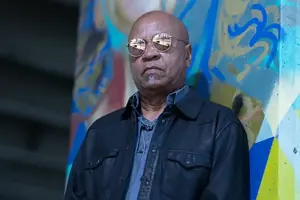
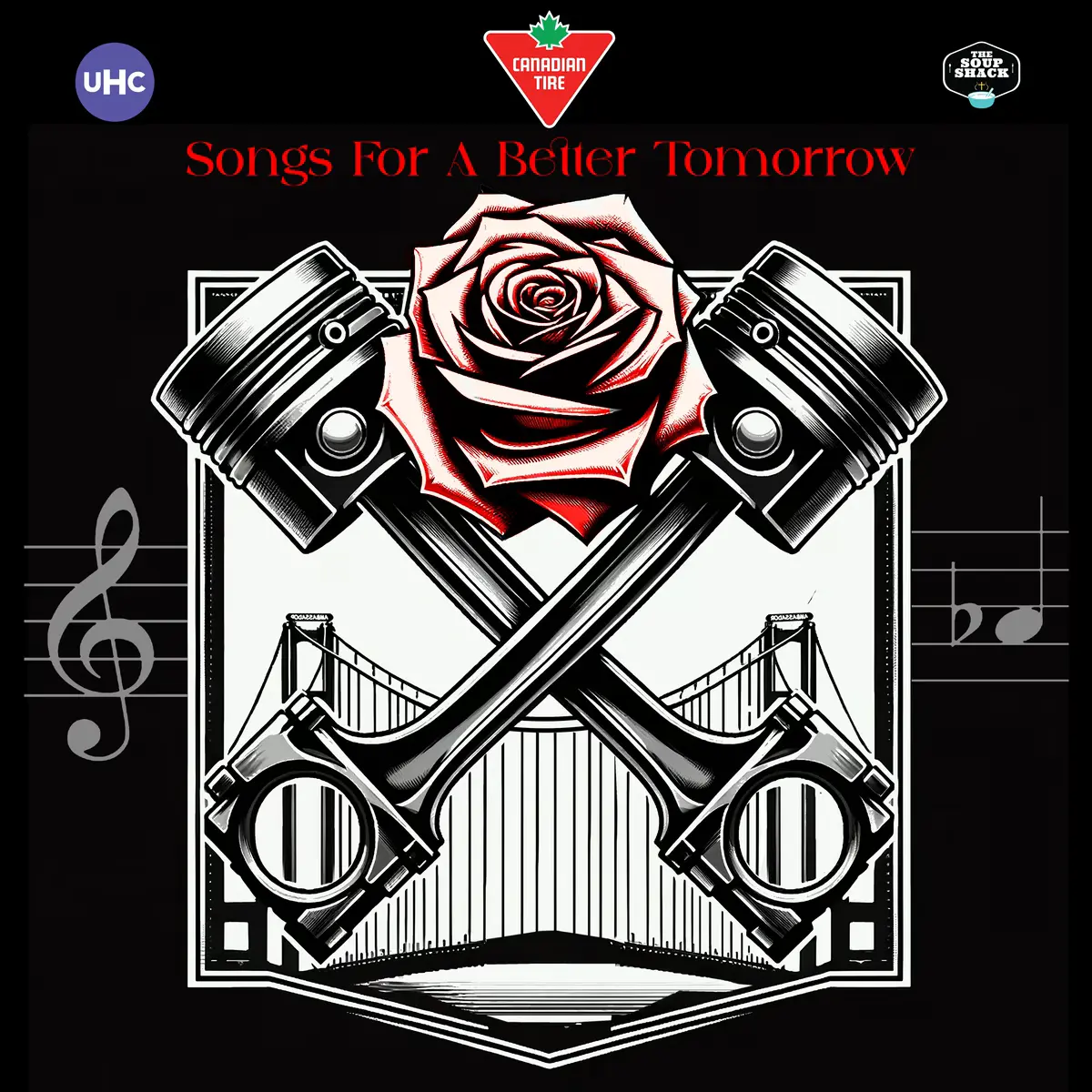
A charity album put together by music industry veteran John Power will get its launch party on Friday, November 20, at 8 p.m. at The Bourbon, 12049 Tecumseh Rd. E. in Tecumseh. The album, Songs for a Better Tomorrow, will raise money for the local food bank and The Soup Shack.
Power has worked in the music business for nearly 60 years. He has called Windsor home for the last decade. He says his love of the city and the generosity of its people pushed him to work on projects that help the less fortunate.
In an interview, Power talked about the project and his life in music. He was a close friend of the late Ted Boomer, the legendary promoter who founded the Windsor Bluesfest and was a passionate supporter of Windsor and its local charities.
Boomer died a little over two years ago. Just before he passed, he asked Power what his plans were for the food bank. Power says the sponsorship side would have been far easier with Boomer alive, because raising sponsors was his specialty at Bluesfest.
“He and I did the Bob Probert ride, and it went on for 10 years and raised over a million dollars for local cardiac services,” Power said. “Before Ted passed away, he had helped me out by getting a few songs from local artists like The Hitmen and The Windsor Tunnel Band. From there on, I was pretty much on my own.”
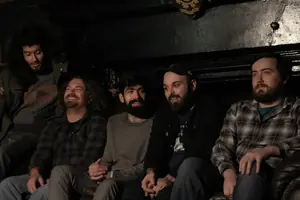
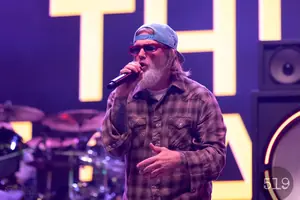
The album features 12 local artists from the past 50 years. It also includes an unreleased song from Mike Reno of Loverboy, a close friend Power has worked with since early in Reno’s career, and a song from Jeff Jones, another friend, who is known for his work with Tom Cochrane and Red Rider and with The Carpet Frogs, Burton Cummings’ band.
The recordings span many years, and some are analog while others are digital. Walter Riggi of Riggi Media helped make the sound consistent across all of them. The album is a vinyl release, and only 1,000 copies will be made.
Each record comes with a 20-page, high-quality book of photos. It includes an introduction by Dusty D’Annunzio and letters from Mayor Drew Dilkens and June Muir, CEO of UHC Windsor.
The record will be available at the release party. There is no cover charge, but non-perishable food or cash donations will be accepted at the door.
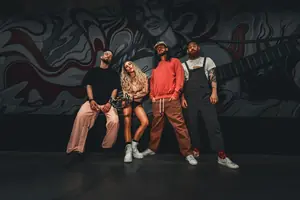
The night will feature local artist Dusty D’Annunzio and members of the Slim Pickerel band. Jones and Finn will headline. The duo is Jeff Jones, of Ocean, Red Rider and Burton Cummings/The Guess Who, and Gerry Finn, of Killer Dwarfs, Helix and The Carpet Frogs. Surprise guests are also planned. The show will be all acoustic, and former CTV Windsor news anchor Jim Crichton will emcee.
From Toronto drummer to sound man
Power was born and raised in Toronto, in a neighbourhood that was full of future music names. “David Wilcox lived up the street from me and his sister taught me how to play drums,” he said. “John Kay from Steppenwolf was in the neighbourhood. Geddy and Alex were three miles away. Ken Greer from Red Rider. Gordon Lightfoot had a place about three miles from our house. It was an incredible era where all this music was around me.”
He played drums in a high school jam band with Greer, who went on to be a founding member of Red Rider. Then Power was hit by a car, which hurt his left leg, and he stopped playing. His parents were relieved. “They said, ‘Thank God, he’s not going to be a musician; he’s going to get a real job,’” Power said. “Little did they know.”
One day, Greer told him, “We need a sound man.” Power had no idea what that meant. Back then, bands had only a six-channel mixing board and a few vocal columns. The band’s idea was simple: put the board out in the audience and they would get paid more. “I think we made $75 a week back then,” Power said.
You can’t do anything about the price of gas. You can’t do anything about wars. You can’t do anything about political unrest. But you can spend a couple of hours and a few dollars and support a good local charity.
The timing mattered. The drinking age dropped from 21 to 18 and then rose to 19, so young bands were suddenly working in bars, and not always great ones. It was also a time when new gear was arriving, including PAs, subs, mid-cabinets, horns and stage monitors. “Because I had a musical ear, I could adapt well,” he said.
He says the road was different then. Bands carried their own sound and lights and travelled with a truck and a road crew. They could play one bar for a week, which Power calls unheard of today, and they got to hone their craft. In the studio, they practiced the five or ten songs they planned to record. “We didn’t have the tool called Auto-Tune to fix us, and thank God for that, because it taught us all how to sing in pitch,” he said.
Power first saw Mike Reno in the studio at a young age, before Loverboy, when Reno sang in a band called Moxie. Power was with that band too. They worked with producer Jack Richardson, whom Power calls the world’s greatest. He says Richardson was blown away by Reno’s vocal strength and by how Reno would do just one, two or three takes. “99% of the time we’d go back to the first take because he nailed it,” Power said.
Standing up to managers
Power says he soon got a reputation as a good live sound man, and as a tough one, because he would not take guff from managers. “They always had the attitude that I was lucky to be working for them,” he said. “I consider it lucky that I’m working for the band. Actually, not for the band, with the band.”
He told manager Bruce Allen, “Don’t ever forget, Bruce, the bands don’t work for you, you work for the bands.” Allen patted him on the shoulder and said Power would learn differently one day. “Well, I still haven’t learned it,” Power said. He added that Allen did a great job for Loverboy.
Power later worked at a company called Power Supply, where he met many bands and ended up on the road with several of them. One band he hoped to work with was Goddo, a three-piece power band with a great PA. He thought the job would help him dial in his mix. After his time with Moxie, agents and lawyers liked how he looked after the band’s books, where every nickel was accounted for. That helped him land the job, and he worked two or three Goddo tours, including the Act of Goddo tour.
He left Goddo disappointed. He says he went into agent David Blustein’s office one day and told the agency it should be ashamed. In his view, the band was driving across the country in a station wagon to save money, from Victoria, B.C., to Halifax, with no real guidance from management.
From there, he moved west to work with Reno. He also worked with The Models, later called Peter Mann and The Lonely, and partnered with Chesley Millikin, Stevie Ray Vaughan’s old manager. That did not last long. Power came back to Ontario and later rejoined Red Rider after they got their record deal in place. He also worked with other bands, served as production manager for some bigger festivals, tour managed several acts and did demos.
He also got a Winnipeg band, the Deadbeat Honeymooners, a record deal with Rush’s label and management. The band had some success for a short time, mainly out west. Later, Chris Burke-Gaffney (vocals, guitar) and Terry Norman Taylor (drums) went on to form The Pumps, and Burke-Gaffney also formed Orphan. Power says they are still going in different versions.
Finding a home in Windsor
Power first lived in Windsor with his ex for a few years, then moved back to Toronto when they split. He kept his lawyer here, Craig Allen, whom he calls a great advocate for Windsor and its citizens. Allen also has a song on the vinyl record. “It’s a great song,” Power said.
Power kept coming to Windsor to see Allen, and he decided to buy a place here. That was nine years ago. His ties to the area go back further. In the early days of Red Rider, before their record deal, the band played at St. Clair College. Their original drummer, Robbie Baker, fell for a Windsor woman named Deborah Burgess, and Power often drove him down to see her. Power says this Robbie Baker is not the guitar player from The Tragically Hip.
When he moved here, Power says he had never been in a city with so much musical talent. Many players are third- or fourth-generation workers at one of the Big Three, then rock and roll heroes on the weekend. He thinks that is a smart way to live. They don’t have to gamble on a music career, and most go home after gigs to a beautiful home and a family.
When friends ask why Windsor, he has an answer. “I can fly to my American shows out of Detroit,” he said. He also likes the people. “They’re hard-working. Not a lot of ego going on,” he said. “I was more than happy to move back here.”
Since then, he has mentored Colton McLauchlin, a young country artist from Petrolia. Thomas Wade, a successful Canadian songwriter, took the young man under his wing. They went to Nashville and recorded, and McLauchlin now has songs charting. “That makes me feel good that I can help the family pay it forward,” Power said.
Sponsors and a split between two charities
The biggest challenge for the album was landing a title sponsor, Power said. Smaller sponsors helped him get the prototypes done. A financial institution looked ready to sign on. As one person told him, the deal was “99% done.” “Sure enough, it wasn’t,” he said.
Then Power found a scrap note Boomer had written, listing potential sponsors, while the two were planning the project. He came across the name Tim Campbell, a local realtor. Campbell bought a spot in the back of the book, suggested some title sponsors and introduced Power to Dave Morrison.
Power says the meeting lasted about four minutes. “I told him what my idea was, and he said, ‘I’m in,’” Power said. “If you’re still putting wings on angels, I think the last set of wings were put on him when he came to Earth.”
Morrison owns the East Windsor Canadian Tire. Power learned that Morrison’s late brother was homeless and died on the streets, and that this inspired Morrison’s giving. Morrison also bought the former Tim Hortons on Goyeau St. downtown and donated it to The Soup Shack, so it can serve warm meals to the hungry seven days a week.
Power then suggested they split the proceeds down the middle. That includes money from record book sales, from donations at the release party and from a concert planned for Friday, January 30, at The Chrysler Theatre. “I’m hoping that each charity makes a significant amount of money,” he said.
Power’s message is simple. “You can’t do anything about the price of gas. You can’t do anything about wars. You can’t do anything about political unrest,” he said. “But you can spend a couple of hours and a few dollars and support a good local charity.”
For more information, visit songsforabettertomorrow.ca.