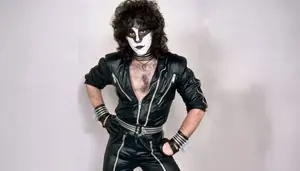
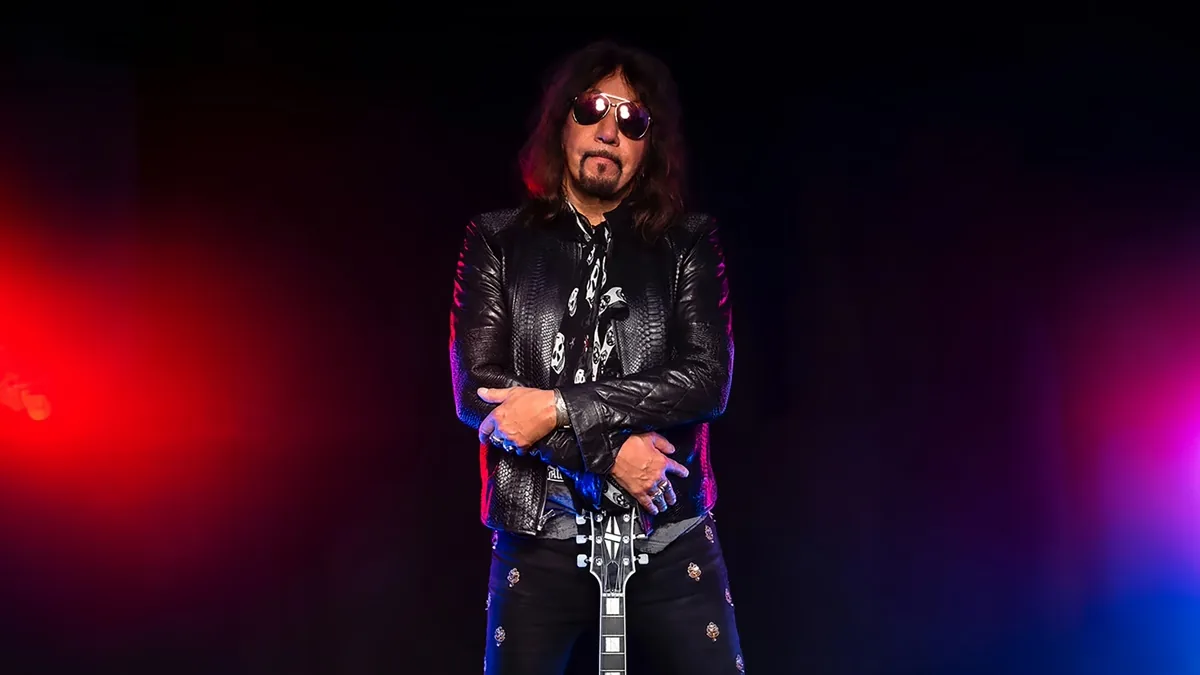

Listening back to these raw archival tapes from Aug. 3, 2009, is an exercise in time travel. The audio crackles with the slightly chaotic energy of a last-minute interviewer swap, but the voice that cuts through is unmistakable. It’s Ace Frehley, on the cusp of releasing Anomaly, his first solo album in 20 years. The air was thick with expectation. Could the Spaceman, long removed from the KISS mothership, still conjure the lightning that made his 1978 solo debut a platinum-selling classic?
The call itself, routed through what Ace calls his “French phone” from a New York number while he was actually in Los Angeles, feels emblematic of the man himself. A little scattered, a bit mysterious but ultimately right where he needed to be. He was promoting a record that felt like a genuine rebirth, and his excitement was infectious, almost naive in its purity. This wasn't a calculated press spiel. This was an artist thrilled to be creating again.
“Everybody who’s heard the album is very excited, and I’m excited because they’re excited because I’m excited,” he says, the sentence tumbling out in a loop of pure enthusiasm. It’s a moment that captures the spirit of Anomaly. This wasn’t just another record on a release schedule. For Frehley, it was a declaration of survival and a reclaiming of his artistic identity after decades of turbulence, reunion tours and public struggles.
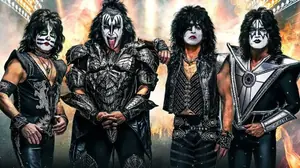
Of course, you can’t talk about Ace Frehley without talking about KISS. The interview inevitably drifts toward the messy breakup following the Psycho Circus era and the infamous “Farewell Tour” that wasn't. While Gene Simmons and Paul Stanley have controlled that narrative for years, Ace’s take is refreshingly devoid of bitterness. It’s matter-of-fact. It was simply time to go.
“By 2001, I was really ready to depart and get back to, you know, doing my own thing,” he explains. It wasn’t a dramatic exit fueled by backstage brawls or creative showdowns, at least not in his telling. It was a personal necessity, a move for self-preservation. He needed to escape the machine to find himself again.
And when pressed on whether the split was ugly, he’s direct. “They didn’t want me to leave,” he states. “They wanted me to continue on, but, you know, I was getting to the point where I just needed to, you know, get away.” That simple need for space speaks volumes more than any ghost-written biography ever could. It was about his own trajectory, not the band’s.
The driving force behind this departure and his subsequent return to the studio was his newfound sobriety. At the time of this call, he was three years clean, a milestone that coloured every aspect of his life and music. The change was profound, and he didn’t shy away from discussing it. This was the “new Ace” and he was proud of him.
I think the four of us have a special chemistry that we don't have apart from from each other. You know? But, you know, all good things come to an end.
“I feel great. I’ve never felt better,” Frehley says with a clarity that cuts through the phone line. “I’m much more productive, much more focused. I think I’m writing better songs. I think I’m singing and playing better. So, you know, it’s really a no-brainer when I think about, you know, the old ace compared to the new ace, you know, I’ll take the new ace.”
But with a tour on the horizon, the question of temptation was unavoidable. The rock and roll road is littered with triggers. Ace’s response is measured, confident. He’d already weathered a tour the previous year and gotten through it. “It was a stressful tour on top of it,” he admits. “But, you know, I’ve made up my mind that, you know, I need to stay on this path.”
Looking back, Anomaly stands as a testament to that focus. While it didn't rewrite the rock playbook or match the commercial heft of his '78 solo record, its artistic success was in its existence. Tracks like “Foxy & Free” had the signature Frehley swagger, a loose, blues-based stomp that was unmistakably his. The album’s primary critique, if any, is that its production felt a bit too polished at times, occasionally sanding down the raw, street-level grit that defined his best work. It was a clean record from a clean man.
The conversation also touches on the complex dynamic with his former bandmates, particularly Gene Simmons. There’s no animosity, just a Zen-like acceptance of their differences. “Gene is Gene,” Ace laughs. “Everybody knows, Gene has a reputation for being the way he is, you know, and I have a reputation for being the way I am, you know, we’re two different people. But, you know, it was that mix that made what it was.”
It’s a remarkably insightful and mature perspective on one of rock’s most legendary and dysfunctional families. He acknowledges the alchemy that only the four of them could create. “I think the four of us have a special chemistry that we don’t have apart from each other,” he reflects. “You know? But, you know, all good things come to an end.”
Frehley also proves to be a man of his time, grappling with the new realities of the music industry in 2009. He talks about the internet changing “the face of music” and the need to provide exclusive tracks for iTunes, Best Buy and Japan. He even designed the album cover himself in Photoshop, proudly talking about learning to work with layers. This wasn't some out-of-touch legacy act; this was an artist adapting to a new world.
He even offers a glimpse into the album’s deeper cuts, explaining that the instrumental “The Return of Space Bear” was a direct tribute to Tom Snyder. The legendary 1979 interview on the Tomorrow show was the moment a drunk, cackling Ace Frehley completely upstaged his bandmates and became a folk hero. By sampling excerpts from that interview, Ace was connecting his sober present with his chaotic past, owning every part of his story.
Throughout the call, he’s swatting down internet rumours with a weary patience, from a false report of his death a few years prior to misinformation about his marriage to Jeanette, which was still going strong after 30 years. It’s a reminder of how wild the digital frontier was before social media became the primary source for celebrity news.
But the most telling moment comes at the very end. The interviewer brings up a Rolling Stone report claiming Ace was retiring his iconic smoking guitar. Frehley’s response is immediate and incredulous. “I never said that,” he shoots back. “That’s one of my most famous guitar effects. I’ll always be using that part.”
It’s the perfect closing statement. The man had evolved. He was healthier, more focused and finally free from the machinery of his past. But the Spaceman? The alien from Jendell with the smoking Les Paul and the cackling laugh? He was eternal. And this recording captures him at the exact moment he was plugging back in.
519 Magazine Archive: We are thrilled to officially unearth the Rockstar Weekly Digital Vault. This isn't just a re-post; it's a high-fidelity restoration of a pivotal era in music journalism. By pairing original print dates with modern retrospectives, we’re bridging the gap between historical rock-and-roll grit and the lightning-fast performance of today’s web. These stories—once locked in physical print and lost URLs—are now back, fully searchable, and optimized for a new generation of fans.
We are thrilled to officially unearth the 519 Magazine Digital Vault. This isn't just a re-post; it's a high-fidelity restoration of a pivotal era in music journalism. By pairing original print dates with modern retrospectives, we're bridging the gap between historical rock-and-roll grit and the lightning-fast performance of today's web. These stories—once locked in physical print and lost URLs—are now back, fully searchable, and optimized for a new generation of fans.