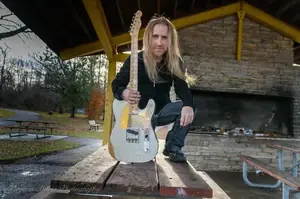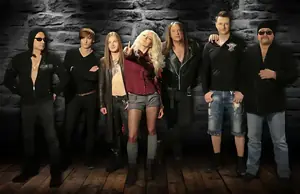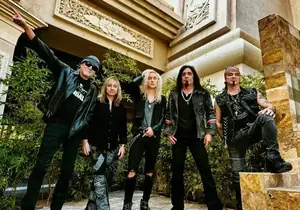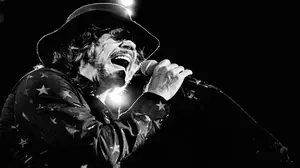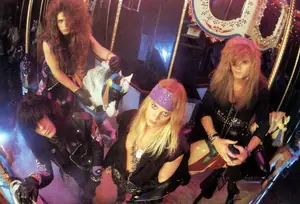
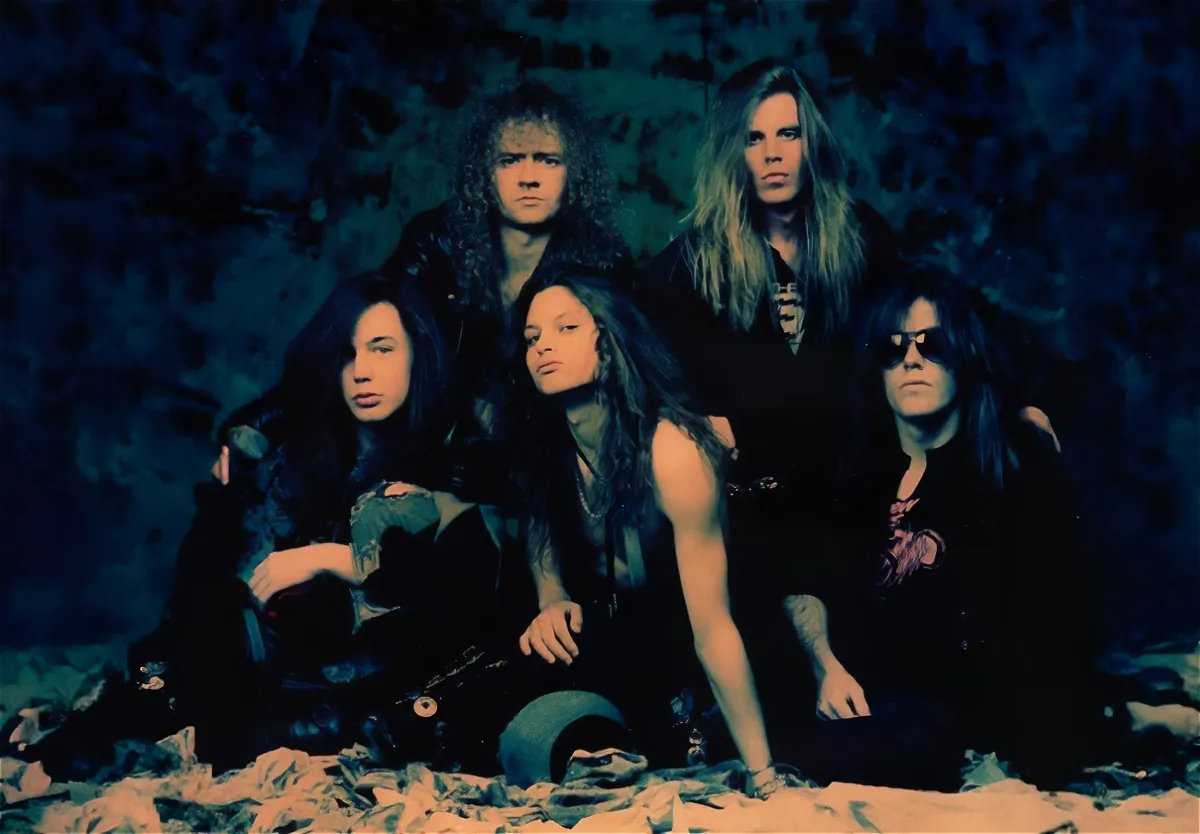

Looking at the raw transcripts from our 2021 sit-down with Nick Walsh offers a fascinating snapshot of a musician navigating the strange crosscurrents of legacy and reality. Here was the frontman for Slik Toxik, a band that embodied the final, fiery breath of Canadian hard rock before the grunge wave hit, now finding a second life as the vessel for Robert Plant. It’s a career trajectory few could have predicted but one that speaks volumes about talent survival and the enduring power of classic rock.
The gig with Classic Albums Live wasn’t some calculated career move. It was pure Toronto music scene serendipity. A jam night a few years prior became the unlikely audition he never knew he was having. And it’s a story that underscores how the industry really works away from the polished press releases. It’s about being in the right room at the right time and having the chops to back it up.
“I just got up on stage singing a couple of tunes and it just so happened that the producer of the show, Craig Martin, was in the audience,” Walsh recounts. A little snooping from Martin’s end led to a phone call. The offer? Singing the Led Zeppelin show. “And you know things have blossomed from there. It’s been almost four years that I’ve been working with the company.”
But it wasn’t just Zeppelin. The role demanded a vocal chameleon capable of shifting from the glam-rock theatrics of David Bowie’s Ziggy Stardust to the swampy grit of Creedence Clearwater Revival and the intricate harmonies of Fleetwood Mac. It’s a tall order for any singer, one that requires more than mimicry. It demands a deep understanding of vocal mechanics, timbre, and phrasing.
This is where Walsh’s professionalism truly shows. He understands his instrument with the precision of a seasoned craftsman. And he’s brutally honest about its limitations. “I’m not the kind of guy that thinks he can do everything,” he states directly. “Sometimes Craig has asked, ‘Hey, would you wanna sing this show?’ For example, the Rush show or the AC/DC show. And quite honestly, you know, I said no.”
It’s a revealing admission. Refusing to tackle Geddy Lee’s stratospheric tenor or Bon Scott’s raw-throated howl isn’t a sign of weakness. It’s the mark of a veteran who respects the source material and his own vocal health too much to risk a bad performance. “I wouldn’t wanna think I could do something and then jeopardize my reputation, the reputation of the company, as well as let down some of the diehard fans of those groups,” Walsh says. It’s about knowing your wheelhouse.
The entire Classic Albums Live ethos is built on a specific and demanding premise: they aren’t a tribute band in the traditional sense. They are not impersonators. They are musical archivists. Their mission is to replicate the studio album note for note, sound for sound. Walsh’s explanation of this cuts to the core of their artistic philosophy.
“A guy like Jimmy Page, you know, as the band’s career started to move forward, there were more and more tracks in the studio that they could use,” he explains. “Therefore their ideas become much more grand.” To recreate that layered studio perfection live requires a different kind of band. “For example, when we do an album like Led Zeppelin IV, we generally have to have a minimum of three guitar players on stage. Even though Zeppelin was only a one-guitar-player band, we’re recreating the record.”
By the time the record came out and everything, the pendulum had already swung and and grunge was in full force... if it had come out maybe a couple of years before when it was actually finished and ready, might had a a different spin on the industry, but it is what it is.
This is the fundamental difference. They are not performing a Zeppelin concert; they are performing the album itself. This means mandolins, acoustic guitars, electric guitars, keyboards, and multiple players to capture every overdub and every nuance Page or John Paul Jones committed to tape. It’s a symphonic approach applied to rock and roll.
And yet they resist the urge to dress the part. “We all go out there in black like a symphony,” Walsh says. This deliberate choice strips away the pantomime and focuses the entire experience on the sound. They aren’t trying to transport you to 1969 through costumes. They are doing it with sonic fidelity. “We don’t feel as though we’re in that era, but we do feel as though we’re in the moment.”
For Walsh, the connection to Zeppelin wasn’t immediate. It was absorbed through osmosis, a product of growing up in the 1970s with two older brothers. “I was a Kiss kid,” he admits. “So Zeppelin was in the background as a part of the soundtrack of my life all my life, but it wasn’t that I was putting on their records.” It was only through the intense study required for the Classic Albums Live gig that he fully appreciated their DNA. “I didn’t realize how much of the material I actually knew just sort of subconsciously and how much they influenced a lot of the bands that I grew up liking.”
He touches on a grander theory from producer Craig Martin, one that reframes the entire project. “He feels like the greats—Beethoven and Mozart and so forth, you know, that came centuries before us. These bands—Led Zeppelin, Pink Floyd, The Beatles—these are the greats of the last century,” Walsh says. It’s a powerful idea. Classic rock as the new classical music, a canon worthy of meticulous preservation and performance in the world’s best theatres.
The show’s structure reflects this high-minded approach. The first set is the album played front to back with zero interruptions. No stage banter. No “How you doin’ Windsor?”. “We don’t really engage the audience at all,” Walsh confirms. “The listener is there to listen and experience the show.” The brief pauses for a guitarist to switch to a mandolin become part of the performance, mirroring the silence between tracks on vinyl. The second set is the payoff, a looser run-through of the band’s greatest hits where the performers can finally let their hair down.
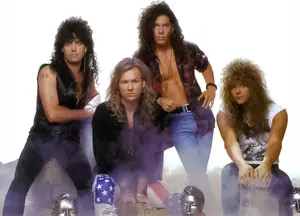
Of course, you can’t talk to Nick Walsh without talking about Slik Toxik. The conversation inevitably turned to whether Zeppelin influenced his former band. “Inadvertently a lot of the stuff probably was,” he muses, suggesting Slik Toxik carried a “third generation” of Zeppelin’s influence filtered through the 80s bands they admired.
But the mention of Slik Toxik brings up the painful reality of their timing. They were a world-class hard rock band that got the record deal just as the world stopped wanting hard rock bands. “By the time the record came out and everything, the pendulum had already swung, and grunge was in full force,” Walsh laments. “If it had come out maybe a couple of years before, when it was actually finished and ready, it might have had a different spin on the industry, but it is what it is.” It’s the story of countless bands from that era who were simply on the wrong side of a cultural sea change.
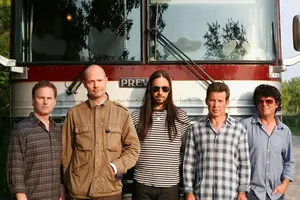
His subsequent project Famous Underground reflects the fractured modern music industry he now navigates. The big-budget album cycle is dead. “Long gone are the days of the big record deals,” he states plainly. “We’re living in the Internet age where music almost seems to be secondary as far as the revenue stream goes for an original band.”
The new model is a digital-first slow drip of content. “We’re slowly releasing them to the public… releasing videos, releasing a few tunes a year,” he says of the Famous Underground strategy. It’s a world away from the major label machine that powered Slik Toxik but it offers a direct line to the fanbase.
And as a veteran bandleader, he knows what matters now isn’t just musical prowess. When asked how he connected with guitarist Darren Boyd, he offered a pearl of wisdom for any musician over 30. He realized that at a certain age everyone still in the game can play. The real question is something else entirely. “It’s more about how the hang’s gonna be, you know? And are you gonna get along with these people? Would you be able to be in the confines of a tour bus, a van, an airplane… and make them your friends?”
That perspective defines Nick Walsh’s career in this century. He is a pragmatist. A survivor. From the excess of the hard rock heyday to the scholarly precision of Classic Albums Live and the DIY reality of Famous Underground, he has adapted. He’s a frontman who understands the difference between being a rock star and being a working musician who respects the craft above all else.
519 Magazine Archive: We are thrilled to officially unearth the 519 Magazine Digital Vault. This isn't just a re-post; it's a high-fidelity restoration of a pivotal era in music journalism. By pairing original print dates with modern retrospectives, we’re bridging the gap between historical rock-and-roll grit and the lightning-fast performance of today’s web. These stories—once locked in physical print and lost URLs—are now back, fully searchable, and optimized for a new generation of fans.
We are thrilled to officially unearth the 519 Magazine Digital Vault. This isn't just a re-post; it's a high-fidelity restoration of a pivotal era in music journalism. By pairing original print dates with modern retrospectives, we're bridging the gap between historical rock-and-roll grit and the lightning-fast performance of today's web. These stories—once locked in physical print and lost URLs—are now back, fully searchable, and optimized for a new generation of fans.