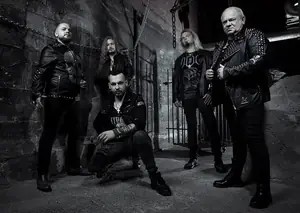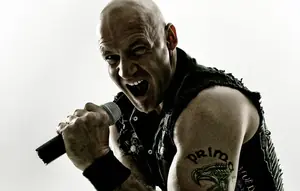
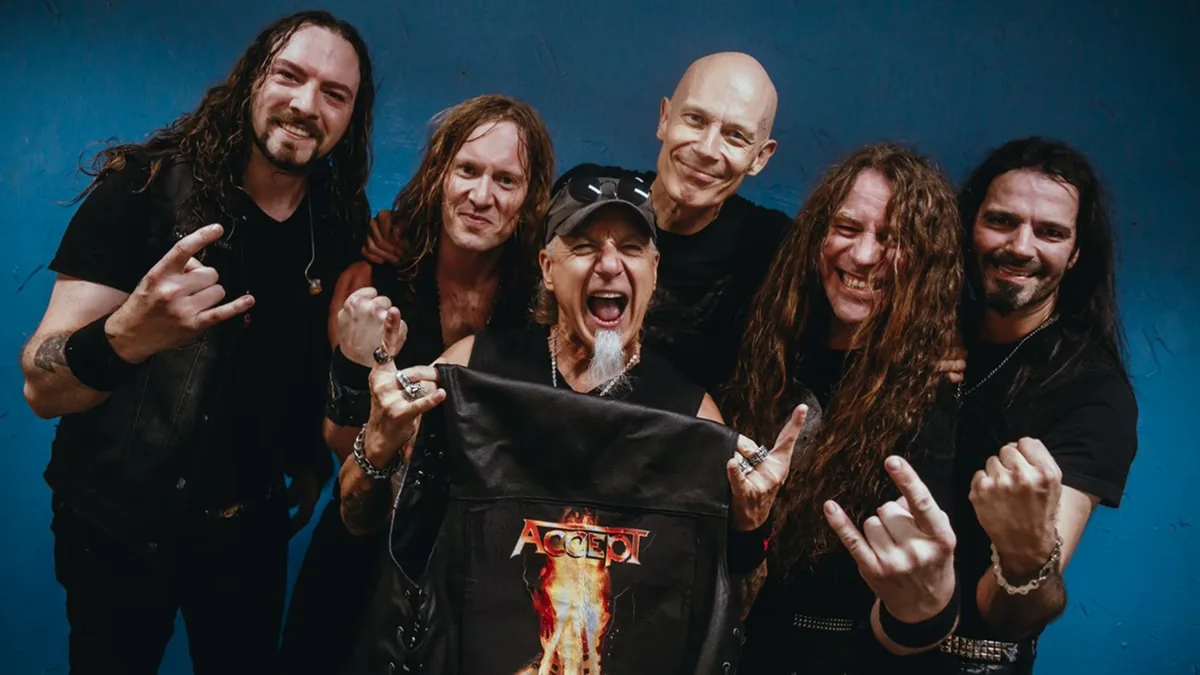

Looking back at these archival tapes from late 2010, the electricity is still there. It’s the sound of a band not just returning but resurrecting. For 14 long years, Accept was a closed chapter, a titan of Teutonic metal relegated to dusty record bins and best-of lists. The engine had seized. And listening to guitarist Wolf Hoffmann lay it all out, the core issue was brutally simple and deeply personal.
The band was in what he calls a “dormant” state, a polite industry term for ‘dead in the water’. The roadblock, as Hoffmann states with zero varnish, was their iconic frontman. “Mainly because Udo didn't really want to have anything to do with us anymore, our old singer,” he says. It’s a frank admission that cuts through years of fan speculation. Without a singer, especially one as distinctive as Udo Dirkschneider, Accept was just a brand without a voice.
But then came the accident. The lightning strike. The kind of story that sounds like a publicist’s fantasy but, in this case, was the genuine article. They found Mark Tornillo, a powerhouse vocalist from New Jersey band TT Quick, not through a cattle call audition but through a casual jam session. It was pure chance.
“We just ran across him during his little jam session one day,” Hoffmann recalls. The casualness of the encounter belies its gravity. He and bassist Peter Baltes were just shredding old Accept tunes for fun, a nostalgic exorcism of sorts. They invited Tornillo over, and the room changed. The band’s future changed.
Hoffmann’s recollection of that moment is pure discovery. “When he came over and started singing, we knew immediately, 'Well, this guy is spectacular. Where'd this guy come from? We need to restart the band.'” That was it. No debate. The decision, he says, was made within a day or two, a testament to the pent-up creative energy waiting for a catalyst.
That spark ignited a bonfire. The resulting album, 2010’s Blood of the Nations, was not a collection of decade-old demos. It was a fresh kill. “All brand new. All written on the spot,” Hoffmann confirms. This is a critical detail. He reveals a fundamental part of his artistic process, an inability to write in a vacuum. “I can't write songs for it, just to write songs. If I don't know what it's for and what the particular project is, then it makes no sense for me.”
This wasn't just a new album; it was a mission statement. And the mission was to reclaim their own sound. They weren’t looking to evolve or experiment. They were looking to double down on what made them legends in the first place.
“We wanted it to be totally old school, you know, eighties vibe, but obviously with new ideas and a new sound, but nothing radically different from the past,” Hoffmann explains. This was a conscious, strategic choice. In a metal scene that had fractured into a thousand subgenres, they aimed for the centre, for the primal heart of their own legacy. They asked themselves constantly, “What would we have done back then?”
That song really just started as almost like a joke... We didn't think much of it. We just thought it's fun.
Of course, trying to think like you did when you were 20 is a dangerous game. It’s a path littered with bands releasing sad caricatures of their former glory. The key, it turns out, was an outsider’s perspective. Producer Andy Sneap became the essential quality control, the guardian of the classic Accept sound. Hoffmann credits Sneap with opening their eyes “to what Accept really means to the fans and what makes Accept special.”
Here lies the only real artistic critique of their approach. By focusing so intently on recreating the feel of an album like Restless and Wild, they risked creating a pastiche. The line between homage and self-imitation is razor-thin. But with Sneap’s modern production muscle and Tornillo’s ferocious delivery, they pulled it off. The album sounded vital, not vintage.
The renewed spirit was palpable, especially when Hoffmann contrasts it with the band’s dying days in the 90s. The last album with the old lineup was a miserable affair. “The whole vibe in the band at that time was not very good,” he admits. “We were all pulling different directions, and nobody really knew where to go.”
This time, they were unified by a singular purpose: to prove everyone wrong. The skepticism was immense. “There's a lot of people who—99% of the people—said this is not going to work,” Hoffmann says, the fight still in his voice. “And this got us all roused up of course and we wanted to prove that we can do it.” That collective chip on their shoulder became the album's fuel.
It’s fascinating to hear him look even further back, to the genesis of their most groundbreaking work. He reveals that “Fast as a Shark” the track that effectively wrote the rulebook for speed metal, began as a complete lark. “That song really just started as almost like a joke,” he laughs. Their drummer wanted a song that was nothing but relentless double-bass. They added the goofy German folk song intro as a gag. They had no idea they were forging a genre.
That cavalier creativity stands in stark contrast to the focused, purposeful writing for Blood of the Nations. The process itself, however, remained unchanged. Hoffmann and Baltes, the core songwriting duo, hunkered down with guitars and a drum machine, cranking out riffs and, crucially, always thinking about the vocal melody from the very beginning. It’s why their songs, for all their aggression, are so damn catchy.
The 14 years off weren’t wasted. Hoffmann needed the distance. “Personally, I walked away from music altogether,” he says, describing a burnout so complete he started an entirely new life. “I became a professional photographer for these last twelve, fifteen years.” It wasn’t a side gig; it was a second career. This exodus was necessary. He had to stop being a rock star to remember why he wanted to be one in the first place.
When the call came, everyone was ready. Tornillo was a union electrician. Baltes was writing commercial jingles. They were adults with real lives. But the pull of the stage was undeniable. “Our first love was always music. And, man, when we had the chance, when we saw that chance, we all grabbed it.”
He even touches on the band’s reputation, or lack thereof, for rock and roll debauchery. Touring with KISS and Mötley Crüe, they were the quiet professionals. “We've always been a band, never the party animal guys,” he states plainly. “We never like snorted ants or any of that stuff.” It’s a refreshingly honest take that reinforces the image of Accept as master craftsmen, more focused on the chord than the chaos.
This interview, captured right as the comeback tour was kicking off in America, is a snapshot of a band reborn. Hoffmann’s mix of excitement and nervous energy is clear. They were about to step back into the arena, armed with new material but trading on a four-decade legacy. It was a gamble of the highest order. And it paid off bigger than anyone, except maybe the five men in that band, could have ever imagined.
519 Magazine Archive: We are thrilled to officially unearth the Rockstar Weekly Digital Vault. This isn't just a re-post; it's a high-fidelity restoration of a pivotal era in music journalism. By pairing original print dates with modern retrospectives, we’re bridging the gap between historical rock-and-roll grit and the lightning-fast performance of today’s web. These stories—once locked in physical print and lost URLs—are now back, fully searchable, and optimized for a new generation of fans.
We are thrilled to officially unearth the 519 Magazine Digital Vault. This isn't just a re-post; it's a high-fidelity restoration of a pivotal era in music journalism. By pairing original print dates with modern retrospectives, we're bridging the gap between historical rock-and-roll grit and the lightning-fast performance of today's web. These stories—once locked in physical print and lost URLs—are now back, fully searchable, and optimized for a new generation of fans.