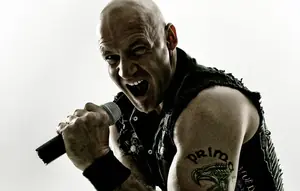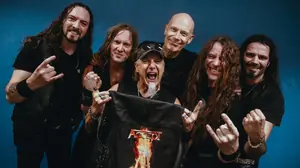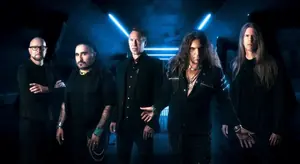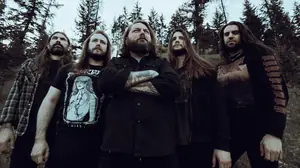

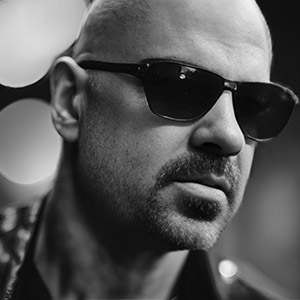
Holding the physical copy of *Harlekin und Krieger*, you feel the weight of a man who has spent two decades screaming into the void only to have the void finally scream back in his own image. Robert-Martin Dahn, the throat once synonymous with the epic heights of Equilibrium, isn't just returning to the fold. He’s burning the old map. Under the moniker ROBSE, he’s launching a debut on Aug. 16 via Reaper Entertainment that feels less like a side project and more like a manifesto.
The metal industry is littered with frontmen who leave their flagship bands only to vanish into the obscurity of "creative differences." But Dahn is a different breed of beast. He understands the optics. He knows that his growl is a brand, a texture of grit and melody that fans have lived with for years. This new record is a sonic assault, blending those expected epic melodies with a level of intensity that feels like a purge.
When we sat down to talk about the catalyst for this new chapter, Dahn didn’t lean on PR-approved scripts. He spoke with the kind of raw energy that usually precedes a riot. He says, "I love music, the stage, and interacting with fans. The fans have always been something very special to me. It has always been wonderful to see how - thanks to music - one becomes a significant part of their lives and accompanies people through all stages of life. Music has been with me for a very long time too and is simply irreplaceable. Now, having a band with great friends and being able to write and perform the music we want is a great feeling."
There is a specific kind of gravity in that sentiment. For Dahn, the stage isn't just a workplace; it’s a communal centre where the line between the performer and the audience blurs. And that connection is what drove the decision behind the band's name. It’s a branding gamble, naming the group after himself, yet he’s adamant that this isn't a vanity project.
Dahn explains the naming logic with a blunt pragmatism: "We didn't want to reinvent the wheel, so we decided to keep a name that some people were already familiar with. We considered other names, but none of them felt right. It's important to note that this is not a solo project, but a complete band. We make decisions together and write music together. We are all ROBSE."
The risk here, of course, is the "solo project" stigma. In the metal world, if the name on the marquee is the singer, the rest of the band is often dismissed as hired guns. But listening to the record, you hear the friction of a collective. It’s messy in the right ways. It’s the sound of six people fighting for space in a mix that refuses to settle for the status quo.
Describing the internal mechanics of the group, Dahn emphasizes that this wasn't a top-down dictatorship. He says, "We are a group of six individuals who collaborate on writing music. We value every idea and encourage each member to contribute their creativity, resulting in songs that are varied in style. Our approach is to forge a unique ROBSE sound that draws from a wide range of influences. At the same time, we aim to honor those roots by incorporating elements that remind us of early Equilibrium. This includes utilizing German-language vocals and crafting memorable melodies, often highlighted by keyboard arrangements."
The title of the album, *Harlekin und Krieger* (Harlequin and Warrior), serves as a psychological blueprint for the record. It’s a bit of a cliché to talk about the duality of man, but in the context of German melodic death metal, it works. You have the "Warrior" for the pit and the "Harlequin" for the beer-soaked afterparty.
Dahn reveals the personal stakes involved in the naming: "Life in all its facets definitely plays a role here, and the lyrics describe me and my life path very well. That's why I chose the title 'Harlekin und Krieger'. The Warrior represents all the challenges one experiences in life. It embodies strength, resilience, and the determination to overcome obstacles. On the other hand, the Harlequin is a reminder that despite everything, one should not lose their lightness and joy. It symbolizes the importance of maintaining a sense of humor, playfulness, and the ability to find happiness in the little things."
This record marks a staggering milestone: the 30th work in Dahn’s discography. That’s a lot of studio hours and a lot of vocal cord strain. But there’s a sense of relief in his voice when he talks about this specific milestone. It’s the first one that feels entirely his, even while being a shared effort.
He shares his perspective on the long road here: "I am deeply honored that along my musical journey, I've had the opportunity to make numerous guest appearances with bands I cherish, in addition to contributing to the albums of the bands I've played in. However, it is all the more special that album number 30 now comes from my own band, featuring my own lyrics."
The influences on the record are a "who’s who" of the Gothenburg sound and the Norwegian frost. You can hear the DNA of In Flames, Immortal, and Amon Amarth rattling around in the sub-bass. It’s a heavy mix, but it’s anchored by a very specific German sensibility that Dahn has perfected over the years.
It is an honor and a great joy for me to continue being with you. This journey is far from over, and I am sure that you will enjoy 'Harlekin und Krieger'. I look forward to seeing you live again. Retirement is for the old – we are now on the offensive.
He breaks down the internal chemistry of the band’s sound: "Everyone brings different influences, so there should be something for fans of every metal genre. For example, our guitarist Ölle Hey is a big 'In Flames' fan, which is evident in his songs. Dennis 'Blaze' Baron, also guitarist, brings a dose of death-thrash, and Marius Berendsen, our drummer, adds black metal influences. Combined with my deep, mostly German-language vocals, this creates our epic melodic death metal, our ROBSE sound."
The lead single and title track is a perfect microcosm of this variety. It’s not just a straight-ahead banger; it’s a bit of a stylistic chameleon. And that was entirely by design. Dahn didn’t want to be boxed in by the expectations of the pagan metal scene he helped build.
Dahn explains the intentional variety: "Since we are six different individuals with diverse musical tastes and everyone is involved in the songwriting, we didn't want to steer the ROBSE band in a specific direction. Instead, we create music that we all love and feel. I myself have an equally diverse taste in music. Just as diverse as the harlequin and the warrior themselves, the album reflects a variety of themes. From lighthearted drinking songs to profound messages, all the way to a cover song for peace featuring our guest vocalist 'Stumpen' from Knorkator."
But let’s be honest: the Equilibrium fans are the ones holding the purse strings here. Dahn is smart enough to know he can’t pivot to jazz-fusion and expect them to follow. There are breadcrumbs throughout the album for the old guard—folk vibes, massive keys, and those guttural German stanzas.
"There will definitely be elements that resonate with the old sound of Equilibrium, especially through the highly diverse keyboard arrangements and German-language vocals," Dahn confirms. "Alina's additional vocals also bring out folk pagan vibes distinctly. However, we do not commit ourselves or forcefully add anything; instead, we decide based on each song when it feels right to incorporate epic elements."
The formation of the band itself sounds like a heist movie—gathering the right specialists for a high-stakes job. Dahn didn’t just pick people who could play; he picked people who could endure him. He knew he wasn't done with the road, and he needed a crew that felt the same way.
He recounts the early days: "Early on, I realized that I wasn't ready to step away from the world's stages and wanted to continue with my own band. The first person I reached out to was my long-time friend and current drummer, Marius Berendsen, and we began sharing our initial song ideas. I greatly value his talent for creating catchy melodies with a brutal sound."
The praise for his bandmates is effusive, almost to the point of being protective. He sees them as a unit, a shield wall against the cynicism of the industry. He has a specific appreciation for what each member brings to the table, from the technical to the emotional.
Dahn says, "The bite on Ölle's guitar and the audible influences from In Flames are absolutely amazing. Marius' ability to create huge radio hits that still remain absolutely brutal is his strength. Dennis and Marco's teddy bear-like personalities create a continuously positive and enjoyable atmosphere, even in the most uncomfortable situations. And Alina's gentle voice and talent for writing highly melodic songs make her unique and essential for the ROBSE sound."
After 30 years in the scene, Dahn’s ears have become more democratic. He’s not a purist who only listens to things recorded in a basement in Bergen. He’s found inspiration in the oddest places—the synth-pop of the '80s and the raw energy of punk. It’s this openness that prevents the new album from sounding like a museum piece.
He reflects on this evolution: "It is important to mention that I am completely captivated by the metal scene in all its various styles, but I have never boycotted other music genres. Bands like Depeche Mode and A-ha are as indispensable in my collection as good old punk rock. When you keep your musician's ear wide open to the musical art of the world, you can compose without bias and not get stuck in your own universe. Being open while making music means you can do whatever you want, and the fan will hear that in the end. It never gets boring."
Preparing for the live circuit is where the real work begins. Dahn is a veteran of the festival circuit, a man who knows how to command a crowd of 40,000. But for his bandmates, some of this is new territory. He’s taken on the role of the mentor, the calm centre in the middle of the pre-show storm.
"In my new band, I also have super professional and passionate musicians by my side who master their instruments and bring a lot of joy," he says. "Before the first festivals, we practiced together to strengthen the band feeling even more. I was less familiar with this from my time with Equilibrium, as we all came from different federal states and sometimes even different countries. Going on stage feels like coming home. Therefore, I am rarely nervous, but rather excited, and try to calm the nerves of my bandmates, who have comparatively less experience on such big stages."
There is a sense of rebirth in this project. Leaving Equilibrium could have been the end of the story, a footnote in a Wikipedia entry. Instead, Dahn has used it as a propellant. He’s in the "director's chair" now, and the view seems to suit him.
He shares, "Everything feels fresh and incredibly new. For the first time, I am almost entirely in the director's chair at the forefront, and I have finally rediscovered the joy in music that a passionate musician should have. The Harlequin and the Warrior were my refuge during the difficult time of separation, my musical and friendly support in the scene, and the crazy start to a new life with incredibly talented musicians, as well as old and many new fans. This adventure feels amazing, and the new ROBSE-baby grows day by day."
The album isn't a tight concept record, despite the initial plans. It’s more of a collection of short stories, each one reflecting a different facet of Dahn’s psyche. It’s a smart move—concept albums can often feel bloated and self-indulgent. By letting each song breathe on its own, the album maintains a frantic, engaging pace.
Dahn explains, "The album was originally intended to be a concept album, but when it came to writing the lyrics, I didn't want to limit myself. Instead, I allowed the impressions of the different melodies to guide me, resulting in each song standing on its own. Life in all its facets is a significant theme, and the lyrics reflect my journey and personal experiences very well."
The technical side of the record was handled by Dom R. Crey, and you can hear the polish. The drums are massive, and the guitars have a serrated edge that cuts through the dense keyboard layers. It was a process born of necessity and speed, a creative burst that followed years of feeling stuck.
Dahn recounts, "The creation of the Robse songs was incredibly easy and adventurous. The fact that we are six songwriters, all coming from different genres, made the process incredibly exciting. When it became certain that I had to leave Equilibrium for further development, I didn't hesitate for a second and immediately wrote to Marius. Within a day, the first song ideas came in, and I was thrilled."
As the release date looms, Dahn isn't looking back. He’s not interested in the "what ifs" of his former band. He’s focused on the offensive, on the next stage, and on the fans who have stuck by him through the transition. It’s a bold stance in an industry that often rewards nostalgia over innovation.
He concludes with a message that sounds like a call to arms: "It is an honor and a great joy for me to continue being with you. This journey is far from over, and I am sure that you will enjoy 'Harlekin und Krieger'. I look forward to seeing you live again. Retirement is for the old – we are now on the offensive.