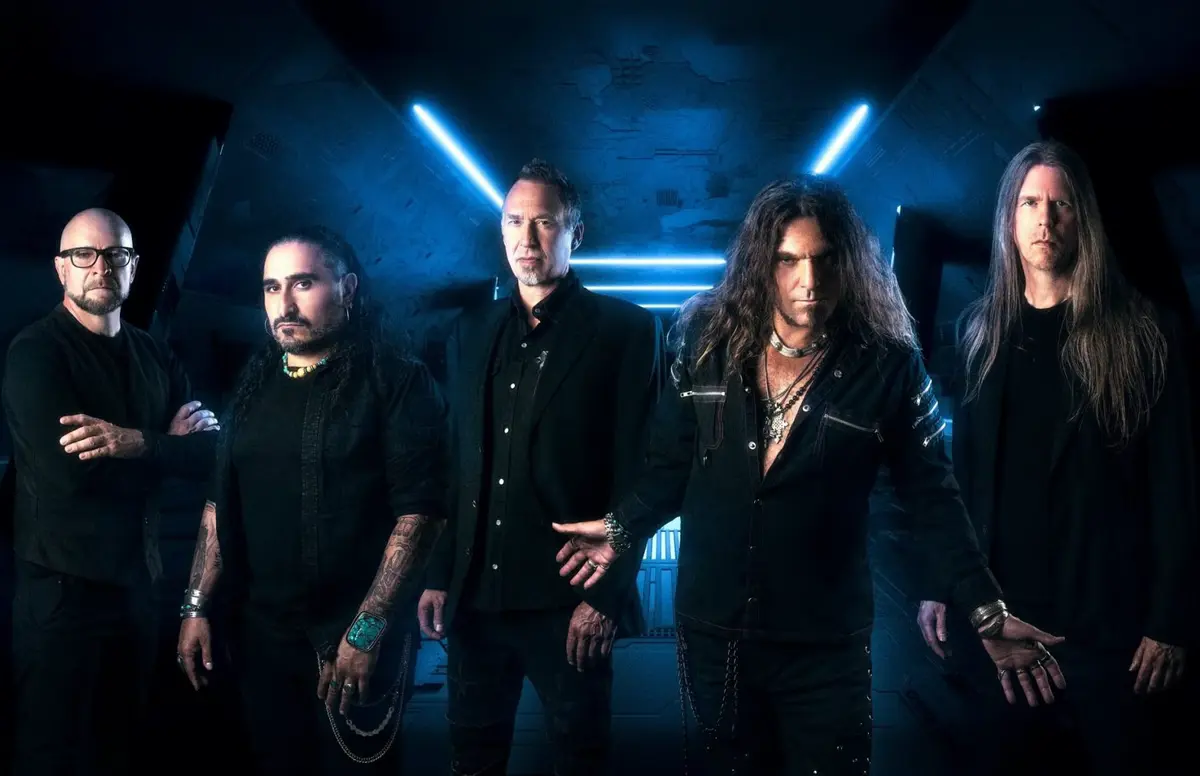

Listening back to the raw tape from our Jun. 21, 2010 interview with Andreas Lill is a trip. The static hums for a second before his voice, polite and precise with a thick German accent, comes through the line from an ocean away. It was a pivotal moment for Vanden Plas. They were German prog-metal royalty, the thinking person’s metal act, and were just dropping The Seraphic Clockwork, their first record for a new label. It was a move that had the scene talking.
For years, Vanden Plas had been synonymous with Inside Out Music, the premier home for progressive rock and metal. But this new album was on Frontiers Records, a label known more for its stable of AOR giants and melodic rock revivalists. It was a calculated risk. Hearing Andreas explain it now, with over a decade of hindsight, reveals the pragmatism that has kept this band alive for so long. There was no drama, no bad blood. Just business.
“We just changed the record company because we didn’t have any problems with Inside Out and we still have a good relationship with them,” Andreas says, his tone matter-of-fact. “But Frontiers Records did give us a great offer. So it was the best possibility for Vanden Plas to go on.” It was a sign of the times. A&R was shifting and even established acts had to chase the best deal, not just the most obvious genre fit.
And the album itself felt different. Heavier. The orchestral flourishes were still there, a signature of the band’s sound, but the guitar riffs from Andreas’s brother, Stephan Lill, felt more muscular and front-and-centre. The reason was simple, a matter of creative bandwidth within the band.
Keyboardist Gunter Werno, the band’s primary architect of orchestral grandeur, was swamped. “Our keyboard player, Gunter, he was very busy with the stuff we do in theatre,” Andreas explains. “And Stephan has had more time to compose and to work on the new songs.” The result was a record driven by the chug and snarl of the guitar. It proved the band’s core sound was malleable, a dynamic push-and-pull between Stephan’s metal instincts and Gunter’s cinematic scope.
That theatrical element isn’t just window dressing. It’s baked into their DNA. Vanden Plas has a long and storied history of working in German theatre, staging and performing in rock operas like Jesus Christ Superstar. This experience provides a depth and discipline you don’t find in bands born solely in sweaty rehearsal rooms. It informs their entire approach to arrangement and storytelling.
“It’s very interesting to work in theatre,” Andreas notes. “Maybe we play together with a big orchestra... it’s to play with a conductor and a big orchestra, and it’s totally different and very interesting. And everybody in the band learns a lot about music and his own instrument.” This wasn’t just a side gig; it was a fundamental part of their artistic development.
That brings us to the album’s narrative. The Seraphic Clockwork is a full-blown concept album, a tradition the band has long embraced. Following their adaptation of Alexandre Dumas’s The Count of Monte Cristo for the album Christ 0, this was an entirely original story conceived by vocalist Andy Kuntz. It’s a wild one.
Frontiers Records did give us a great offer. So it was the best possibility for Vanden Plas to go on.
Andreas lays out the ambitious plot. “It's about a guy in the Middle Ages. He lives in Rome in Italy and he finds out that something is wrong with people and religion,” he says, summarizing a complex tale. “He finds some documents which say that what happened about sixteen hundred years before went wrong with Jesus. So something should have been different... he finds out it's a kind of time machine and he can travel back in time to that point and see what happened there and maybe change something.”
It’s heady stuff. Time travel, revisionist history and religious intrigue. But the band has always walked a fine line. They use religious iconography and stories as narrative devices not as dogma. Andreas is quick to draw that distinction, making it clear they are not a “white metal band” pushing a specific creed.
He frames it as a fascination with the story of Jesus as a historical event, a mystery to be explored. “I would really like to find out what really happened two thousand years ago because we just know what people wrote down,” he muses. It’s about the narrative potential not the proselytizing.
Still, this is where the one genuine critique of the band’s approach can be found. While their intentions are purely artistic, the consistent return to biblical themes risks painting them into a corner. For a band in a niche genre, it could be a barrier for listeners wary of anything that smells of religious commentary, however indirect. It’s a tightrope they walk with confidence, but it’s a tightrope nonetheless.
“If you have a good religion for your own, just for you personally, and a big part of it is Jesus, so it's okay,” Andreas clarifies, showing a remarkably open-minded perspective. “And if you have another religion like some Aborigines in Australia and they have their religion which is good for them, so it's okay.”
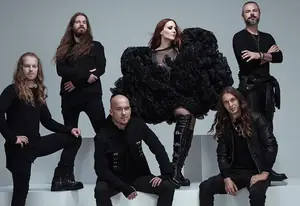
Perhaps the most remarkable thing about Vanden Plas is their stability. The core lineup has been intact since 1990. In the ego-driven world of rock and roll, that’s almost unheard of. Their secret isn’t complicated. It’s about mutual respect and knowing when to give each other space.
“We found out where we have to leave somebody with his typical things,” Andreas reveals. “Like some guys, you have to leave alone at that point and another guy doesn't like that... you have to leave everybody as he is and don't try to change him.” It’s a simple philosophy but one that countless bands have failed to grasp. It's a brotherhood, cemented by the fact that the band's rhythmic backbone, Andreas and Stephan, are actual brothers.
As a drummer, Andreas himself is a product of classic influences like John Bonham, Alex Van Halen and Neil Peart. Yet his inspiration is broader, pulling from Latin rhythms and orchestral percussion, always looking to grow. He tells a charming story about starting out by bashing along to the Sex Pistols, much to his parents’ initial dismay.
“When I was practicing a few hours, they told me... ‘Come on, stop now!’,” he laughs, recalling his father trying to watch a soccer game over the racket from the rehearsal room directly below the living room. “He could just watch TV but he couldn't hear the TV.”
The conversation ends on a familiar note for many European bands: the challenge of North America. At the time, they had only played the United States once, at the ProgPower festival, and never in Canada. The desire was there but the logistics and finances were brutal.
“We would like to play everywhere where somebody likes our music and it's possible for us to travel there without losing our home, because it's very expensive,” he says, a candid admission of the financial realities that govern the touring circuit.
Revisiting this conversation from 2010 captures a band that is the definition of professional. They were navigating a label change, delivering one of their heaviest albums and continuing a legacy built on intelligence, musicality and a rare lack of internal drama. Vanden Plas never became superstars, but this tape is a reminder of why they remain one of the most respected and enduring acts in the entire progressive metal colour spectrum.
519 Magazine Archive: We are thrilled to officially unearth the Rockstar Weekly Digital Vault. This isn't just a re-post; it's a high-fidelity restoration of a pivotal era in music journalism. By pairing original print dates with modern retrospectives, we’re bridging the gap between historical rock-and-roll grit and the lightning-fast performance of today’s web. These stories—once locked in physical print and lost URLs—are now back, fully searchable, and optimized for a new generation of fans.
We are thrilled to officially unearth the 519 Magazine Digital Vault. This isn't just a re-post; it's a high-fidelity restoration of a pivotal era in music journalism. By pairing original print dates with modern retrospectives, we're bridging the gap between historical rock-and-roll grit and the lightning-fast performance of today's web. These stories—once locked in physical print and lost URLs—are now back, fully searchable, and optimized for a new generation of fans.