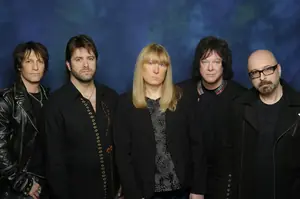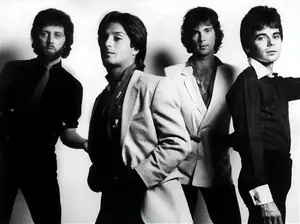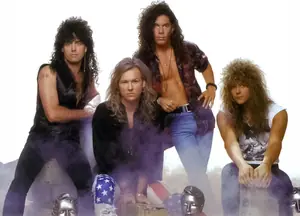

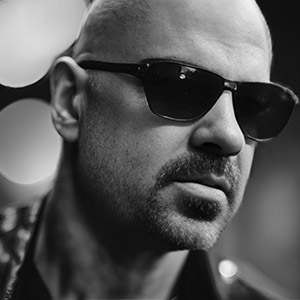
Looking back at these archival tapes, the digital hum of a 2013 phone call barely masking the clarity in Wayne Nelson’s voice, was an exercise in archaeology. This wasn't just another promotional spot for a new record. This was a dissertation on survival. At the time, Little River Band was pushing an album of new material, Cuts Like a Diamond, an audacious move for a band so deeply defined by its past. But listening now, it’s clear Nelson wasn't selling nostalgia. He was defending the present and fighting for the future of a legacy he inherited.
The entire project was an oddity, a throwback. It was kickstarted not by a major American label chasing a catalogue act, but by Frontiers Records, an Italian outfit with a deep reverence for classic AOR. And they didn't want a greatest hits package. They wanted blood, sweat and new songs. “They wanted to gamble, I guess, roll the dice on a new record of new material by Little River Band,” Nelson says, the surprise still evident in his tone years later. It was a gamble few were willing to take on a band nearly 40 years into its run.
What followed was a process Nelson describes as a return to an almost mythical era of the record business. This wasn't a hands-off deal. Frontiers’ president, Serafino Perugino, became a modern-day Clive Davis, deeply embedded in the creative process. He was an A&R man in the truest sense, a figure largely extinct by 2013. Nelson paints a picture of a bygone era, invoking the ghosts of industry titans. “If you go back to people like Clive Davis, Ahmet Ertegun, Herb Alpert, those were people who ran record labels that got rolled up their sleeves, went into the studio, and were involved with the product that they put out.”
But this old-school approach came with modern complications. The song selection process was a grueling six-month slog, a transatlantic negotiation conducted in what Nelson calls “broken broken English.” He listened to over 200 songs, whittling them down until both he and the label were satisfied. “I just said to the president, I'll send you songs that I feel good about... from there, I need you to filter out the ones that you don't like or don't fit your vision,” Nelson explains. “If it starts with me and ends with you, we should end up having a product that we're all happy with.”
The result was an album of surgical precision. The interviewer at the time noted its almost unnerving consistency, calling it a hits collection without the actual hits. And he was right. Every track on Cuts Like a Diamond feels polished to a high gloss, engineered to fit seamlessly into the LRB sonic universe. While Nelson took this as a compliment to the rigorous process, it's also the album's one valid critique. The meticulous curation may have scrubbed away any potential for raw, unexpected moments, producing a work that is impeccably crafted but perhaps a little too safe.
Still, the album wasn't merely a retread. The lead single, “The Lost and the Lonely,” carried a distinct Americana flavour, a nod to the Nashville postcodes of some band members and the track's patriotic themes. Nelson, speaking in 2013, correctly identified a major musical shift, noting how mainstream country was absorbing the DNA of 80s pop-rock. “With the vocals and the guitar harmonies, you could almost hear that crossing into country, you know, at many levels,” he mused. He wasn't wrong; the line between a Little River Band harmony and a Rascal Flatts chorus had become almost invisible.
This was a record made by grown-ups, for grown-ups. There’s a weariness and a wisdom baked into the grooves. Nelson was adamant about that. “The band's 38 years old. I'm 63 years old. I'm not gonna write nine pop songs about the girl in chemistry class,” he says, his voice sharp. This was a conscious decision to make music that reflected their station in life, a bold move in an industry obsessed with youth. It was a statement of pride and an acceptance of time's passage.
All of those records went platinum and gold in Canada before they went platinum and gold in the US. There was a very, very large and loyal Canadian following to the band.
Of course, you can't discuss Little River Band in the 21st century without addressing the elephant in the room: its identity. Nelson, an American who had been in the band for 33 years by that point, was candid about the band’s transformation from an Australian supergroup into a primarily American entity. He doesn't flinch. He frames it as a simple, unavoidable reality of the business. Survival required a North American home base.
“No one told the Australians to quit Little River Band. It was a choice they all made individually, one at a time for different reasons,” Nelson states, matter-of-factly. “For purists, they see it as a negative. As a realist, I just see it as a progression.” It’s a pragmatic, almost brutal, assessment. The original mission was to conquer America. The mission was accomplished, but the original soldiers, one by one, chose to leave the field. Nelson was the one who stayed.
And he doesn't forget the first beachhead in that North American invasion. In a fascinating aside, Nelson points out a detail often lost in the band’s history. “All of those records went platinum and gold in Canada before they went platinum and gold in the US,” he reveals. “There was a very, very large and loyal Canadian following to the band.” This country was not an afterthought; it was the proving ground.
Nelson’s historical perspective is sharp, breaking the band’s sprawling career into six distinct phases. It’s a surprisingly honest taxonomy of a band's life cycle: the “earthy” beginnings, the focus on “hits,” the inevitable “dissension,” the slide into the “vintage” category, a desperate phase of pure “survival” and finally, the post-2000 era he dubs “new blood.” It’s a story of creation, decay and determined rebirth.
That rebirth is fuelled by the stage. The grind of the road is hell. “The travel sucks. Airports double suck,” he says with the exhaustion of a million miles. But the payoff is the transfer of energy with an audience that now spans three, sometimes four, generations. That connection is the currency that keeps a legacy act solvent. It’s the reason to show up.
And they do show up, playing the hits with a vitality that defies repetition. The key, Nelson explains, is reinvention within the familiar framework. New intros are written, solos are reimagined and endings are stretched. “I've played these songs 4,000 times in front of people,” he admits. “I'm not there to play them for me. I'm there to play them for them.” It’s the ethos of a master craftsman who respects both the blueprint and the materials.
But the real legacy isn't in the gold records or the setlists. It’s in the stories. Nelson shares a few that are absolutely gut-wrenching in their power. He recounts a letter from a mother whose autistic son, non-verbal for four years, walked to the television during an HBO special and sang every word of “Take It Easy On Me.” It was a moment of profound, unexplainable connection that transcends music.
The stories keep coming. A song he wrote about the tragic loss of his own daughter provides solace to other grieving parents who approach him at signing tables. A young woman, mascara streaming down her face, explains that the band’s catalogue is the literal “map of my childhood,” scoring every high and low of her family’s life. Then there’s the soldier who reveals his tank crew in the Gulf War played “Help Is On Its Way” heading into battle and “Cool Change” on the way back. This is the stuff that matters.
Even pop culture has played a strange role in cementing this legacy. The prominent, and hilarious, use of “Reminiscing” in the Will Ferrell and Mark Wahlberg film The Other Guys gave the band a bizarre but effective entry point for a younger generation. Nelson is amused by it. “Any press that Will Ferrell wants to give us is good press,” he laughs. He knows it’s absurd, but he also knows it put their music back into a conversation it had long since left.
Listening to this old recording, what resonates most is Nelson's clear-eyed resolve. He isn't an imposter or a caretaker. He’s a lifer who inherited the keys to a kingdom and refused to let it fall into ruin. Cuts Like a Diamond was more than just another album. It was a line in the sand, a declaration that Little River Band was not a museum piece but a living, breathing, working band. It was a document of evolution, a sound of survival.
519 Magazine Archive: We are thrilled to officially unearth the Rockstar Weekly Digital Vault. This isn't just a re-post; it's a high-fidelity restoration of a pivotal era in music journalism. By pairing original print dates with modern retrospectives, we’re bridging the gap between historical rock-and-roll grit and the lightning-fast performance of today’s web. These stories—once locked in physical print and lost URLs—are now back, fully searchable, and optimized for a new generation of fans.
We are thrilled to officially unearth the 519 Magazine Digital Vault. This isn't just a re-post; it's a high-fidelity restoration of a pivotal era in music journalism. By pairing original print dates with modern retrospectives, we're bridging the gap between historical rock-and-roll grit and the lightning-fast performance of today's web. These stories—once locked in physical print and lost URLs—are now back, fully searchable, and optimized for a new generation of fans.