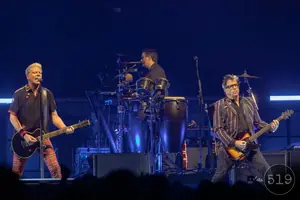
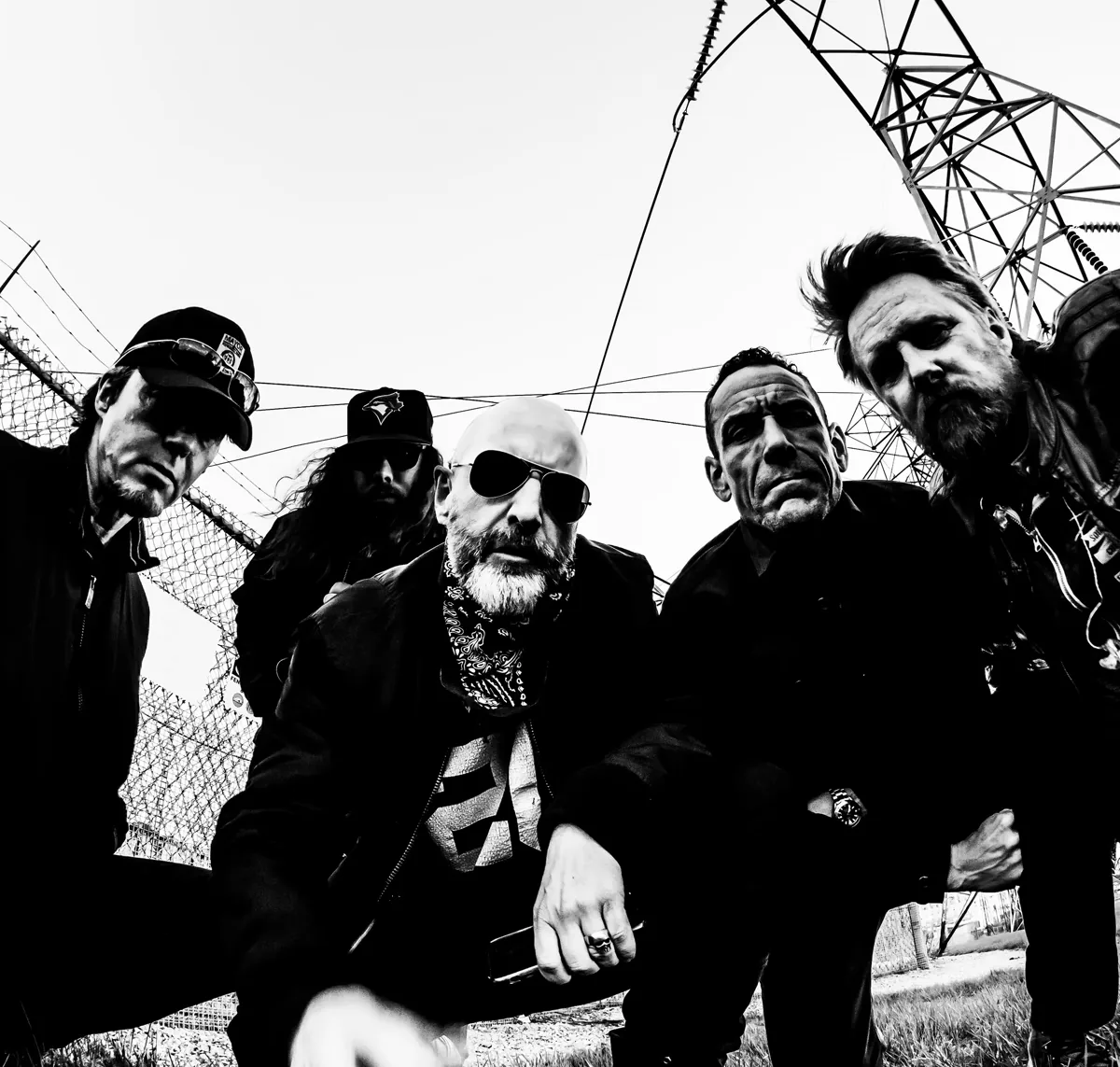

Revisiting the raw transcripts from our 2018 conversation with Tim White and Trent Carr of the Headstones feels like cracking open a time capsule from a very specific moment. The band was on the cusp of a 25th anniversary tour for their landmark album Picture of Health, a record that wasn’t just a hit but a cultural detonation in Canadian rock. This wasn’t about nostalgia. It was about confronting a legacy head-on.
And twenty-five years is a hell of a long time in this business. As guitarist Trent Carr puts it with a signature dry wit, “It’s disgusting.” The passage of time is a recurring theme, a concept that feels abstract until you’re forced to relive your own history night after night on stage.
The creation of that debut album was the culmination of a decade of grinding. It was the moment the dream became tangible. Carr recalls the atmosphere with an almost breathless clarity. “When you're sitting there in the studio actually recording, there's like a real oh my god. Here we go. We're doing it. So it's real exciting.” It’s a sentiment that cuts through the cynical veneer of rock history, reminding you that behind every iconic record is a group of artists betting everything on a single moment.
But memory is a funny thing. Carr mentions finding old video footage from the sessions at Metalworks Studios, a discovery that threw his own recollections into chaos. “My memory of it is crazy and dark and insane,” he admits. “And that actually that video actually was kinda funny. It's kinda nice. Some guys recording a record. But that's not how I remember it at all. I remember total chaos.”
This disconnect is the core of the Headstones’ mythology. The legend is one of non-stop partying and barely controlled mayhem. And for good reason. Carr is blunt about the fuel for their early years. “We were all fueled by, you know, alcohol and just the excitement of doing what we were doing and just partying nonstop,” he says. “Like that was sort of part of the goal. It's just like let the party keep on going and make it never stop.”
That ethos bled directly into their visual identity. Their early videos were exercises in capturing lightning in a bottle, often with the band just “along for the ride.” But then came Bruce McDonald. Fresh from directing frontman Hugh Dillon in the seminal Canadian rock film Hard Core Logo, McDonald brought a different kind of energy. He saw the band for what they were: pure unadulterated grit.
The story behind the video for “Cemetery” is peak Canadian indie ingenuity. As Carr tells it, McDonald’s pitch was simple and perfect. “He just said ‘Hey. I'm gonna steal a camera and a light and we're gonna stick it in this alley and we're gonna blow a fan on you guys down this alley and throw garbage at you. And that's it.’” It was a moment of perfect synergy between a renegade filmmaker and a band that thrived on chaos. It remains their most definitive video.
Bruce McDonald had just directed Hugh in Hardcore Logo... and was like, 'Hey. I wanna do you guys. I wanna do a video.' So he ended up doing a cemetery.
That raw energy was always the band’s primary weapon. And it hasn’t faded. When asked if anything has changed since those early tours, Carr’s answer is definitive. “On stage no. I think if anything on stage it's more intense and more focused and more energetic. Because I guess back then it was like the youthful energy and now it's the angry, mature, wise energy.” That’s the difference between a firecracker and a controlled demolition. Both are destructive, but one knows exactly where to place the charges for maximum impact.
Behind the wall of sound, however, was a surprising degree of craftsmanship. Many of the songs on Picture of Health didn’t start as punk anthems. Carr reveals a softer origin story. “A lot of the songs will start out acoustically and almost for lack of a better term like folk songs,” he explains. “They sort of find their legs once you play it in front of people and then you wanna get that reaction. So you gotta amp it up a bit more.” It’s a fascinating look into how the crucible of live performance forged their sound, sharpening acoustic ideas into weapons.
But revisiting the past isn’t always comfortable. The reissue of Picture of Health included a 2018 re-recording of “Skin Me Alive,” a process that proved to be artistically and emotionally complicated. Bassist Tim White, who joined after the original was recorded, approached it with a sense of duty, trying to honour the original parts.
Carr, however, found the experience jarring. It was a song tied to a different lineup, a different era. “I just kinda felt weird playing it again,” he confesses. He makes a profound point about how art becomes entangled with personal history. “You don't look at songs as ‘oh that's a good song.’ You kind of associate it with the people involved and you go ‘I don't wanna do that anymore.’ Like nothing wrong with those people but they're just not around anymore.”
This is the one place where the anniversary project stumbles. The new version of “Skin Me Alive” is technically proficient, but it lacks the desperate hunger of the original. It proves that some moments are so specific to their time and place that they can’t be replicated, only remembered. It’s an artifact, not a living document.
The band’s entire second act was born from a similar sense of looking back, though under far more tragic circumstances. The catalyst for their 2011 reunion was the passing of their friend and one-time bandmate Randy Kwan. It was Kwan’s dying wish that the band play together again.
What started as a one-off benefit show for Kwan’s family at Toronto’s Sound Academy quickly spiralled. “I didn't even think we really thought about what that would mean to get back together,” Carr says. “It was more like, yeah. Okay. We'll do a show.” But the show sold out instantly. The demand was undeniable. The reunion wasn't a calculated industry move; it was an organic response to grief, friendship, and an audience that never left.
That momentum carried them through the 2018 tour and beyond. At the time of this interview, they were already writing what would become their next album, looking forward even as they celebrated the past. The plan for the tour was to play Picture of Health in its entirety, a challenge that involved dusting off deep cuts they had barely ever performed live.
Looking back at this conversation, it’s clear the Picture of Health anniversary wasn’t about reliving glory days. It was about closing a circle. It was an acknowledgement of the chaos, the friendships, the tragedies, and the enduring power of a handful of songs written by a bunch of guys who just wanted the party to never stop. And for a glorious moment, it didn’t.
519 Magazine Archive: We are thrilled to officially unearth the 519 Magazine Digital Vault. This isn't just a re-post; it's a high-fidelity restoration of a pivotal era in music journalism. By pairing original print dates with modern retrospectives, we’re bridging the gap between historical rock-and-roll grit and the lightning-fast performance of today’s web. These stories—once locked in physical print and lost URLs—are now back, fully searchable, and optimized for a new generation of fans.
We are thrilled to officially unearth the 519 Magazine Digital Vault. This isn't just a re-post; it's a high-fidelity restoration of a pivotal era in music journalism. By pairing original print dates with modern retrospectives, we're bridging the gap between historical rock-and-roll grit and the lightning-fast performance of today's web. These stories—once locked in physical print and lost URLs—are now back, fully searchable, and optimized for a new generation of fans.