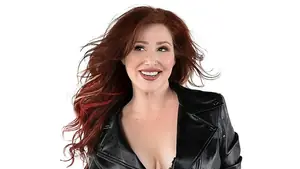
Looking at the raw transcripts from our Apr. 14, 2020 conversation with Felissa Rose is to look at a time capsule from an industry on the brink. The world had just slammed shut. Productions were frozen. But for a horror icon forged in the relentless indie fires of the 1980s, sitting still was never an option. Rose was already adapting, already creating, proving that the genre’s most enduring figures are defined by hustle not just horror.
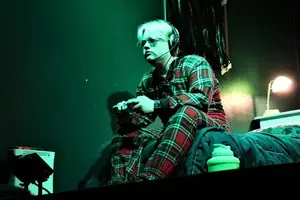
While the major studios were grappling with existential dread, Rose was in her element, finding new avenues for performance. “People have created. I just did two animated shows and a couple of iPhone films, two different iPhone films. So, still working under the circumstances,” she says, detailing a pivot to voiceover and micro-budget filmmaking. It was a prescient move, a microcosm of the ingenuity that would keep the independent scene breathing while Hollywood held its breath.
For Rose, there was also an unexpected silver lining to the global pause. An actress whose career is a blur of convention appearances and on-location shoots found herself grounded. “For me, it's a nice pleasure because I'm traveling so much that being home with the kids and my family is really nice,” she reflects. It’s a humanizing moment from an artist known for portraying the monstrous.
Of course, the shutdown had a very real impact. Two productions were immediately postponed, a reality faced by creators worldwide. Yet, Rose’s focus was on the pipeline of projects already in post-production. Films like Scream Test, Terrifier 2 and Stepdaddy were waiting in the wings, a testament to her prolific work rate just before the world changed.
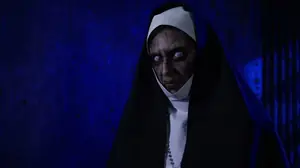
Two films, however, were getting immediate VOD releases, defying the industry paralysis. The first was Tommy Faircloth’s A Nun’s Curse. The project was a reunion for the two, who had previously collaborated on Family Possessions. “He's one of my closest friends,” Rose explains. “When he told me about A Nun's Curse, I thought, wow. Not only does it sound exciting, but the character is so insane. I love the idea of playing such a villainous, dark character.”
The role of Sister Monday taps into one of horror’s most reliable wells: the corruption of religious iconography. It’s a trope as old as the genre itself, but Rose attacked it with a ferocity that felt fresh. “She's so incredibly rooted and evil and dark and crazy,” she says. The physical transformation, aided by effects artists Tony Rosen and Sean Crumbles, was crucial. “As soon as I was in the habit and I was in the the makeup and the and the sclera lenses, it just sort of all came together.”
When asked to channel such darkness, Rose points to her training at the Lee Strasberg Theatre and Film Institute, a method-acting institution that prizes sensory memory. “I have to really go all the way on the other side,” she says of accessing anger, a difficult task for a self-professed positive person. It’s a fascinating glimpse into the mechanics of performance, where an actor must build a bridge to emotions antithetical to their own nature.
Sister Monday immediately entered the pantheon of Rose’s most unsettling creations. She places the character in her top five, alongside another religiously themed terror: Leah, the town preacher from Zombie Killers: Elephant's Graveyard. Of that role, she recalls, “Every time it was reviewed, people would say, 'was scarier than the zombies...' There's a theme here in my life.” Indeed, this recurring motif of faith-based evil has become a powerful niche in her filmography.
They called me ethnic. At the time in the eighties, you saw a lot of, like, blonde hair or blue eyed young actors... New York Magazine did an article on me being like this ethnic New York actress. I didn't even know what that meant.
The second film seeing a release was For Jennifer, part of the cult found-footage series started by James Cullen Bressack. Her involvement underscores a key aspect of her career: loyalty and community. “The horror community is so small,” she notes. “Anytime I get to work with good friends, it's, you know, a pleasure. It's wonderful. It's like a family reunion.”
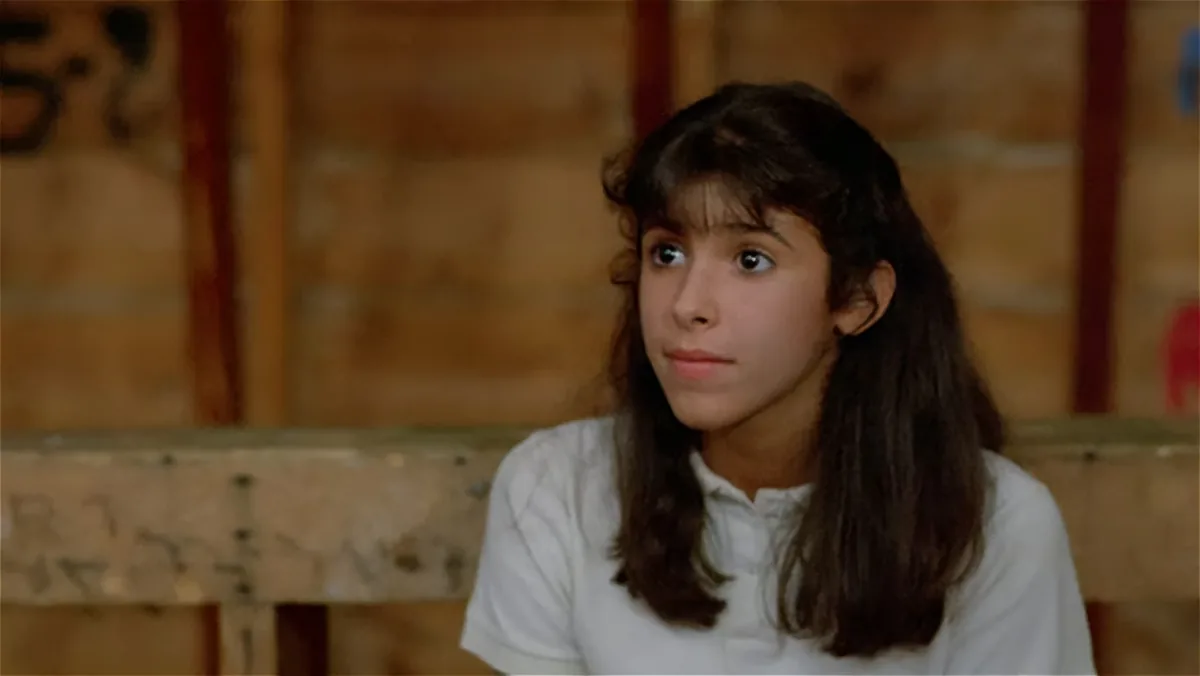
This entire journey, of course, began with one of the most iconic and debated slashers of the 1980s: Sleepaway Camp. Revisiting her memories of the film is to hear an artist discuss her genesis. “It's my, you know, it's kind of like my love. And it gave me—I always say it gave me a life,” Rose says with genuine reverence. At just 13 years old, she was thrown into a world that felt more like a real summer camp than a film set, forging bonds that have lasted a lifetime.
That film undeniably set the trajectory for her entire career. The advent of the internet and the rise of the convention circuit in the early 2000s gave Sleepaway Camp a second life, transforming it from a video store curiosity into a certified cult classic. “Fangoria was our first convention in, like, 2000 or 2001, and we noticed that there was, you know, an audience. So, other horror directors started calling me.” It was the dawn of a new era for legacy horror actors.
But the industry she entered was vastly different. She offers a sharp critique of the era’s casting biases. “They called me ethnic,” she recalls. “At the time in the eighties, you saw a lot of, like, blonde hair or blue-eyed young actors... New York Magazine did an article on me being like this ethnic New York actress. I didn't even know what that meant.” It’s a stark reminder of how far the industry has come in terms of on-screen diversity.
And then there’s the ending. The final scene of Sleepaway Camp remains one of the most shocking reveals in cinema history. To create the effect, the crew made a mold of her face and placed it on a young man for the full-body shot. Her reflection on it as a young girl is pricelessly candid. “It was an interesting experience to see the first penis I saw was my own penis. It was weird.” It’s a quote that perfectly captures the bizarre, unprecedented nature of that moment in film.
After her initial brush with fame, Rose made a pragmatic choice, stepping away to pursue a university education at her parents’ behest. She even started her own temp agency for artists, a move that honed the business skills she’d later apply to producing. “I always figured show business was not only about the creative talents of people, but certainly, like, you had to understand the business side of it.” This acumen is a key differentiator, allowing her to navigate the industry as both talent and producer.
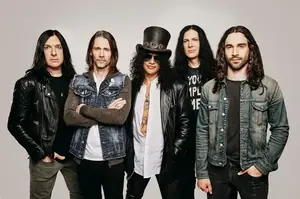
Her dual role as artist and producer led to one of her most high-profile collaborations: working with the legendary metal band Slayer. The connection came through her husband, Deron Miller of CKY and 96 Bitter Beings. Nuclear Blast Records was looking for a producer for a video from Slayer’s Repentless album, and Miller suggested his wife. She brought in director BJ McDonnell, and together they orchestrated a trilogy of brutally cinematic music videos that perfectly married horror aesthetics with thrash metal.
The partnership felt preordained. The synergy between metal and horror is a cultural constant, and for Rose, it was a natural fit. “I'm a lover of all music,” she says, “I've always loved Metallica... and I love Slayer. So, it was kind of, like, you know, meant to be.”
Her life itself reads like a rock-and-roll horror story. She met her husband after he, a massive Sleepaway Camp fan, put her face on his CKY guitar and wore a t-shirt with her image on the first episode of Jackass. Years later, while filming Return to Sleepaway Camp, the band was invited for a cameo. “My husband and I met the next day, and that was seventeen years ago... We decided we'd move in together, get married, and have kids.”
Her children have even become part of the family business, appearing in her productions. “My two girls are Caroline Williams and Bill Moseley's kid daughters in the video, and they are getting killed by Danny Trejo,” she says of their role in the Slayer video. “My daughter is the voice in the beginning of Victor Crowley.”
Even facing the profound uncertainty of 2020, Felissa Rose was already looking ahead. She spoke of returning to conventions, of a slate of films like Amityville Harvest and Terrifier 2 on the horizon, and of her work on the podcast Casualty Friday for the Fangoria network. Her energy is a constant, a driving force in a genre that demands nothing less. She is a survivor in every sense of the word, on-screen and off.
519 Magazine Archive: We are thrilled to officially unearth the 519 Magazine Digital Vault. This isn't just a re-post; it's a high-fidelity restoration of a pivotal era in music journalism. By pairing original print dates with modern retrospectives, we’re bridging the gap between historical rock-and-roll grit and the lightning-fast performance of today’s web. These stories—once locked in physical print and lost URLs—are now back, fully searchable, and optimized for a new generation of fans.
We are thrilled to officially unearth the 519 Magazine Digital Vault. This isn't just a re-post; it's a high-fidelity restoration of a pivotal era in music journalism. By pairing original print dates with modern retrospectives, we're bridging the gap between historical rock-and-roll grit and the lightning-fast performance of today's web. These stories—once locked in physical print and lost URLs—are now back, fully searchable, and optimized for a new generation of fans.