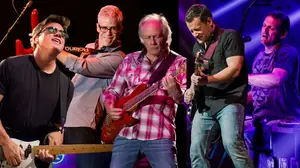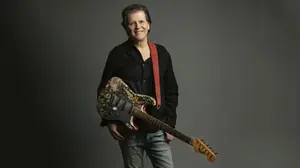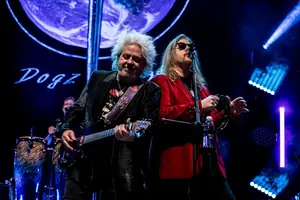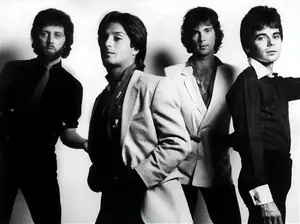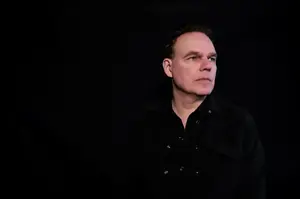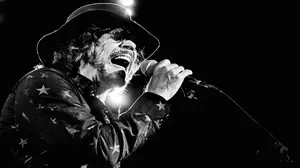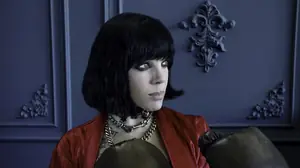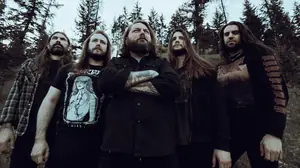
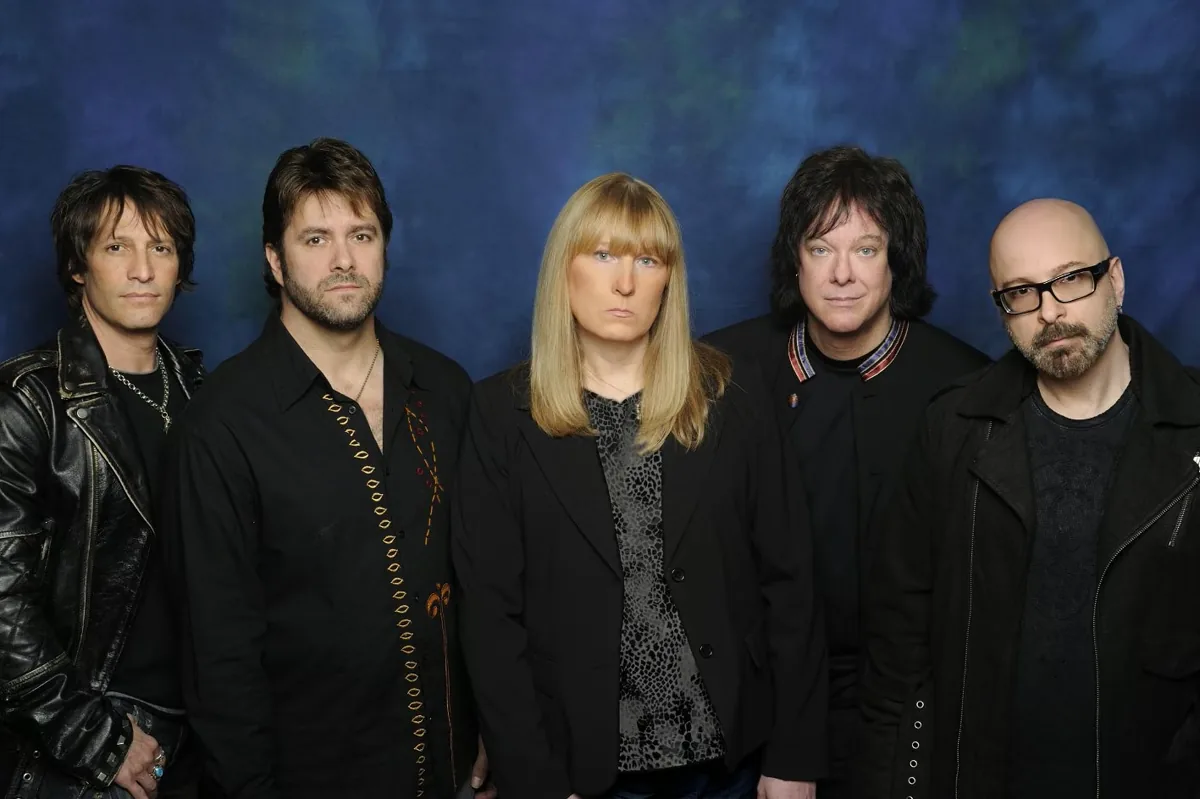

Looking back at these archival tapes from Oct. 29, 2010, the sound is raw, a direct feed from April Savoie’s conversation with Marcie Free. But the voice coming through the speaker is anything but. It’s a voice that defined an era of melodic rock, a voice many thought was lost to the industry’s brutal churn and the simple passage of time. The occasion for this talk was the improbable, almost miraculous reunion of Unruly Child for their album Worlds Collide, a record that felt less like a comeback and more like a course correction from fate itself.
The first question is always the most obvious. Why now? After so many years away, what could possibly pull a singer of this calibre out of a self-imposed exile? Free’s answer cuts through the usual industry chatter of record deals or renewed creative passions. It was something far more fundamental. It was, in her words, “God.” After getting sober two and a half years prior, a profound spiritual shift took hold, catalyzed by the most unassuming of sources: a daily affirmation book.
The book’s message for one particular day in May 2009 was simple but seismic. It spoke of the gifts we are all born with and the responsibility to develop them not for ourselves, but for humanity. That concept hit Free with the force of a revelation. “When I thought about that, I really realized, you know, how incredibly gifted I’ve been and how kind of selfish I was for not using that gift in all these years,” she says on the tape, her conviction clear. It was a moment of reckoning.
And so, a vow was made. A promise to a higher power and to herself. “I vowed that day that if I were ever to get another opportunity to do music again, I would gladly accept the responsibility as a way of showing faith and showing up and giving back what has been given to me and to be of service,” she explains. This wasn't about chasing fame or reliving glory days. This was about service, a word seldom heard in the vocabulary of rock and roll.
The universe, it seems, was listening. Just a couple of weeks later, the phone rang. It was guitarist Bruce Gaitsch, her old partner in Unruly Child. The timing was so uncanny, so perfectly aligned with her newfound purpose, that it felt preordained. “I knew what he was gonna ask me before the words even came out of his mouth,” Free recalls. “I just laughed and I said, ‘Thanks God. You know, you got a great sense of humor.’” She saw it as nothing less than divine providence.
Of course, this spiritual alignment was happening against a very real-world backdrop: the surprising resurgence of melodic rock. Labels like Italy’s Frontiers Records had become a sanctuary for AOR and hard rock bands, cultivating a dedicated European and online fanbase that had never let the flame die out. Unruly Child wasn’t returning to a vacuum. They were returning to a scene that was primed and waiting, a scene that valued songwriting, musicianship and soaring vocals over fleeting trends.
The reunion itself felt less like a business arrangement and more like a family coming back together. The chemistry between Free, Gaitsch, keyboardist Guy Allison, bassist Larry Antonino and drummer Jay Schellen was immediate and palpable. “I gotta tell you, it’s just, it’s like coming home,” Free says, the warmth in her voice evident. “These guys, I love them like I love my own brothers, you know. My own family members, I’d do anything for them and, you know, they feel the same way.”
But this warm homecoming stood in stark contrast to the band’s fractured, tense departure nearly two decades earlier. The early nineties were a brutal time for bands like Unruly Child. Their spectacular debut album was a critical darling but a commercial casualty, swallowed whole by the grunge wave that had washed over America. The failure was a heavy burden to bear for a band with so much promise.
I gotta tell you, it’s just it’s like coming home. These guys, I love them like I love my own brothers, you know. My own family member, I’d do anything for them and, you know, they feel the same way.
Compounding that professional pressure was an intensely personal journey unfolding in the background. As Free candidly puts it, “It was kind of under stressed out and tense times when I left before because that’s when my whole gender thing was hitting the fan, and it was a hard thing for everyone.” Her transition was happening amidst immense industry turmoil, a personal earthquake during a cultural one. It was a difficult, painful period for her and for her bandmates, who were trying to navigate a complex situation in a far less understanding era.
The band even tried to pivot, to survive. They rebranded as Twelve Pound Sledge, a name that screamed nineties aggression, and attempted a heavier sound to compete with the new order. It was a move born of desperation, a reaction to the changing times and the feeling that their brand of polished, sophisticated rock was being rendered obsolete. The backdrop of the Rodney King riots in Los Angeles only added to the feeling of a city and a scene on edge.
The creative process for Worlds Collide, however, was a world away from that pressure cooker. Free recorded all but two of her vocals in her own home studio in Michigan. This shift from expensive L.A. studios to a personal space reflects the democratization of music production, allowing for a more relaxed and organic workflow. Inspiration could strike at any moment, as it did when she wrote the track “You Don’t Understand” while waiting for her computer to boot up, an acoustic guitar simply sitting in the corner of the room.
The time away also brought an unexpected evolution in her most famous asset: her voice. Free noticed it herself, a change she struggled to articulate but could clearly feel. “There’s something going on in my voice,” she muses. “It’s got this mid-range, thickness edge to it, and where it’s really smooth now and it’s sitting better in the track, you know, than when I was younger. And I’m finding that I’m not having to push as hard.” It’s the sound of maturity, of life lived. The instrument was not just preserved; it was enhanced.
From a critical standpoint, the album itself is a masterwork of the genre. Yet, its greatest strength is also its most significant limitation. Worlds Collide is an unapologetic AOR record, a flawless execution of the sound the band perfected in 1992. For the faithful, it was everything they could have hoped for. But it did little to push the genre’s boundaries or engage a new generation of listeners, cementing its status as a brilliant piece of work for a niche, albeit devoted, audience.
The new video for “Very First Time” perfectly captured the band’s renewed, low-stakes spirit. The song choice was made just four days before the shoot, and the entire thing was filmed in an afternoon on a shoestring budget of $5,000. It was a stark contrast to the last video she had made, for Signal’s “Does It Feel Like Love?” back in 1989. This wasn't about major-label gloss; it was about the joy of creation.
A huge part of that joy stemmed from the personal peace Free had found. Stepping away from the L.A. machine and moving back to Michigan allowed her to find herself outside the context of the music industry. She worked a corporate job in the mortgage industry, where she was simply accepted as “Marcie, one of the girls in the office.” That distance was essential for her to become comfortable in her own skin.
She speaks with incredible clarity about the public’s perception of her identity. “People who have only known me as Marcie find it incredibly hard to believe that I was ever Mark,” she explains. “So conversely, it’s the same for people who knew me as Mark all those years, and it was hard for them to see the vision for Marcie.” It’s a beautifully succinct summary of the challenges of transitioning in the public eye.
Free was also remarkably ahead of the curve in patiently explaining the nuances of her identity to a world that was still largely uninformed. She makes a clear distinction that was revelatory for many in 2010: “Your sexual preference and your gender identity are two completely different things. And one can or cannot be related with the other.” Her willingness to educate was as powerful as her willingness to sing.
The plans she laid out in the interview—releasing the old Twelve Pound Sledge material as the solo record Tormented, a new solo album and continuing with Unruly Child—showed that this reunion was no fluke. The creative wellspring was overflowing. This was a true second act, built on a foundation of sobriety, faith and radical self-acceptance.
Listening to this conversation today, it feels like a time capsule from a pivotal moment. It captures the rebirth of one of rock’s most singular voices and the restoration of a truly great band. Marcie Free’s story transcends music. It’s a profound narrative of resilience, a testament to the courage it takes to reclaim not just a career, but a life. And that is a story that only grows more powerful with time.
519 Magazine Archive: We are thrilled to officially unearth the Rockstar Weekly Digital Vault. This isn't just a re-post; it's a high-fidelity restoration of a pivotal era in music journalism. By pairing original print dates with modern retrospectives, we’re bridging the gap between historical rock-and-roll grit and the lightning-fast performance of today’s web. These stories—once locked in physical print and lost URLs—are now back, fully searchable, and optimized for a new generation of fans.
We are thrilled to officially unearth the 519 Magazine Digital Vault. This isn't just a re-post; it's a high-fidelity restoration of a pivotal era in music journalism. By pairing original print dates with modern retrospectives, we're bridging the gap between historical rock-and-roll grit and the lightning-fast performance of today's web. These stories—once locked in physical print and lost URLs—are now back, fully searchable, and optimized for a new generation of fans.