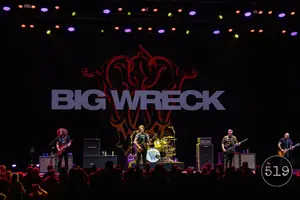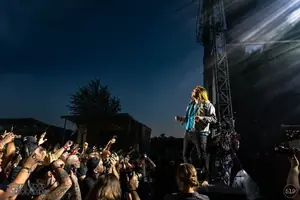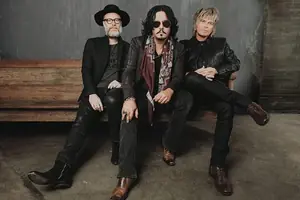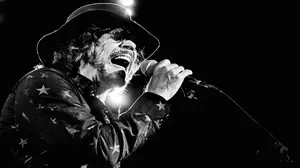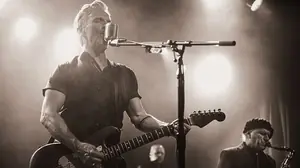
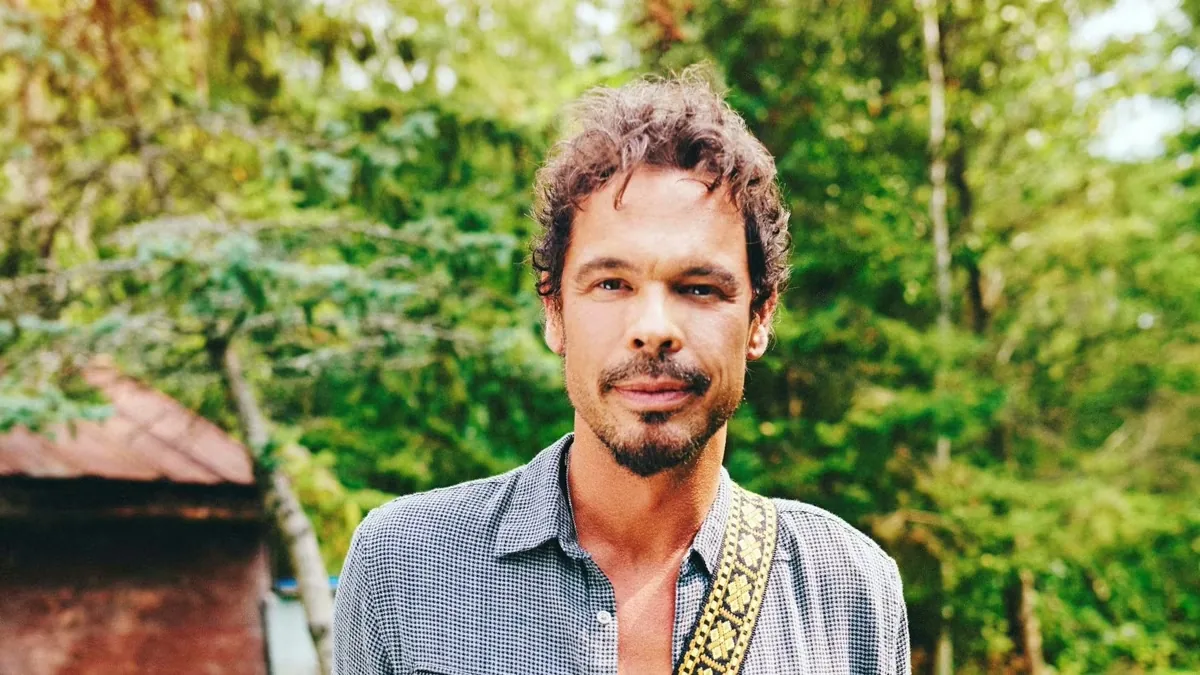

Looking at the raw transcripts from this Oct. 22, 2019, conversation with Ian Thornley is to see a band standing at a brutal intersection of triumph and tragedy. Big Wreck had just unleashed ...But For the Sun, an album that felt like a deliberate and glorious correction of course. But they were also navigating the immediate aftermath of losing founding guitarist Brian Doherty, a loss that was still raw, visceral, and shaping every note they played on stage.
The album itself was a declaration. It was loud, unapologetic, and steeped in the kind of primordial seventies riff-rock that first put them on the map. And Thornley made no bones about the intent. “Yeah. That's sort of the mission statement that we'd carved out for ourselves at the onset for sure,” he says. This wasn't an accident. It was a conscious pushback against the more atmospheric and sonically expansive territory of their previous record Grace Street. It was a return to force and firepower.
For Thornley, it was about recapturing an era “when rock albums were masterworks.” This wasn't just nostalgia. It was a statement on craft, a belief in the album as a complete artistic thought form from start to finish. And while he's quick to sidestep ranking his own work, it’s a telling glimpse into his creative headspace at the time. A desire for something tangible, muscular, and immediate.
He falls back on the classic artist’s defence when asked to place it within the Big Wreck canon, comparing his albums to children. “You don't love one more than the other,” he insists. “Right now it's my favorite. But that's probably just because it's the most recent.” It’s a familiar line, but one that rings true. The newest creation always burns the brightest. It’s the one you’re living with, defending, and sending out into the world.
But for Thornley, it was also about timing. The aggressive energy of ...But For the Sun was something that needed to gestate. “On a personal level I don't think it was time to go there with the previous album,” he reflects. “Grace Street was a statement of where we were at that time... I think musically it was just time. It was the right time for us to go in that direction.”
The conversation pivots to one of the more curious footnotes in the band’s recent history: their contribution to the 40th anniversary tribute for Rush’s A Farewell to Kings. Given Thornley’s status as a premier Canadian guitar hero, one assumes a deep connection to the Holy Triumvirate. The truth is far more interesting and complicated.
“Ironically no,” Thornley states flatly when asked if Rush was an influence. “Musically was never really my cup of tea... Maybe it's just when I was coming of age sort of musically where my tastes were sort of across the street from where they were, you know.” It’s a refreshingly honest admission in a world of obligatory praise. He respects the institution and counts Alex Lifeson as a friend, but the music itself never fully connected.
And yet their version of “Closer to the Heart” works. It’s a testament to their ability to inhabit a song while retaining their own sonic identity. “I have always loved that song. I love that guitar riff,” he admits, explaining his choice. “It was basically a day in the studio of, you know, us doing what we do with their music. It's a weird fit, but I think it kinda works.” It’s a perfect summary of the project, a respectful nod from across the street.
The expression we've come up with is we're getting 'Braai slammed'. And so, you know, if you're at the mic and you're concentrating and doing your thing and all of a sudden it'll pop into your head and it's just like you just get choked up and thrown off course.
This reverence for the original recording is a core part of Thornley’s artistic philosophy. When asked what other classic album he’d love to play on, he dismisses the idea entirely. “There's so many albums that I just think are beautiful and perfect and I love to listen to,” he explains. “I always think of these records as masterpieces; they're perfect as they are. And I have so many of them that I wouldn't ruin them with my, you know, incessant wanking guitar playing or whatever.” He’d rather be a fly on the wall, a student of the process, not an interloper.
The emotional weight of the interview lands squarely on the topic of Brian Doherty. The new album’s opening track “Voices” became an unintentional and heartbreaking tribute. “The record was completed while he was still with us,” Thornley says, his voice heavy with the memory. “I listen to it now and I have a hard time with some of the lyrics because I'm like how would I have said that... we were still of the mind that he was gonna be fine.”
This is where the conversation gets truly vulnerable, revealing the mechanics of a band grieving in public every single night on tour. The experience was so intense they had to invent a term for it. “The expression we've come up with is we're getting 'Braai slammed',” Thornley shares. “If you're at the mic and you're concentrating and doing your thing and all of a sudden it'll pop into your head and it's just like you just get choked up and thrown off course. Yeah, that's a Braai slam.”
It’s a devastatingly human portrait of loss. A sudden wave of grief hitting in the middle of a guitar solo or a high note. “I'm sure he's getting a chuckle out of it,” Thornley adds, finding a moment of dark humour in the pain. This shared experience became the glue holding them together, a collective wound they had to tend to constantly.
Into this fragile ecosystem stepped guitarist Chris Caddell, a longtime friend tasked with the impossible. Thornley is clear-eyed about the change. “Obviously he's a completely different musician than Brian, and I mean he has a different energy than Brian,” he says. “Nobody has the hands of Brian, and, you know, conversely, nobody has the hands of Chris or myself. It's just a matter of chemistry... luckily with Chris it works. It just works in a different way than it did with Brian.”
There was a brief flirtation with continuing as a power trio over the summer, but Thornley’s instincts as a composer and producer won out. He’s a man who loves layers, countermelodies, and sonic architecture. “There is just something about having two guitars. You can cover so much more ground musically,” he explains. “I love hearing the fairy dust and the other bits that sort of adorn a song, you know. All the seasoning, if you will.”
The discussion of the band’s lineup and sound inevitably leads back to their first rebirth with 2012’s Albatross. That record wasn't initially intended to be a Big Wreck album at all. It was born from the ashes of his solo project Thornley. The shift happened in the studio with producers Nick Raskulinecz and Eric Ratz suggesting they reclaim the iconic name.
The real catalyst, however, was a newfound creative freedom under the SRO/Anthem label. Thornley’s description of escaping his previous major label deal is a scathing indictment of early 2000s industry logic. “It was like, 'Oh god. Thank you.' There's nobody saying, 'No, no, no, it has to be under three and a half minutes. No, no, no, no guitar solos. No big words. No chords with numbers in them,'” he recounts. “I felt like I was right out of the cage. I was just sort of able to do whatever I wanted.”
That freedom defined the second act of Big Wreck, a period that has now far outlasted the first. The decision to put the Big Wreck sticker on the track sheet for Albatross proved to be more than just a name change; it was a recommitment to an ideal. It unlocked a creative floodgate that has produced some of the band’s most vital work.
The conversation ends with a nod to Southwestern Ontario. Thornley speaks warmly of friends made in Sarnia during the Bayfest years, a reminder of the deep roots the band has in the region. Doherty himself was the band’s direct 519 connection, making those shows particularly poignant.
Revisiting this moment from 2019, it’s clear this was more than just a promotional interview for a new album. It was a snapshot of Ian Thornley processing immense change in real time. He was a bandleader mourning his friend, a songwriter rediscovering his voice, and an artist defining the terms of his band’s survival. He was steering the ship through the storm and pointing it toward louder shores.
519 Magazine Archive: We are thrilled to officially unearth the 519 Magazine Digital Vault. This isn't just a re-post; it's a high-fidelity restoration of a pivotal era in music journalism. By pairing original print dates with modern retrospectives, we’re bridging the gap between historical rock-and-roll grit and the lightning-fast performance of today’s web. These stories—once locked in physical print and lost URLs—are now back, fully searchable, and optimized for a new generation of fans.
We are thrilled to officially unearth the 519 Magazine Digital Vault. This isn't just a re-post; it's a high-fidelity restoration of a pivotal era in music journalism. By pairing original print dates with modern retrospectives, we're bridging the gap between historical rock-and-roll grit and the lightning-fast performance of today's web. These stories—once locked in physical print and lost URLs—are now back, fully searchable, and optimized for a new generation of fans.