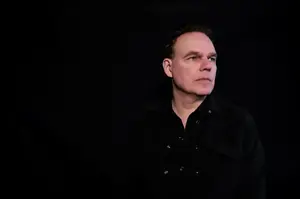
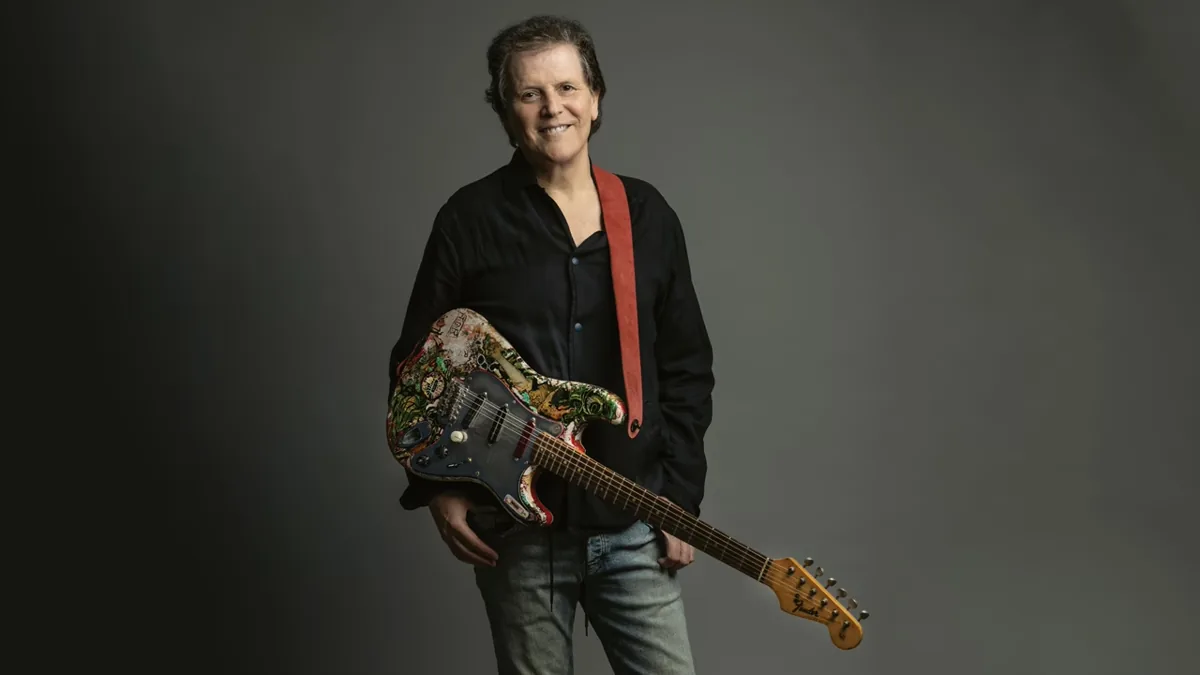

Revisiting the raw transcripts from this Oct. 4 conversation offers a sharp look into the mind of a musician who has lived multiple artistic lives. Trevor Rabin is not just a rock star. He's a prog-rock architect, a pop hitmaker, and a Hollywood A-list composer. And with the release of Rio, he was stepping back into the rock arena after a staggering 34-year absence from vocal-led solo work. It wasn't a comeback. It was a recalibration.
The elephant in the room was always going to be the time gap. Three and a half decades is an eternity in the music business. But Rabin is direct about it. His detour into film scoring wasn't a side project; it became the main gig. After the monumental effort of the Talk album with Yes, he felt he'd pushed that boundary as far as it could go. Hollywood called with its orchestral palettes and narrative demands.
“I thought I'd, you know, do four, five films and then do another rock album,” Rabin explains. “And here I am, you know, years later still looking at Armageddon... like it was yesterday because the time just seemed to truncate, and these thirty years just went by incredibly fast.” It’s a familiar story for anyone consumed by their craft. The work simply takes over. The pressure to return though was both internal and external. He finally reached a breaking point. “I gotta stop what I'm doing and get into doing another album... I disciplined myself to do it and get on with it.”
That discipline produced Rio, a record that feels both modern and deeply connected to his past. A prime example is the track “Oklahoma.” The song's origins trace back to the horrific 1995 bombing, a moment of national trauma that struck Rabin, who had recently become an American citizen. He saw the news and his stomach dropped. “This really affected me heavily,” he admits. “It's like cutting, you know, cutting into the underbelly of this great place.”
He drafted lyrics and melodic ideas but felt the timing was too raw to release anything. He didn’t want to be perceived as capitalizing on a tragedy. But the idea lingered. Elements of its melodic structure even found their way into some of his film scores, a ghost in the machine waiting for its moment. With Rio, that moment arrived. It was no longer a reaction but a reflection, a tribute to the victims and survivors. A necessary exorcism.
One of the most defining characteristics of Rabin's work has always been his near-total command of the studio. On Rio, he handles almost everything: guitars, keyboards, bass, and vocals. This isn't ego. It's efficiency. “When I write a song, I always hear the whole thing,” he says. “It's like when I'm writing a film score... I'm writing all the layers.” This holistic approach means the arrangement is baked into the composition from the very beginning. Why hire a session player only to dictate every single note? “I could get in a bass player to do this, but I'm just gonna want him to do what I've just done. So why bother?”
But he’s no hermit. The album features powerhouse drummers like Louis Molino III and the untouchable Vinnie Colaiuta, whose work on “Push” adds a layer of rhythmic complexity that is simply breathtaking. His son, Ryan Rabin of Grouplove fame, also served as a crucial sounding board for percussive ideas. It's a controlled collaboration, one where the core vision remains singular and undiluted.
That night, my son was conceived, Ryan... years later, he's having his his daughter's about to be born. I said, what are you gonna what's her name? What's her name? He wouldn't tell me. And then eventually, he said, it's Rio.
The album's striking cover art is also a Rabin original. A lifelong painter taught by his artist mother, he has embraced digital painting with the same fervour as digital music production. It's cleaner, he jokes. He sent some abstract pieces to his record label, InsideOutMusic, on a whim. Label head Thomas Waber saw a cover. Rabin was hesitant but agreed with a caveat. “I'll make a deal with you. If in one week you look at it again and realize, oh my god. I don't like this. I'm quite happy for you to fire the artist.” They stuck with it, a testament to the art's synergy with the music.
And then there's the title. Rio. It’s not just a place; it's a legacy. The story is pure rock and roll lore. In 1985, Yes played the massive Rock in Rio festival to a crowd of half a million people. It was a career peak. “It was just almost peculiar looking out and seeing half a million people,” he recalls. That very night his son Ryan was conceived. Decades later, when Ryan was expecting his own child, he kept the name a secret until the birth. The name was Rio.
The album title is a beautiful full-circle moment, connecting the largest audience of his life to the birth of his son and now the name of his granddaughter. It’s a story so personal, and frankly a little raw, that Ryan initially cringed at his dad sharing it. “Ryan said, ‘Oh, Dad. That's gross. Don't say that’,” Rabin laughs. But it’s the truth, a perfect intersection of his public and private histories.
Looking back, the conversation inevitably turns to his legendary session work. His memories of working with Michael Jackson are particularly vivid. He describes a studio bristling with every recording format imaginable and an artist who walked in with an almost divine presence. But the mystique quickly dissolved. “He walked up to me and I said, ‘Hey, man. Nice to meet you.’ And then, you know, it kinda lightened up immediately, and he was a fantastic guy to work with.”
Rabin shares a stunning anecdote from the sessions for “They Don't Care About Us” where Jackson mapped out a complex rhythm track using only his own body. “He sat on a chair in the studio and kind of tapped on his feet, on his knees, and used his feet and his voice and his neck. And I said, Oh my God. You should forget about the record. You should just release that.” He also remembers the sheer volume Jackson monitored at. “It was louder than a live show I'd ever done. It was incredibly loud.”
His collaboration with Roger Hodgson of Supertramp fame is another fascinating sidebar. Hodgson showed up at Rabin's house in an RV and they spent weeks writing together, both in Los Angeles and at Hodgson's studio near Sacramento. They had nearly two-thirds of an album ready to go. But life intervened. A divorce for Hodgson and the siren call of the Yes Union tour for Rabin caused the project to dissipate. It remains one of prog-rock's great 'what-if' projects.
This all feeds back into his primary work for the last 30 years: film. From action blockbusters like Con Air to inspirational dramas like Remember the Titans, Rabin proved his versatility. He had to fight against typecasting. He recounts a meeting for the comedy Get Smart where a producer questioned his credentials. “I said, ‘Well, I've been in some really comedic situations. After all, I've played in Yes for fifteen years,’ and they laughed. And I got the movie.” Yet his personal favourite remains the more emotional scores like The Great Raid and especially Remember the Titans, which he considers his finest work.
The pressure to create is a constant. He shares a deeply personal story about how his wife understood his compositional obsession. “She used to call me the alcoholic without a bottle. Instead of bottles in the drawers just all over the house, there'd be pieces of manuscript with pencil jottings of music all over the place.” It was this all-consuming focus, redirected by his son's encouragement, that finally brought Rio to life.
As for the future, Rabin is clear. He’s not disappearing back into the scoring world just yet. “My next project is definitely gonna not be a movie. It's gonna be in the next album.” The cycle is beginning again. Talk of a tour is still nascent, but the concept is ambitious: a show that combines his solo material, the Yes songs he penned, and his iconic film scores performed live. It would be the definitive Trevor Rabin experience, a journey through a career that has defied categorization at every turn.
519 Magazine Archive: We are thrilled to officially unearth the 519 Magazine Digital Vault. This isn't just a re-post; it's a high-fidelity restoration of a pivotal era in music journalism. By pairing original print dates with modern retrospectives, we’re bridging the gap between historical rock-and-roll grit and the lightning-fast performance of today’s web. These stories—once locked in physical print and lost URLs—are now back, fully searchable, and optimized for a new generation of fans.
We are thrilled to officially unearth the 519 Magazine Digital Vault. This isn't just a re-post; it's a high-fidelity restoration of a pivotal era in music journalism. By pairing original print dates with modern retrospectives, we're bridging the gap between historical rock-and-roll grit and the lightning-fast performance of today's web. These stories—once locked in physical print and lost URLs—are now back, fully searchable, and optimized for a new generation of fans.