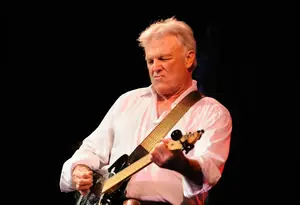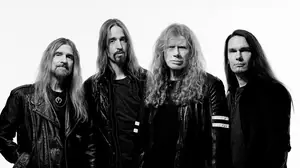
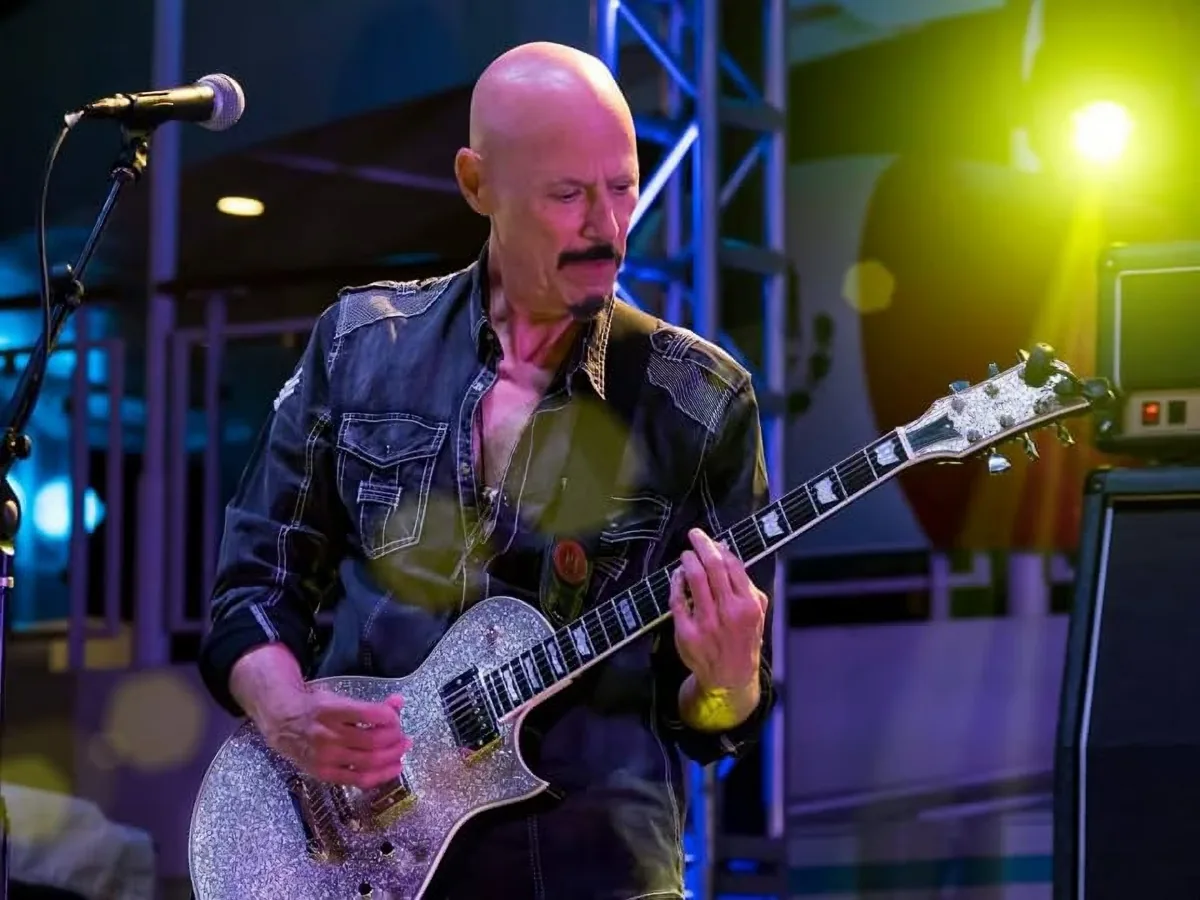

Listening back to these archival tapes from our 2009 interview with Bob Kulick is a stark reminder that rock and roll history isn’t just written by the frontmen. It’s built by guys like Bob. The ultimate session ace, producer and consigliere, Kulick was the Zelig of hard rock, a figure who was always in the room when it happened, guitar in hand. His name might not be on the marquee, but his DNA is all over the platinum records that defined an era.
He was a New York kid, through and through. And he was brutally honest about the role geography played in his ascent. It wasn't just talent; it was proximity. The city was a crucible. It demanded skill and it offered opportunity. But Kulick insists luck was the real catalyst. “Being born in New York, I was able to be in a place where with the amount of talent that I had when I auditioned for gigs... I was able to capitalize, so to speak, and get those gigs,” he says on the tape, his voice pragmatic. “If I was, say, born in New Delhi or born in Iowa somewhere, I might not have had that opportunity.”
This is not false modesty. It’s the clear-eyed assessment of a working musician. He saw the industry for what it was: a machine that needed reliable, high-performance parts. And he made himself indispensable. The man’s résumé is a study in stylistic schizophrenia. One minute he’s laying down blues licks for Long John Baldry, the next he’s navigating the funk and R and B pocket of LaBelle.
His adaptability was his calling card. It was the key that unlocked every door. “The adapt part was very crucial early on,” he explains. “Those songs require the ability to play black R and B. And the fact that I was schooled enough as a player to be able to come in and have an artist like that hand you a chart... and still be able to show that you're a rock guitar player with some chops definitely got me those jobs.” Even gigs he didn’t land, like for Hall and Oates, came with glowing feedback. He wasn’t just good; he was a problem solver.
And then there’s KISS. The sliding doors moment of his entire career. It’s the story every hardcore fan knows. He was in the running, the technically superior player by his own and the band’s admission. He auditioned for the pre-fame version of the band, jamming on Zeppelin-style riffs. But Ace Frehley walked in, a lightning bolt of charisma and alien cool. The story of Ace unplugging Kulick is, as Bob confirms, pure myth. The reality was a simple business decision.
“Probably about two weeks later, Paul called me and just said, ‘You know, you play great and you're probably the best player’,” Kulick recalls. “‘The guy that came in after you, you know, his vibe, his look, his personality is more what we're looking for.’” There’s no bitterness in his voice, even all those years later. He understood the gig. They weren’t building a band; they were casting a television show. It was about the whole package. Makeup, gimmick and spectacle.
But the story didn't end there. It twisted. Kulick became the band’s secret weapon, the ghost in their machine. When Ace was too drunk or disinterested to show up for the studio tracks on Alive II, they called Bob. He played on “All American Man” “Rockin' in the U.S.A.” and “Larger Than Life”. He co-wrote “Nowhere to Run” on Killers. He was the shadow guitarist on Paul Stanley’s 1978 solo album. He was family.
So when KISS needed a new guitarist after the Vinnie Vincent debacle, they called Bob again. This time, he had the perfect replacement. “I suggested my brother again, you know, because I thought at that point, it just seemed like my brother was ready,” he says. Bruce Kulick got the job, holding it down for 12 solid years. The Kulick legacy was cemented inside the KISS empire, one way or another.
For some reason, he thought he was Robert Plant when actually he was Otis Redding.
Eventually, the life of a sideman lost its lustre. The phone call from Mick Jagger wasn't coming. So, Kulick pivoted. He moved behind the glass, drawn to the power and control of the producer’s chair. “I trust my judgment and my taste,” he states, a simple declaration of self-belief. And that trust was validated in the most public way possible.
He helmed Motörhead’s cover of Metallica’s “Whiplash” for a tribute album, a project that earned them a Grammy for Best Metal Performance. The nomination was stacked with heavy hitters: Slipknot, Killswitch Engage and Cradle of Filth. But Kulick was supremely confident. “I'm just like, we're gonna win,” he says, recounting the story with a laugh. “It seemed to me all the other bands would cancel themselves out and that the reality was that this was such a great performance by them.” He told everyone they would win, much to the annoyance of Motörhead's own manager.
He was right. It’s a perfect anecdote that reveals everything about his approach. He understood the song, the artist and the industry politics. He saw the winning angle before anyone else did. That Grammy wasn’t just a trophy; it was vindication for a career spent making other people sound great.
Kulick also became a go-to producer for a wave of tribute albums in the late 90s and early 2000s, records often dismissed by critics as cash-grabs. But he saw them differently. They were a chance to curate dream collaborations and, frankly, to hire his friends. “As much as people look down their noses at these records, the reality is my versions of these songs will stand the test of time because it's Ronnie James Dio and Roger Daltrey and Alice Cooper singing these songs,” he argues forcefully. His point is valid; hearing Steve Vai trade licks with Alice Cooper on “Hey Bulldog” is a unique pleasure, regardless of the album’s context.
While these all-star jams could occasionally feel more like a collection of parts than a cohesive whole, their value was in the spectacle. Kulick was a master networker, leveraging decades of goodwill to get people like Slash, Billy Gibbons and Lemmy Kilmister on the phone. He was a fan, putting together lineups he himself would want to hear.
The interview is littered with incredible memories. He calls his long tenure with Meat Loaf a “rags to riches story” where the band went from being booed off stage to headlining arenas. He lovingly refers to the touring band as the “Hamburger Helpers”. And his time with Alice Cooper was pure joy.
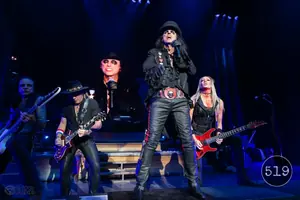
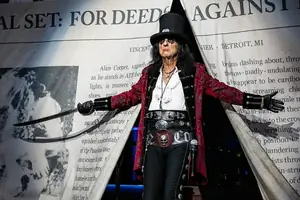
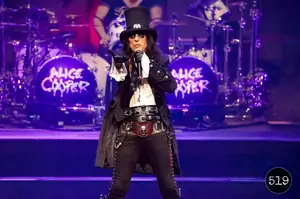
“I'll never forget standing on stage in front of 50,000 people playing ‘I'm Eighteen’ and ‘Billion Dollar Babies’ behind Alice Cooper,” he says, the excitement still evident in his voice. “I'll never forget that thrill... it would put a smile on their face when they thought about it like it does for me now.” He contrasts the alcoholic Alice of the 70s with the sober, wonderful person he later worked with, a testament to survival in a brutal business.
Of course, not every gig was a dream. He describes Lou Reed as “one of the craziest people I ever worked with” during the sessions for Coney Island Baby. He was unceremoniously fired after overstepping some invisible boundary. It’s a brief, telling glimpse into the volatile nature of genius and the precarious position of a session player.
But the most arresting story comes from his youth in Greenwich Village. His kid band played at a coffee shop called the Cafe Wha?, sharing the bill with a guitarist named Jimmy James, who the world would soon know as Jimi Hendrix. The anecdote is beautifully simple. Hendrix broke an E string backstage, and a young Bob Kulick gave him a spare from his case.
Hendrix repaid the favour by sitting front and centre while Kulick’s band played, an intimidating gesture from a musician who was already lightyears ahead of everyone. “It was like the spaceship landed and this guy got out,” Kulick says, capturing the alien brilliance of Hendrix. He remembers Hendrix as a kind, gracious person, a human being who was just as awestruck by Eric Clapton as anyone else.
He saw Hendrix for the last time on Eighth Street, right after he’d finished building Electric Lady Studios. They had a brief, friendly chat before Hendrix left for the Isle of Wight Festival. He never came back. It’s a poignant end to a remarkable story, a moment where history feels touchable and real.
That was Bob Kulick’s world. He was always there, just off-camera, providing the crucial string, the perfect solo or the right piece of advice. He was the ultimate professional, a rock and roll lifer who understood that true legacy isn't always measured in the spotlight, but in the grooves of the records themselves.
519 Magazine Archive: We are thrilled to officially unearth the Rockstar Weekly Digital Vault. This isn't just a re-post; it's a high-fidelity restoration of a pivotal era in music journalism. By pairing original print dates with modern retrospectives, we’re bridging the gap between historical rock-and-roll grit and the lightning-fast performance of today’s web. These stories—once locked in physical print and lost URLs—are now back, fully searchable, and optimized for a new generation of fans.
Get Tickets

We are thrilled to officially unearth the 519 Magazine Digital Vault. This isn't just a re-post; it's a high-fidelity restoration of a pivotal era in music journalism. By pairing original print dates with modern retrospectives, we're bridging the gap between historical rock-and-roll grit and the lightning-fast performance of today's web. These stories—once locked in physical print and lost URLs—are now back, fully searchable, and optimized for a new generation of fans.