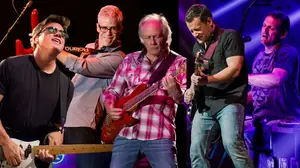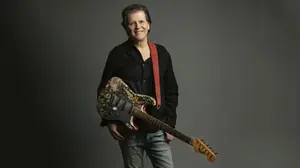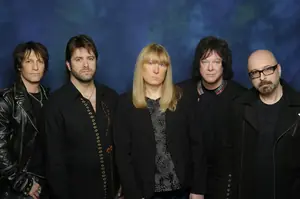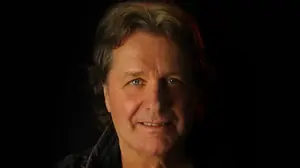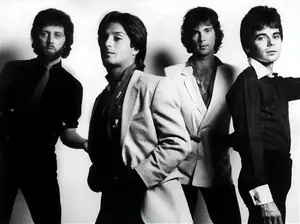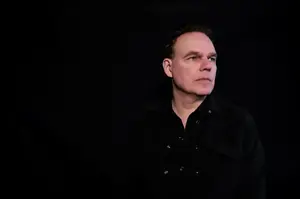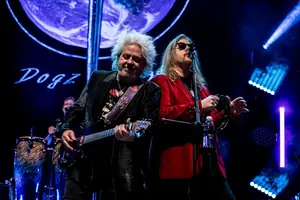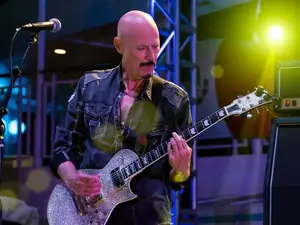
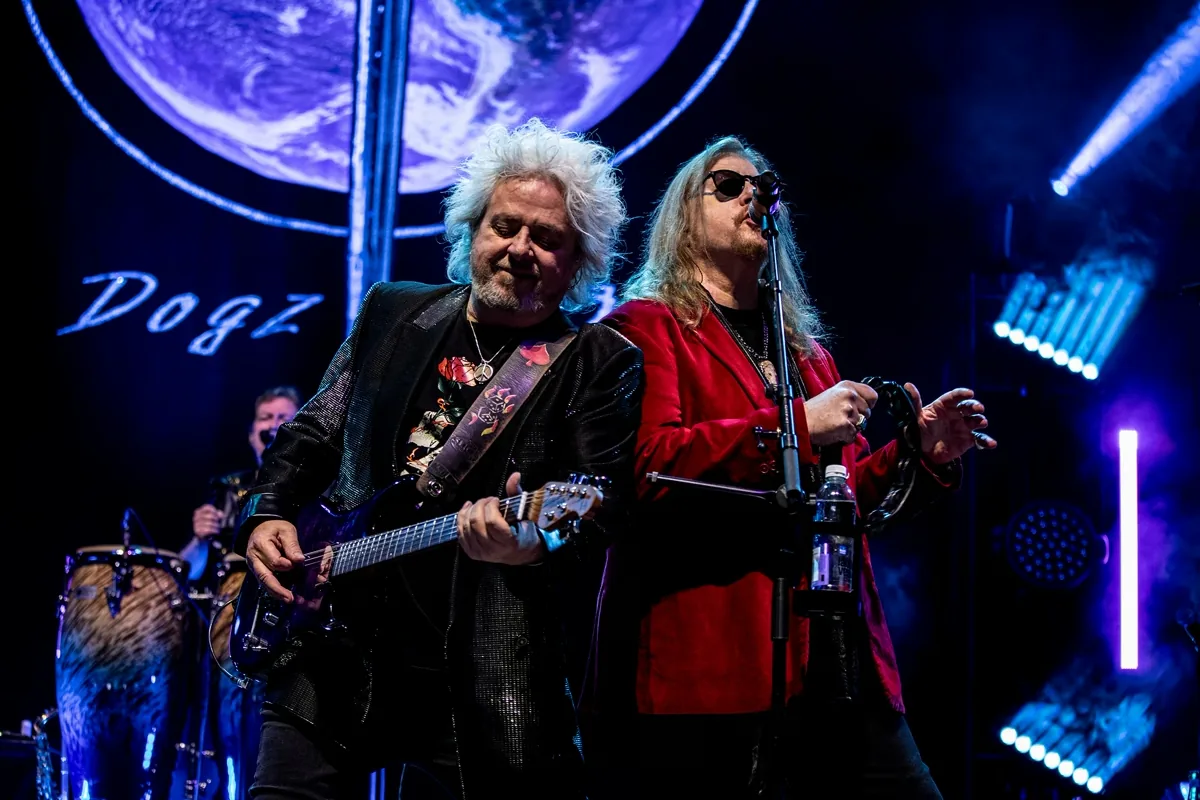

Looking at the raw transcripts from this 2018 conversation with Steve Porcaro is a stark reminder of the dense architecture behind Toto’s seemingly effortless sound. At the time, the band was deep into a legacy run, a victory lap for a career that outlasted nearly all its critics. But Porcaro, the band’s synthesizer wizard and sonic painter, spoke with the clarity of a man who never forgot the foundational risks and creative battles that defined their journey.
The years do indeed whiz by. Porcaro’s memory of the band’s formation, however, remains razor-sharp. It was a moment of profound excitement and anxiety. He was the kid brother watching legends-in-the-making find their footing. “My big brother Jeff and David Paich, my hero, were finally doing their own band,” he says. The L.A. session scene of the mid-70s was a lucrative trap. Jeff Porcaro and David Paich were kings, their grooves and hooks underpinning massive records for Steely Dan and Boz Scaggs. Starting their own project was a gamble.
“I was afraid that they would never do their own band, you know, because they were doing so well just being freelance studio musicians,” Porcaro recalls. And when they finally took the leap, bringing in a young Steve Lukather and Porcaro himself, the mission statement was clear. This wasn’t about dumbing it down for the charts. It was about elevating the charts to their level of musicianship.
This philosophy became their core identity. They were unapologetic studio perfectionists who also worshipped a killer pop hook. The trick, Porcaro explains, was navigating that duality. “The trick was always to just make it to not lower ourselves musically, to get a hit record, to try to be who exactly who we were, be the best version of ourselves, and hopefully, people would like that.” It was a tightrope walk between progressive rock complexity and AM radio accessibility, a formula that immediately connected with audiences.
A huge part of that unique sonic signature was Porcaro’s embrace of synthesis. In an era when many rock bands still viewed keyboards as secondary, Toto placed them at the centre of the creative process. New sounds were not just ornamentation; they were catalysts. “Sometimes just getting a new sound up that you've never heard before just totally will dictate what you'll play,” he explains. “A lot of riffs kinda started off on a synth sound or something like that.”
This pioneering spirit reached its apex on the iconic solo for “Rosanna.” It wasn't a flash of improvised brilliance but a meticulously constructed masterpiece. It was Porcaro’s statement piece. “Especially the Rosanna solo was my baby, you know, was me really wanting to show everybody what I could do,” he says. This is where the band’s internal dynamics become fascinating. While Lukather could unleash a world-class guitar solo in a single take, Porcaro’s method was one of patient composition.
He admits it freely. “I've never been a good improviser, but what I love to do is to kinda compose solos, you know, make these events that are... very, very much thought out.” He wanted to demonstrate what synthesizers could do in the right hands, creating orchestral movements and sonic shifts that told a story. The “Rosanna” solo is less an instrumental break and more a miniature symphony, a testament to his architectural approach to music.
That dedication to technology defined his career. He recalls the earliest days at Studio 55, working on 24-track tape with one of the first VCA automated mixing consoles. But he’s no Luddite pining for the past. He fully embraces the digital world. “Love it. Absolutely love it,” he says of modern recording. “Love having unlimited tracks. Love not having to align tape machines.”
I was on my way to the studio, and I wanted to stop by and see my daughter at her mom's house. And she had had had a rough day at school. Some boy had bothered her... and she just kept asking me why. And it just kinda stuck in my head. All of a sudden, title human nature kind of you know, just the the phrase human nature pops in my head.
He still keeps his massive modular synth rig, an instrument he describes as “catching lightning in a bottle” because of its inability to save presets. But for workflow, the new tools are essential. He champions software plugins and the power of total recall, allowing him to endlessly tweak and refine his work without the pressure of committing a performance to tape. It’s the evolution of his compositional mindset.
But the band’s sophisticated sound eventually collided with a changing industry. Porcaro’s departure after the 1986 album Fahrenheit was not born of personal animosity but of a seismic shift in the cultural zeitgeist. The pressure was on. “The guys were kind of wanting to follow what the record company wanted to do,” he says. “And at the time, you know, grunge started becoming real popular. The whole Seattle scene with Nirvana and Pearl Jam was exploding.”
The band felt compelled to strip back its sound. The lush layers and intricate arrangements that were Porcaro’s specialty were suddenly on the chopping block. “They kept talking about how, you know, on the next album, you know, there's gonna be a lot less synths, a lot less of the orchestral kind of interludes, and a lot less of really everything that I was about in the band,” he states. It was an amicable split, a recognition that the band’s direction was moving away from his artistic core.
His return years later was prompted by his brother Mike Porcaro’s tragic illness. The reunion tour, initially planned as a one-off benefit, sparked a new era for the band. The time apart had fostered a deeper appreciation for what each member contributed. “This time when they asked me back, they really wanted me,” he says. “I think we all started... with all this much time passing, really began to appreciate each other and just what it was that we individually brought to the table.”
Of course, no conversation about Porcaro’s career is complete without discussing his work on the biggest album of all time, Michael Jackson’s Thriller. His reverence for Jackson’s talent is palpable. He speaks of a musical instinct so profound it transcended traditional songwriting. “What he brought to human nature... If it was any of these artists these days, they would demand songwriting credit, you know, because of what they brought to the table,” Porcaro insists. “Michael, that was just what he did on any song he sang. He just so made it his own.”
The sessions with Quincy Jones were a whirlwind of creativity and competition. You were part of a team, but your parts were never safe. “Quincy was always having other people also work on it. So half the time, you know, you were replacing someone's parts. Half the time, someone was replacing your parts,” he remembers. Yet it was exhilarating. His synthesizer work ultimately became integral to “P.Y.T. (Pretty Young Thing),” “Beat It,” and “The Girl Is Mine” in addition to his own composition.
And then there was “Human Nature.” The story of its creation is pure serendipity. He was on his way to the final mixing session for “Africa” when he stopped to see his young daughter, who was upset after a boy had hit her at school. “She just kept asking me why,” he recounts. “And it just kinda stuck in my head. All of a sudden, the title 'Human Nature' pops in my head. And how do you explain that to a, you know, to a second grader that the boy probably liked her?”
Later that night, while the rest of Toto was occupied, he sat down at a piano in the empty studio and the song simply poured out of him. “I pretty much wrote, you know, the verse and chorus... in one sitting right there. It just boom. Came out.” He is quick to give credit to lyricist John Bettis for refining his verse ideas into a compelling narrative, but the melodic and harmonic soul of the song was born in that single moment of inspiration.
That flash of genius contrasts with his typically methodical process. Porcaro admits he struggles without a deadline, often shelving ideas for years. His solo work, for example, took decades to complete, a project he only finished by imposing a deadline on himself before a Toto tour. It’s a relatable struggle for any creative mind.
And he remains a songwriter first, not a singer. He’s been spoiled, he says, by having his first major song covered by Michael Jackson. “Seeing what a real gifted singer brings to the table... I'm always wanting other people to sing my stuff.” It's a humility that belies his immense contribution not just to Toto, but to the entire sonic landscape of popular music.
When this interview was conducted, Porcaro was looking forward to bringing the full Toto experience to Windsor, Ontario. Not a truncated festival set, but the full two-hour-plus European show, complete with deep cuts for the faithful. It was a promise to deliver the undiluted vision of the band—complex, melodic and impeccably performed.
Revisiting his words, we’re reminded that behind the hits lies a story of artistic conviction, technological curiosity and the delicate balance of brotherhood. Steve Porcaro was never just the keyboard player. He was, and is, the band’s sonic conscience.
519 Magazine Archive: We are thrilled to officially unearth the 519 Magazine Digital Vault. This isn't just a re-post; it's a high-fidelity restoration of a pivotal era in music journalism. By pairing original print dates with modern retrospectives, we’re bridging the gap between historical rock-and-roll grit and the lightning-fast performance of today’s web. These stories—once locked in physical print and lost URLs—are now back, fully searchable, and optimized for a new generation of fans.
We are thrilled to officially unearth the 519 Magazine Digital Vault. This isn't just a re-post; it's a high-fidelity restoration of a pivotal era in music journalism. By pairing original print dates with modern retrospectives, we're bridging the gap between historical rock-and-roll grit and the lightning-fast performance of today's web. These stories—once locked in physical print and lost URLs—are now back, fully searchable, and optimized for a new generation of fans.