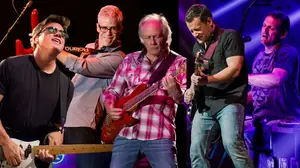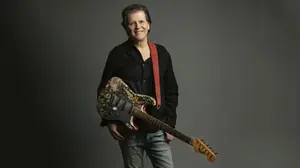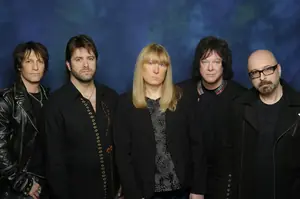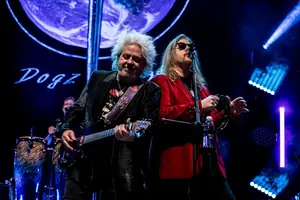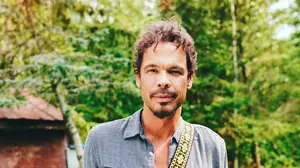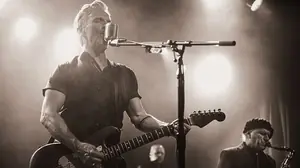
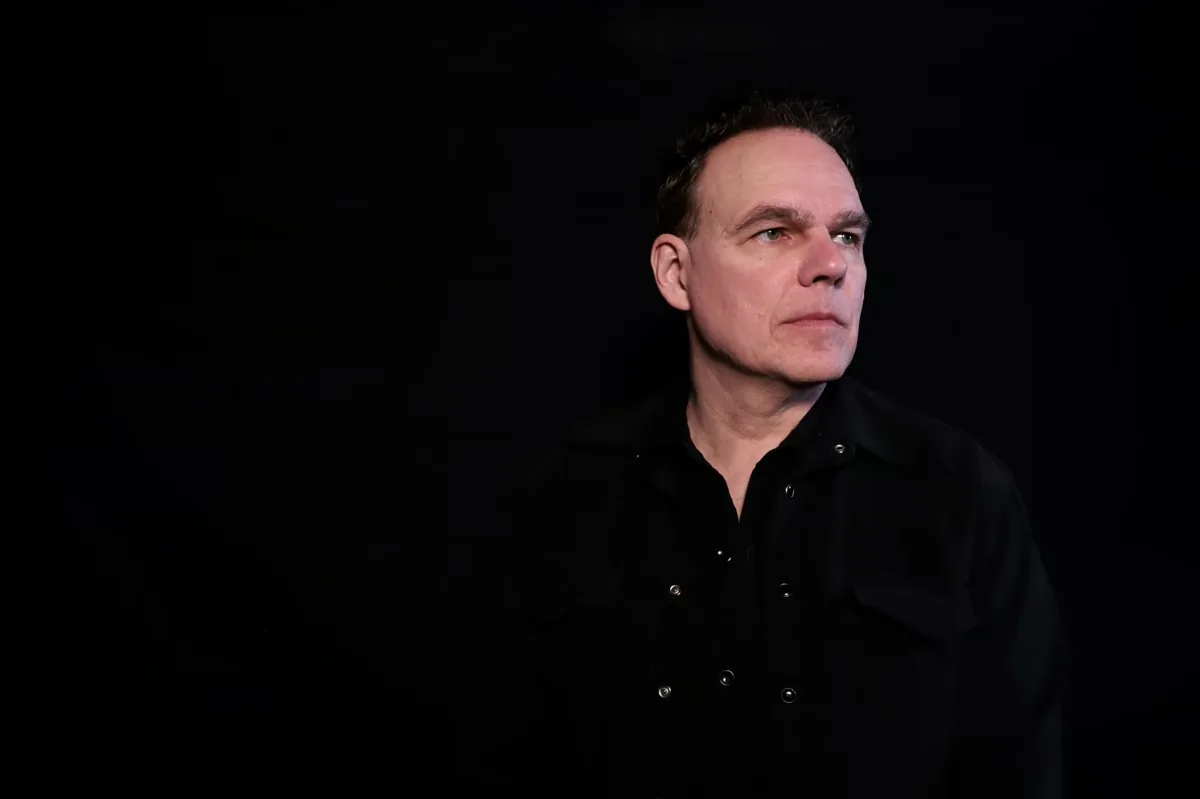

Listening back to these raw archival tapes from our 2010 interview with Harry Hess is a trip. It’s a moment frozen in time. Harem Scarem was barely three years in the rearview mirror, a calculated and quiet ending to one of Canadian melodic rock’s most enduring, if domestically undersold, careers. And here was Hess, the voice of that band, fronting a new project called First Signal that sounded, for all the world, like a ghost.
The question had to be asked: Was this a Harem Scarem rebirth by another name? Hess, ever the pragmatist, was quick to manage expectations. But the sound was undeniable. The soaring vocals, the arena-sized hooks, the pristine production—it was all there. It was a direct line back to the band’s earliest days, a sound he himself admitted was a throwback.
“I can honestly say, it sounds to me like what we were kind of writing and doing like around our first record or even before that,” Hess says on the tape, his voice clear and direct. “Before we even got a record deal when we were demoing, you know, before our first record. Around that time, you know, late eighties, like early nineties, that's kind of the mindset we were in. So I think it's fair to say that, you know, it sounds like early Harem Scarem but extremely early, I would say.”
It was a sound born not from a grand artistic plan but from a simple desire. “I’d love to sing on a rock record again,” he recalls thinking. And that was that. The project was assembled by Italy’s Frontiers Records, a label that had become the global sanctuary for this specific brand of rock. Hess was, in essence, the star vocalist brought in to front a studio creation helmed by producer Dennis Ward. It wasn't a band. It was a project.
But to understand why First Signal even existed, you have to understand why Harem Scarem had to end. There was no explosive drama, no public fallout. The reality was far more mundane and, frankly, more relatable. It was about professional exhaustion and the daunting reality of the industry machine. They had simply run out of road.
“We were together for 20 years and, you know, we felt by the end that we were kind of going down a road that felt like it was the same road over and over again,” Hess explains. He notes they had just fulfilled their record deal with their album Hope. “If we were to continue, we would have had to have signed another record deal again, which looked like it was going to be a three-album deal or a five-album deal. And after 20 years to be looking at doing another three to five albums, none of us were overly excited about getting back in there and what we felt we'd already done before.”
That’s the unglamorous truth of a working band. It wasn’t about losing the passion for music but about losing the appetite for the cycle. For Hess, who was already building a formidable career as a producer, songwriter, and mixer in Europe, the decision was a logical career pivot, not a tragic ending.
The conversation inevitably turned to Canada. Why did a band with such immense talent and a string of hits in the early ‘90s struggle for sustained domestic support? Hess is brutally honest, offering a perspective that many Canadian artists from that era share but rarely voice so plainly. After their second record, Canada became an afterthought.
When you finish a record like that... you can't even listen to it for the first four, five, six months after you finish it because it just makes you want to vomit.
“I don't know if we were ever heavily supported in Canada beyond our second record,” he states, matter-of-factly. “Canada never, I wish it were more important for us as a band, but it wasn't. Only because it wasn't a big territory, you know, as far as consumers and it was a really difficult country to tour, and we didn't really get that kind of support.”
So, they focused their labour elsewhere, building massive fanbases in Japan, Asia, and Europe. “It was hard to be negative about our lack of success in Canada when we were having lots of success in other countries,” he says. “So we didn't spend a whole lot of time thinking about it or worrying about it.” It’s a damning indictment of a Canadian industry that has always been too quick to follow American trends, a market that turned its back on melodic rock the second the winds shifted from Seattle.
This global focus also informed how the First Signal record was made. Hess was in his Toronto studio, while producer Dennis Ward and the session musicians were in Germany. Files were exchanged over the internet, a process that felt slightly futuristic in 2010 but is now standard operating procedure. For a seasoned pro like Hess, the distance was irrelevant.
“When I did the vocals for Harem Scarem records, probably 99 percent of the time I'm in the room by myself recording my own vocals and people hear it when it's done,” he reveals. The critique, of course, is that such a process can feel sterile, lacking the organic spark of musicians in a room. But the final product was slick and powerful, a testament to the professionalism of everyone involved, particularly Ward, whom Hess trusted implicitly.
One of the most fascinating parts of the interview is Hess’s complete lack of sentimentality for Harem Scarem’s magnum opus, Mood Swings. For legions of fans, it’s the definitive album, a classic of the genre. For Hess, it’s just another record, and one he couldn’t listen to for months after making it.
“When you finish a record like that and you put in so much time, you don't want to hear it again for a long, long period of time and you can't even listen to it for the first four, five, six months after you finish it because it just makes you want to vomit,” he says with a laugh. He attributes its iconic status purely to timing, one of the last great melodic rock records before grunge took over. He respects its place in the band’s history, but he’s not a fan. He was the guy who made it. That’s it.
This reveals the core of Harry Hess in 2010: an artist in transition, acutely aware of his own creative identity. He recognized the paradox of his own talent. His voice was a finely tuned instrument, perfectly suited for the melodic rock of First Signal. But his creative mind, his songwriting sensibilities, had moved on.
“I know that when I'm singing that's what comes out naturally,” he says. “For me to be a singer on a record like this, it is 100 percent real and 100 percent natural for me. But if I were to write a song today or tomorrow, it probably wouldn't be in that style only because I've changed so much personally. As a vocalist, this is perfect for me. But as a songwriter, it probably isn't at this point in time.”
It’s a remarkable piece of self-analysis. He could step back into the vocal booth and deliver the classic Hess sound on demand because it was his natural timbre. But he couldn’t write those songs anymore because his artistic heart was somewhere else, collaborating with pop artists in Sweden or country writers in Nashville.
He also spoke candidly about the sheer physical effort required to sing in that style. It’s not a switch you can just flip. “It's not easy singing like that, you know, from a physical standpoint,” Hess admits. “It'll take me like a day, sometimes two before I can even get anything down that I can keep... you're literally like working out cobwebs.” It’s a reminder that this kind of powerful, high-range singing is an athletic endeavour, requiring maintenance and warm-ups to achieve the power and clarity fans expect.
Looking back, this interview captures a pivotal moment. Hess was embracing his future as a versatile, in-demand producer and songwriter while honouring his past by lending his voice to a project that served the fans who missed it. First Signal wasn’t a nostalgic cash-in; it was a professional engagement that allowed him to exercise a specific muscle without having to fully recommit to a style he’d outgrown creatively.
It was a smart, calculated move from a musician who has always understood the long game. The woo-hoo he throws in at the end of the tape for a station ID feels almost like a wink. He’s having fun, he’s doing the work, and he’s in complete control of his legacy. And that, more than anything, is the mark of a true survivor in the music business.
519 Magazine Archive: We are thrilled to officially unearth the Rockstar Weekly Digital Vault. This isn't just a re-post; it's a high-fidelity restoration of a pivotal era in music journalism. By pairing original print dates with modern retrospectives, we’re bridging the gap between historical rock-and-roll grit and the lightning-fast performance of today’s web. These stories—once locked in physical print and lost URLs—are now back, fully searchable, and optimized for a new generation of fans.
We are thrilled to officially unearth the 519 Magazine Digital Vault. This isn't just a re-post; it's a high-fidelity restoration of a pivotal era in music journalism. By pairing original print dates with modern retrospectives, we're bridging the gap between historical rock-and-roll grit and the lightning-fast performance of today's web. These stories—once locked in physical print and lost URLs—are now back, fully searchable, and optimized for a new generation of fans.