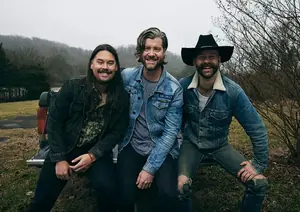
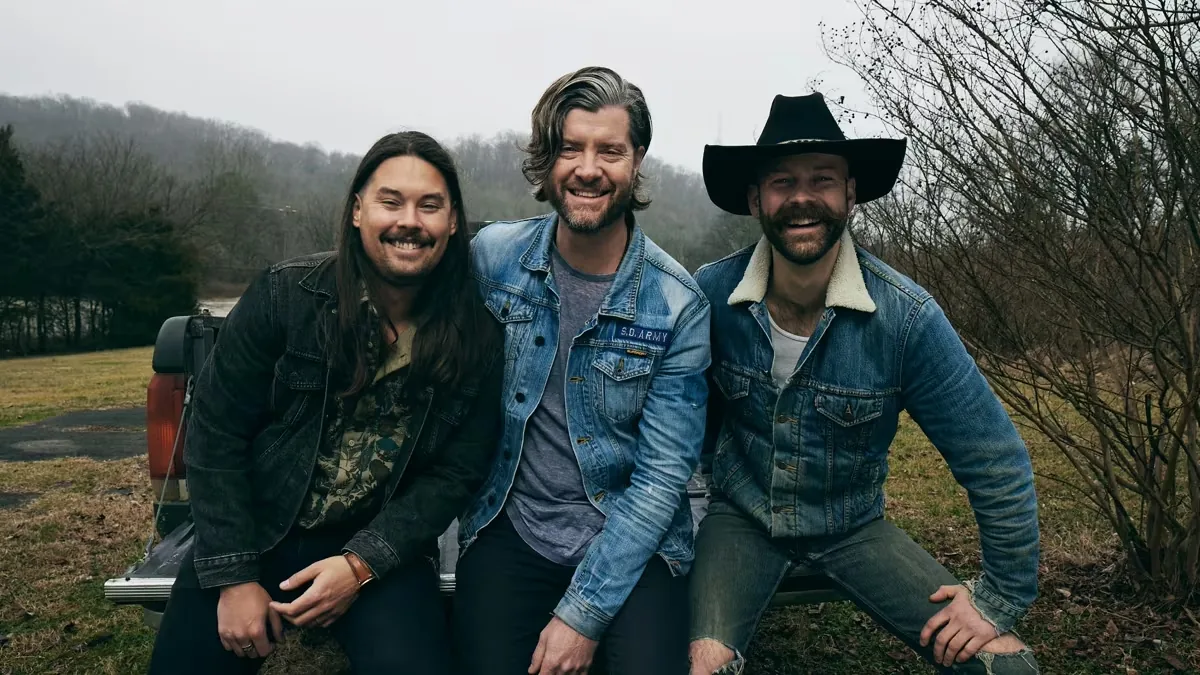
But the pandemic wasn't a roadblock for them. It was an accelerator. Neufeld laid it out with a kind of bewildered gratitude that defined the era for the lucky few who found opportunity in the chaos. “The pandemic happened, and all I got was a record deal out of it,” he says. The irony hangs heavy. While most of the industry was in a holding pattern, Neufeld and his band were handed the one thing that had eluded them: time. Time to focus on strategy, branding, and development without the grind of their usual touring schedule.
That rigorous schedule was replaced by what Neufeld cheekily calls “the cheapest tour of all time.” They weren't logging miles on the Trans-Canada. They were logging on from their tour bus parked in Chilliwack, B.C., playing virtual shows for specific cities. It was a clever workaround, a way to manufacture scarcity in a digital world drowning in content. By geotagging their streams for places like Windsor or London, they gave fans a taste of exclusivity.
Neufeld is adamant that the core experience remained intact. “The human connection is the same,” he argues. “And that's all we're really looking for is just to, you know, engage in that ancient ritual of singing and performing and entertaining and laughing together.” A noble sentiment for sure, but one that also underscores the desperation of the times. It was a necessary substitute, a digital ghost of the real thing.
The routine became its own ritual. Instead of soundchecks and backstage corridors, there were bottles of wine shared on the bus and a banjo-playing skeleton Halloween decoration as a permanent opening act. This casual living-room vibe, as Neufeld describes it, wasn't just a gimmick. It was a crucial part of a much larger pivot the band was executing. They were consciously moving away from the stage lights of the church and into the more nuanced spotlight of the mainstream.
This transition was years in the making. Neufeld speaks candidly about the shift from playing churches to actively seeking out neutral venues like soft-seater theatres. The goal was simple but profound: make everyone feel welcome. It was a strategic repositioning from a Christian band to a band of artists whose faith informs their work but doesn't ghettoize it. It’s a fine line to walk, one that many have stumbled on before.
But for Tim & The Glory Boys, the crossover felt less like a leap and more like a homecoming. Neufeld is clear that this isn't about abandoning his roots but reframing them for a wider audience. “Our faith inspires the music and the lyrics,” he explains. “But, again, our goal is not to proselytize... It's honestly just to be who we are and to entertain.” This mantra became the band’s new north star, allowing them to court country radio without alienating the congregation that built them.
For Neufeld, it was also a deeply personal artistic breakthrough. He sounds genuinely liberated by the shift. “I just feel like I finally found my voice in country music,” he admits. “And literally and figuratively in that, like, I'm a baritone, and I have this deep sort of voice that suits the genre, and I've grown up, you know, mimicking some of these great baritone artists like a Johnny Cash.” It’s a powerful statement connecting his physical voice to his figurative one. He was no longer just a singer in a specific genre. He was a country artist, period.
The biggest question was whether both fanbases would follow. Neufeld insists the transition was seamless, a harmonious merging of two worlds. And while the music’s positive, bluegrass-infused core certainly helped smooth things over, the band did enjoy pushing the envelope just a little. He acknowledges that singing romantic love songs was a new frontier for their church-going fans.
It feels like we're we're fully, like, you know, three-dimensional band. And and before that, it was just the road stuff.
“We're having so much fun. If we're stirring it up, it's with these wholesome love songs,” he says with a laugh. He seems to relish watching people “squirm a little bit” before ultimately accepting the new direction. It’s a gentle rebellion, a far cry from the Christian hair-metal theatrics of Stryper, which he name-drops with the affection of a true music nerd.
The songs themselves became artifacts of this new era. “When You Know You Know” wasn't just another love song. It was a multi-generational statement. The band used a 1971 wedding photo of Neufeld’s parents from Thunder Bay, Ontario, as the single’s cover art. Their 50-year marriage became the song's thematic anchor, a real-world testament to the track's title.
Then there’s “Without a Prayer,” a track co-written with Canadian country mogul Brad Rempel of High Valley alongside Ben Stennis and Zach Crowell. The title alone is a masterstroke of branding, a winking nod to their past while being firmly planted in secular country themes of partnership and codependence. The connection to Rempel, who followed a similar path from Christian music to country stardom, was instrumental.
Neufeld is refreshingly honest about the learning curve. “I figured writing gospel music would be an easy transition to country music. I was so wrong,” he confesses. “It feels like a different muscle altogether, and I've just so enjoyed having something that I'm not good at that I get to learn in my old age.” This humility and willingness to be a student of the craft is exactly what makes the band’s evolution feel so authentic.
The industry was clearly taking notice. An opening slot for 90s icon Clint Black was on the books, a prospect that left Neufeld feeling like an “impostor.” It was a sign that the gamble was paying off. They weren't just a niche act anymore. They were being invited to the party. A big party.
And their sound was ready for it. Their single “Right Back at Ya” is a full-throated embrace of their bluegrass heart. Neufeld describes the genre as having a “playfulness” and a “permission... to just be a little irreverent musically.” This was the sound of a band unshackled from the solemnity that can sometimes define gospel music. It was pure joy, pure energy.
That fun-loving spirit is apparently the band’s lifeblood, with Neufeld crediting multi-instrumentalist Colin Moore as the group's “Energizer bunny” and “eternal optimist.” He’s the one who ensures they don’t fall into the tunnel vision of touring, getting them off the bus to experience the towns they’re in. It's this commitment to joy that seems to fuel their entire enterprise.
As of late 2020, they were a machine in waiting. They had a paid-for bus, a top-tier sound system, a string of radio singles, and a major label marketing team. Everything was primed. The only thing missing was the open road. The pandemic had given them the tools for the next level, but it was also the very thing keeping them from using them.
“It feels like we're fully, like, you know, a three-dimensional band,” Neufeld says, reflecting on their new reality of radio play and massive streaming numbers. “And before that, it was just the road stuff.” The hole left by the absence of live shows was immense, but it was about to be filled.
Revisiting this conversation is a study in perfect timing. Tim & The Glory Boys didn’t just survive the shutdown. They used it as a chrysalis. They emerged in 2021 a completely rebranded and re-energized act, perfectly positioned to capture the explosion of enthusiasm for live music. It was a victory lap that started from a dead stop.
519 Magazine Archive: We are thrilled to officially unearth the 519 Magazine Digital Vault. This isn't just a re-post; it's a high-fidelity restoration of a pivotal era in music journalism. By pairing original print dates with modern retrospectives, we’re bridging the gap between historical rock-and-roll grit and the lightning-fast performance of today’s web. These stories—once locked in physical print and lost URLs—are now back, fully searchable, and optimized for a new generation of fans.
We are thrilled to officially unearth the 519 Magazine Digital Vault. This isn't just a re-post; it's a high-fidelity restoration of a pivotal era in music journalism. By pairing original print dates with modern retrospectives, we're bridging the gap between historical rock-and-roll grit and the lightning-fast performance of today's web. These stories—once locked in physical print and lost URLs—are now back, fully searchable, and optimized for a new generation of fans.