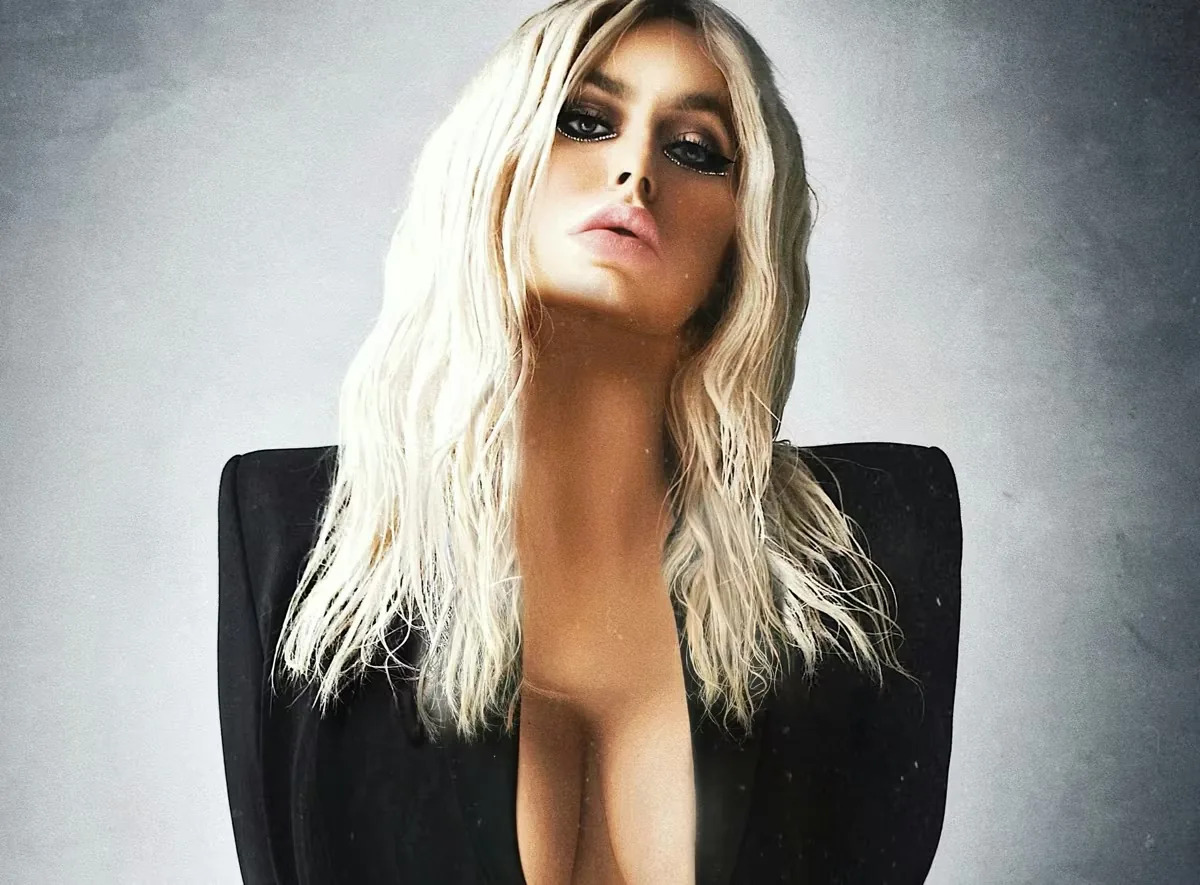

Listening back to this raw archival tape from Apr. 18, 2011, is like excavating a specific, volatile layer of pop culture history. The audio crackles with the sound of a career at a tipping point. Aubrey O'Day, fresh from the televised implosion of Danity Kane and the public firing by P. Diddy, was fighting her way back. This wasn't just an interview; it was a declaration of intent, captured in the middle of her promotional blitz for a new reality show and a solo single that had everything riding on it.
The entire comeback was pinned to one song: "Automatic". And hearing her talk about it now, you can feel the pressure. This was her shot. "It was the first song that I recorded going back into the studio as a solo artist," O'Day says, the relief and surprise still evident in her voice. "And it was before I really even had gotten through the mass of knowing what I like and don't like. And you know, sometimes you get it right in the first try."
It was a savvy choice for the time. The track was a slick piece of electro-pop, perfectly calibrated for a 2011 landscape dominated by the thumping beats of Lady Gaga and Britney Spears. It was commercial. It was safe. But for O'Day, the song’s core message was a form of rebellion against the hyper-stylized image she was known for.
She was adamant about its substance. "It's not about putting on the Louis Vuitton or the Jimmy Choo and, you know, putting on the tight dresses and looking hot," she explains. "It's about being able to walk into a room and automatically have everyone's attention no matter what you have on." This was her attempt to pivot from manufactured glamour to inherent star power. A bold claim for an artist still trying to prove she could exist outside the machine that created her.
The planned album, which she described as "urban pop" with "strong pop hooks", sounded like a perfect bridge from her Danity Kane past to a solo future. It was the right formula on paper. But the reality of the industry is that countless artists from successful groups have tried to make that leap, only to find the public's attention has a short memory. The album itself never materialized as planned, becoming a casualty of a difficult solo journey.
Interestingly, she wasn't quick to burn bridges with the group dynamic. When asked about the freedom of being solo, her answer was surprisingly measured. She spoke of the upside of having "four other really talented women that you could look to when you weren't sure of what artistic choices to make". It was a moment of genuine reflection, a rare admission from a new solo act that collaboration had its merits. It showed a maturity that the tabloids often ignored.
But you can't discuss O'Day in 2011 without addressing the ghost of Danity Kane. The breakup wasn't just a footnote; it was the entire prologue to her solo story. Her diagnosis of the group's failure is brutally honest and cuts right to the heart of the manufactured-pop experiment.
"We were just built on a rocky foundation and it was bound to collapse eventually," she states, the finality of the words hanging in the air. "And we weren't really built to succeed. And it was kind of a shock to everyone that we did, the people that we worked with." This wasn't just about creative differences. This was about a structure, overseen by Diddy's Bad Boy empire, that was seemingly designed for drama, not longevity.
I love the ability to have to trust your talent and to not depend on any smoke and mirrors... It really separates talented people from non-talented people.
The P. Diddy connection remained a powerful narrative tool. She confirms on the tape that for her reality show, All About Aubrey, she called him and left a message. And no, he never called back. This single act was a brilliant piece of television, framing her as the spurned protege trying to get closure from the indifferent mogul. It was a storyline that wrote itself.
That show was her primary weapon. In an era before Instagram stories and TikTok gave artists a direct line to fans, a reality docu-series was the only way to seize control of your own narrative. She knew it was a calculated risk, a necessary evil to undo years of caricature built by another TV show, Making the Band.
"I think I'm a very criticized person in general, and I think there are a lot of misconceptions about who I am," she says, the frustration palpable. "It was really important for me to really get to a place where I could show people who I truly was because I was feeling so defined by other people's words instead of my own." She was leveraging the very machine that defined her to redefine herself.
The only real critique one could level at the entire enterprise was that the music, while competent, felt secondary to the drama. "Automatic" was a solid pop song, but in a year saturated with hits, it lacked the undeniable, market-shattering hook required to launch a solo career of that magnitude. The comeback story was, for a time, more compelling than the soundtrack.
While fighting for a foothold in pop, O'Day wisely returned to her first love: the theatre. Her stints in Hairspray on Broadway and Jerry Mitchell's Peepshow in Las Vegas weren't just resume padders. They were a strategic retreat to a world that valued raw ability over industry politics.
"I love the ability to have to trust your talent and to not depend on any smoke and mirrors," she insists. "It really separates talented people from non-talented people." This was a direct shot at the studio trickery and lip-syncing prevalent in the pop world. On stage, eight shows a week, there is nowhere to hide. It was her way of reminding everyone, and perhaps herself, that she was a performer first.
Her distinction between Broadway and Las Vegas reveals a deep understanding of the performance world. She calls Broadway "iconic" and "historical", the place where true talent is validated. Vegas, by contrast, is about "glitz and the glamour" and the ability to "sell a crowd". It’s a sharp, accurate analysis that speaks to her experience in both demanding centres.
This desire for authenticity bled into her personal style. She championed a philosophy of defiant individualism. "I think the hottest trend is doing what you wanna do and not listening to trends," she declares. Fashion wasn't about fitting in; it was another tool for self-definition, a way to project the outrageous and dramatic persona she was cultivating on her own terms.
Of course, the most dramatic move of all was her 2009 Playboy cover. It was a classic gambit for a female star seeking to reclaim her image. She admits to the initial hesitation, but her reasoning is rooted in a defiant brand of self-expression. It was an honour, a chance to feel beautiful and to challenge the girl she used to be. The detail that her liberal parents were at the shoot, more excited than she was, completely upends the trope of the scandalous photoshoot.
Beyond the high-stakes career moves, O'Day was also an early adopter of direct fan engagement. In 2011, the idea of a celebrity personally calling fans for hours was almost unheard of. It wasn't a PR stunt; it was a genuine recognition that her fanbase was the only stable thing she had. "I think a lot of celebrities forget who's really giving them their money," she says. "It's the fans that are backing the product that you put out."
Looking back, this conversation captures a critical moment of struggle and ambition. It’s the sound of an artist refusing to be a footnote in someone else’s story. Aubrey O'Day was using reality TV, brazen photoshoots and a solid pop single to claw her way back into the spotlight, not as a band member, but as the main character. It was a messy, public and fascinating fight for survival.
519 Magazine Archive: We are thrilled to officially unearth the Rockstar Weekly Digital Vault. This isn't just a re-post; it's a high-fidelity restoration of a pivotal era in music journalism. By pairing original print dates with modern retrospectives, we’re bridging the gap between historical rock-and-roll grit and the lightning-fast performance of today’s web. These stories—once locked in physical print and lost URLs—are now back, fully searchable, and optimized for a new generation of fans.
We are thrilled to officially unearth the 519 Magazine Digital Vault. This isn't just a re-post; it's a high-fidelity restoration of a pivotal era in music journalism. By pairing original print dates with modern retrospectives, we're bridging the gap between historical rock-and-roll grit and the lightning-fast performance of today's web. These stories—once locked in physical print and lost URLs—are now back, fully searchable, and optimized for a new generation of fans.