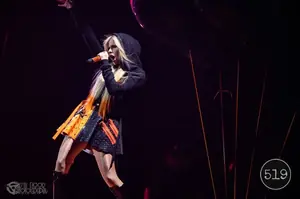
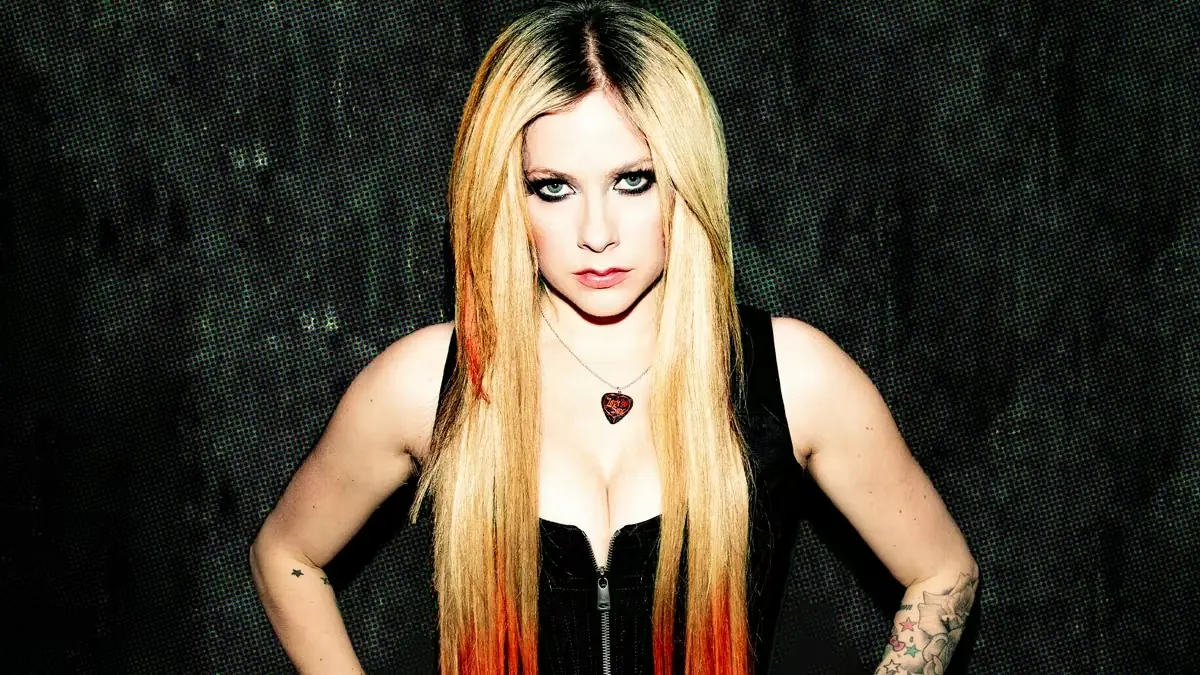

Looking at the raw transcripts from this March 2022 conversation with Avril Lavigne is to witness an artist perfectly in sync with a cultural boomerang. The pop-punk revival was in full swing and Lavigne wasn't just riding the wave; she was the deity the new generation had been praying to. Her seventh studio album Love Sux had just dropped a month prior a snarling unapologetic return to the skate park sonics that made her a global phenom 20 years earlier. This wasn't a comeback. It was a coronation.
The album was a blast of pure energy a direct response to the more somber and ballad-heavy territory of her previous work. And Lavigne herself was clearly buzzing from the feedback loop of creating and performing this kind of music again. It was a reclamation of a sound she helped pioneer. She was having fun again and it was infectious.
She tells 519 Magazine, “I think it's just some of my favorite music to play. It's just, like, rock and roll music, and it was, like, it's like, it's just so it's the vibe I've carried with me, like, throughout my career on all the albums.” But she admits a deliberate pivot was at play. “after the last album, especially, I was just like, alright. I just wanna have fun and make a good rock record.” It was a mission statement and a promise delivered.
The album’s title is pure unadulterated Lavigne a thesis she’s been exploring since she first tied a necktie over a tank top. But the million-dollar question remains: does love really suck? Her answer in 2022 revealed a nuanced perspective one forged over two decades in the public eye. This wasn't the simplistic angst of a teenager. This was the conclusion of a seasoned veteran.
“It can. It does, and then it doesn't, and then it does,” she explains. “Like, I think love is like, it can be beautiful, but it can be hard, and it can be heartbreaking. And most of the time, it doesn't end very well. But it's also worth it to take that chance and to take a shot at love and to experience that than to have not.” It’s a beautifully complicated sentiment that gives the album’s bratty exterior a surprising depth.
That emotional core was established from the very first writing session. The album’s direction wasn’t a marketing ploy cooked up in a boardroom; it was born from genuine heartbreak. The title track set the tone for everything that followed creating a focused and cohesive project that felt both authentic and immediate.
“Love Sux was, like, the first song that I wrote,” Lavigne reveals. “I was feeling, like, very, like, jaded on love. I had just gotten out of a breakup. And, like, in the studio, I have to, like, sort of talk about that and be open, and so that set the tone for, like, writing all the songs.” This singular focus is the album's greatest strength a tight 33-minute barrage of hooks and attitude.
But let’s ground this in reality. While Love Sux is a masterclass in brand consolidation and a thrilling listen for long-time fans it doesn't necessarily break new ground. It’s an expertly crafted homage to her own legacy leaning on the sonic architecture of Let Go and The Best Damn Thing. It’s less an evolution and more of a powerful reaffirmation a move that solidified her influence but didn't expand her artistic palette in a significant way.
I was just being myself. Like, I didn't even, like, think about it. Like, I was just like, okay. I'm right about what I'm going through, and, like, I didn't hold back.
And that influence is undeniable. At the time of this interview a new generation of artists was openly citing Lavigne as a foundational inspiration. She effectively broke the pop mold of the early 2000s offering an alternative to the polished choreography and manufactured personas of her peers. She was just a girl from Napanee Ontario with a guitar and something to say.
Her recollection of that period is telling. “I was just being myself. Like, I didn't even, like, think about it,” she says of her trailblazing impact. “I was just like, okay. I'm right about what I'm going through, and, like, I didn't hold back. And, like, you know, I was, like, expressing, like, frustration and anger and angst as a teenager. You know? And just, like, that's real.” That realness became her superpower.
It also forced her into an early battle for artistic control. The industry machine saw a marketable face and tried to feed her pre-packaged pop songs. Her refusal was a defining moment a line in the sand that established her as an artist not a product. This fight is the bedrock of the entire Avril Lavigne story.
“I had to, like, push and fight for that and, like, won that battle,” she states plainly. “Because, like, people were giving me songs that were already written, they were, like, so bad. And I would, I was just like, I'd have to sing them, and I'd be in the worst mood. Like, this is so not cool at all.” Her search for collaborators who got it led her to The Matrix and Cliff Magness and the rest is music history.
Comparing that frantic beginning to her process now reveals the calm confidence of experience. The girl living out of a suitcase in a hotel was gone replaced by a woman fully in command of her craft and her career. The discovery phase is over. Now it's about execution.
“I know who I am,” she says, reflecting on the contrast. “Back then, I was, like, trying to discover, like, grow into who I was musically and even, like, as a woman because I was just a teenager. But now... I'm more mature, and I have a lot of life experience that I pull from. And, yeah, I think everything's kinda, like, easier now.”
This comfort extends to her playful side which is on full display in songs like “F.U.” Her affinity for a certain four-letter word is more than just rock-and-roll posturing; it’s a part of her personality tattooed on her body multiple times. “To have a song called 'F.U.' is very natural for me,” she laughs. “Probably one of my favorite words is fuck.”
With seven albums of material the challenge shifts from filling a setlist to curating it. It’s a problem most artists dream of. For Lavigne it’s a journey that has come full circle recalling a formative concert experience from her early days on the road.
“I remember seeing Green Day play live, and they were just, like, playing, like, all hits,” she remembers. “I was so frustrated making my set list and, like, kind of annoyed because I only had three singles. And I was like, I can't wait till, like, my whole set list is all singles, like, Green Day. And now here I am. Like, literally, I walk on stage, and every song is a single.”
Beyond the music this interview also touched on her ambitions in Hollywood specifically the long-discussed film adaptation of her iconic hit “Sk8er Boi.” At the time the project was in active development with Lavigne taking a hands-on role as a producer. It was positioned as her entry point into a new creative field.
“It is being developed currently, and the script is being written,” she confirmed. “We have a director that we're working with and a production team, and I'm producing it and developing it. And I'm really excited to get into film.” While the project seems to have stalled since 2022 the ambition remains a fascinating footnote from this era a sign that even 20 years in she was still looking for new worlds to conquer.
Ultimately this conversation captures a pivotal moment of reflection and resurgence. It’s Avril Lavigne owning her legacy understanding her impact and still cranking up the volume. She wasn't just revisiting the sound that made her famous; she was reminding everyone that she never really left.
519 Magazine Archive: We are thrilled to officially unearth the 519 Magazine Digital Vault. This isn't just a re-post; it's a high-fidelity restoration of a pivotal era in music journalism. By pairing original print dates with modern retrospectives, we’re bridging the gap between historical rock-and-roll grit and the lightning-fast performance of today’s web. These stories—once locked in physical print and lost URLs—are now back, fully searchable, and optimized for a new generation of fans.
We are thrilled to officially unearth the 519 Magazine Digital Vault. This isn't just a re-post; it's a high-fidelity restoration of a pivotal era in music journalism. By pairing original print dates with modern retrospectives, we're bridging the gap between historical rock-and-roll grit and the lightning-fast performance of today's web. These stories—once locked in physical print and lost URLs—are now back, fully searchable, and optimized for a new generation of fans.