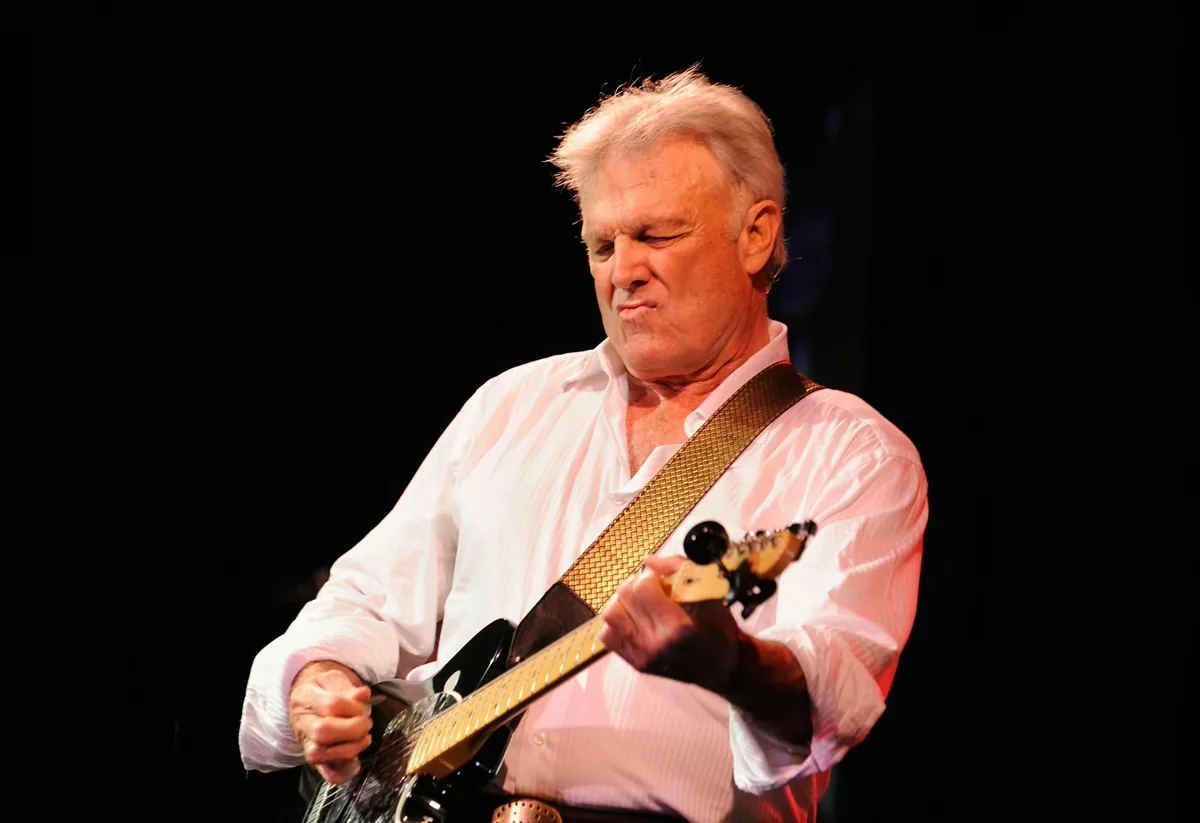

Looking back at these archival tapes from Apr. 13, 2011, there’s a raw, unvarnished quality you just don't get anymore. The interview starts with a missed connection, an answering machine message. It’s a relic. Then the phone rings, and it’s Tommy Roe himself, casual and apologetic. “I was playing with my guitar and I just missed the call,” he says, his voice relaxed. It’s the perfect, unassuming entry point into the story of a man who stumbled into fame, toured with The Beatles before they were The Beatles and defined a genre he never asked for.
By 2011, Roe was already five years into what he called a retirement, a term he used loosely. “When you retire in show business, that’s kind of a joke,” he explains. “It’s more like a sabbatical, I guess you could call it.” But this wasn't some diva-like retreat. It was a practical decision born from industry exhaustion. The grind of post-9/11 air travel, with its heightened security and logistical nightmares, had worn him down. For an artist who always flew commercial, hauling a band and gear across continents became an unbearable labour. The stage was never the problem. It was always about getting there.
His entire career feels like a series of happy accidents, beginning with his first and most enduring hit. The story behind “Sheila” is pure Americana. He wrote it as a poem for a high school crush named Freda when he was just 14. “My father taught me a few chords on the guitar and I thought, you know, I think I’ll put some music to my poem and then I’ll be a songwriter,” Roe recalls. A producer, hearing the demo, liked the melody but hated the name. “Freda” became “Sheila” and a career was born. The song was a local hit in Atlanta but the national breakout came later.
And it almost didn't happen. By 1962, Roe was 20 years old, married with a child and working a steady job at General Electric. He was a responsible adult. Show business was a dream, not a plan. He heard “Sheila” on the local Atlanta stations but didn't grasp its national momentum until his producer called him at work. “He said, ‘You know, Tommy, you need to think about quitting your job at General Electric.’ I was totally against it. I said, ‘You gotta be nuts, man.’”
The producer’s persuasion was brutally effective. He invited Roe to his office and showed him the charts: “Sheila” was number 40 in Billboard with a bullet. Roe didn’t even know what that meant. Then came the cheque. “He reached over in his desk and got his checkbook and he wrote me a check for $10,000,” Roe says, the astonishment still present in his voice decades later. In 1962, that was an astronomical sum, more than he or his father made in a year. The decision was made. The GE job was history.
What’s fascinating is that Roe never chased the spotlight. He was inherently shy, initially seeing himself as a behind-the-scenes songwriter. “I thought, well, maybe I’ll just write songs for other artists and have them record my songs and just be a songwriter and kinda be in the background,” he admits. The industry had other plans. The ballroom tours across the Midwest became his training ground, forcing him to overcome his shyness and learn how to command a stage. It was a baptism by fire, a necessary evil that forged a performer out of a writer.
Then came England. In 1963, Roe and Chris Montez, who were riding high on the charts with “Sheila” and “Let’s Dance” respectively, embarked on a UK tour. The twist? The opening act, a local Liverpool band just starting to make noise, was The Beatles. “Nobody knew who the Beatles were in 1963,” Roe states. “They were just starting out in England. And in America, nobody knew them at all.”
The tour was a logistical and artistic nightmare for the headliners. You simply could not follow The Beatles. The fan reaction was so frenzied, so utterly chaotic, that the show was dead the moment they left the stage. “It was just impossible because, you know, you couldn’t follow them,” Roe says. “Once they went on stage, the audience went so crazy.” The tour lineup was quickly reshuffled, with The Beatles moving to the closing slot. Roe became one of a handful of artists who could legitimately say The Beatles opened for him, even if it was only for a few dates.
He picks up the needle and looks at me and said, ‘I’ll tell you what, kid. That’s the worst piece of crap I’ve ever heard. Let us be the talent scouts. You be the writer and the artist.’
Armed with this firsthand knowledge of the coming storm, Roe returned to the States as a prophet without honour. He walked into the offices of his label, ABC-Paramount, with a Beatles album and a bio, a package given to him by Brian Epstein. He pitched them to the president of the company. The reaction was swift and brutal. After seeing the album cover and hearing a few bars, the executive dismissed them completely.
Roe's recollection of the moment is a legendary piece of music history. “He picks up the needle and looks at me and said, ‘I’ll tell you what, kid. That’s the worst piece of crap I’ve ever heard. Let us be the talent scouts. You be the writer and the artist.’” Six months later, The Beatles owned the world and the executives at ABC-Paramount were running the other way whenever they saw Tommy Roe walking down the hall. It was one of the biggest fumbles in industry history.
While his contemporaries were washed away by the British Invasion, Roe survived. His secret was simple: he wrote his own material. That creative control allowed him to adapt. He saw what was happening in England and deliberately shifted his sound. Songs like “Dizzy” were a product of this evolution. He and co-writer Freddie Weller built the song around a jarring modulation in the first two bars, a technical trick that gave it an infectious, off-balance feel. It was pop craftsmanship disguised as simple fun.
This led to the “bubblegum” label, a tag he was branded with by DJs. But Roe never saw it as an insult. In fact, he embraced it. “I was called the king of bubblegum,” he says with a laugh. “If it makes people happy, how can that be all bad?” He saw the direct lineage from his sound to bands like The Archies and, in a sharp observation for 2011, to the teen pop of the day. “Justin Bieber is a bubblegum artist. They will never call him that, but that’s what he is.”
Beyond the creative side, Roe was uncommonly savvy about the business of music. He understood the brutal economics of royalties, a topic that still trips up artists today. He lays out the truth of the industry with stark clarity. “The songwriter is protected more than the singer, more than the artist,” he explains. He watched as artists racked up millions in debt to their labels through recording costs and tour support, money they had to recoup before seeing a dime in royalties.
Because Roe wrote his own hits, he got paid from day one on publishing. “A songwriter gets money from day one,” he confirms. “If that album sells 100,000 albums, then he gets paid for 100,000 albums on that one song.” This financial independence is the untold story of his longevity. While others were fighting for their earnings, Roe was cashing cheques. He played the game and won.
His only real regret seems to be the rerecordings he did for labels like K-Tel. It's a common pitfall for legacy artists, but Roe is brutally honest about the results. “Once you try to rerecord a hit song, it will never have the magic of the hit. I mean, the hit is magic and you can’t recreate it,” he states. It’s a moment of critical self-awareness. He knows those versions are out there and wishes they weren't, a testament to his respect for the lightning-in-a-bottle nature of the original sessions.
The interview is peppered with memories of his peers, like the quiet and introverted Roy Orbison. He describes a man who was reserved backstage but exploded into a “super personality” onstage. The anecdotes aren't wild tales of rock and roll debauchery but small human moments, like eating peanuts backstage at the Dothan, Alabama Peanut Festival. It paints a picture of a working musician’s life, far from the glamour many imagine.
Eventually, the conversation turns to his personal life, specifically meeting his wife, the actress Josette Banzet. It’s another story of fate, seeing her in a parade on television in Atlanta a year before they were introduced at a rehearsal in Los Angeles. It’s a sweet, grounding coda to a life lived in the unpredictable whirlwind of the music industry.
Listening to this old tape, you hear a man at peace with his legacy. Tommy Roe was never the edgy rebel or the critics' darling. He was a craftsman who wrote indelible pop hooks that made people smile. He navigated a treacherous industry with intelligence and foresight, survived the British Invasion he tried to kickstart in America and ended up with a career and life he wouldn't change. He wasn't just the King of Bubblegum. He was a survivor.
519 Magazine Archive: We are thrilled to officially unearth the Rockstar Weekly Digital Vault. This isn't just a re-post; it's a high-fidelity restoration of a pivotal era in music journalism. By pairing original print dates with modern retrospectives, we’re bridging the gap between historical rock-and-roll grit and the lightning-fast performance of today’s web. These stories—once locked in physical print and lost URLs—are now back, fully searchable, and optimized for a new generation of fans.
We are thrilled to officially unearth the 519 Magazine Digital Vault. This isn't just a re-post; it's a high-fidelity restoration of a pivotal era in music journalism. By pairing original print dates with modern retrospectives, we're bridging the gap between historical rock-and-roll grit and the lightning-fast performance of today's web. These stories—once locked in physical print and lost URLs—are now back, fully searchable, and optimized for a new generation of fans.