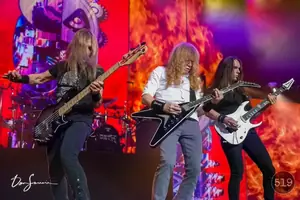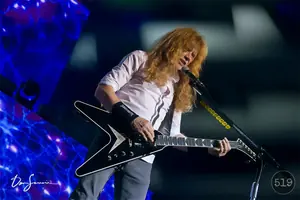
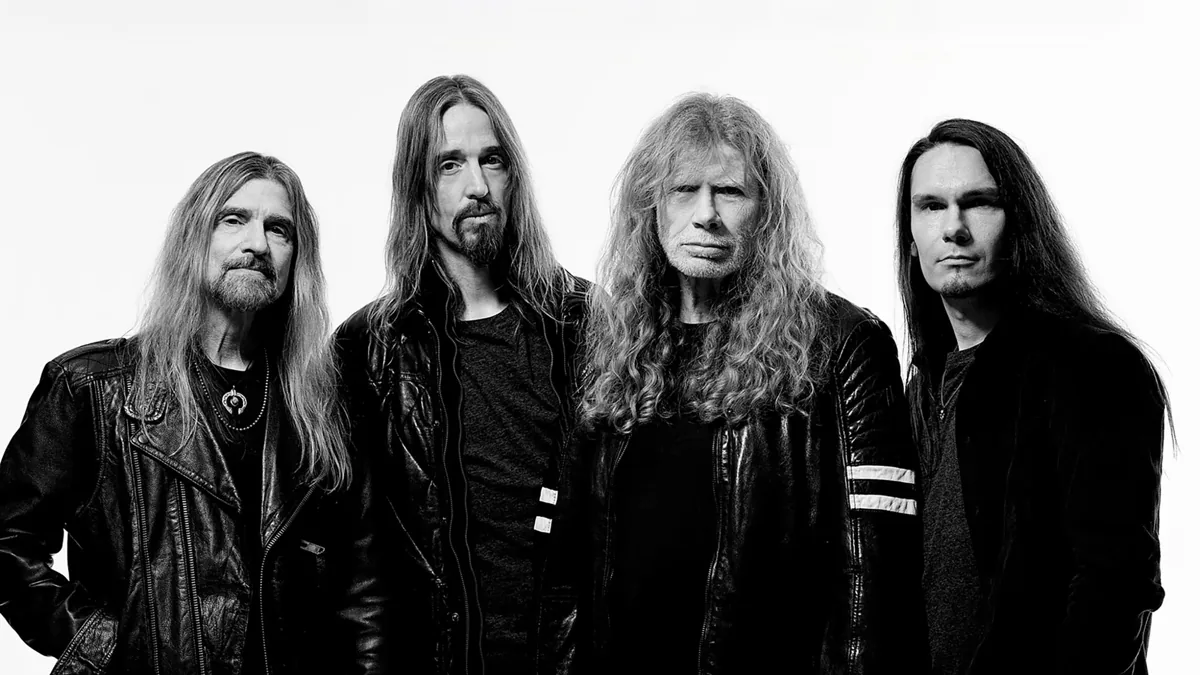

Looking back at these archival tapes from Jan. 10, 2011, is a fascinating exercise. The digital hiss captures a very specific moment in time for Megadeth and for metal itself. David Ellefson had been back in the fold for less than a year, the triumphant Rust in Peace 20th anniversary tour was a global victory lap and the impossible Big Four shows had finally become a reality. And yet, the first thing on Ellefson’s mind during this call was a laser-based interactive music system called Beams. It’s a strange, almost forgotten footnote that speaks volumes about the creative restlessness of a musician finding his footing once again.
Beams was a peculiar piece of tech for its time. It wasn't quite a video game and it wasn't quite a digital audio workstation. It was something in between, a product born of early interactive media ambitions. Ellefson, ever the articulate spokesman, lays it out clearly. “Beams is a company that has a musical interactive apparatus that operates with laser beams by waving your hand through the beam and essentially breaking the beam,” he explains. “You trigger a sound and... you trigger a different instrument.”
He’d composed a series of short musical vignettes, dubbed Metal Factory, specifically for the platform. But he’s quick to manage expectations, a recurring theme for a man navigating a return to one of the most scrutinized bands on the planet. This wasn't a proper solo record. “This isn't a solo album,” he insists. “It’s not like an outing like that. These tracks are all composed specifically for use with the Beams apparatus.”
You have to admire the ambition. The goal, as Ellefson saw it, was to empower the user. It was about deconstruction and fan creativity. “I may have provided the impetus for the listener or for the user's creativity so that they can do something extra with it as well and truly make it their own,” he says. The idea was that fans could use his bass track, add their own parts, create ringtones or upload their creations to MySpace. MySpace. That really dates the tape.
But let’s be direct. The project was a commercial non-starter. While Megadeth was dropping Grammy-nominated tracks like “Sudden Death” for the colossal Guitar Hero franchise, Beams felt like a garage-level experiment. It was a noble concept that lacked the slick interface and mass-market appeal of its gaming counterparts. The critique here isn't of Ellefson's music, but of the vehicle. It was an interesting idea that, in retrospect, was destined for obscurity in a market already dominated by Harmonix and Activision.
The real story here, the one simmering under the surface of the tech talk, is Ellefson’s re-entry into the Megadeth war machine. His return wasn't just a simple lineup change; it was a seismic event for the fan base. And the way it happened was pure industry chaos, a perfect storm of chance and timing. He confirms the long-standing rumour of how it all went down.
“There was this unique opening that happened because Megadeth and Slayer were supposed to do the American Carnage tour and then the bass player for Slayer, Tom Araya, had to postpone the tour due to a back surgery,” Ellefson recalls. “And that essentially kept Megadeth off the road for about six weeks at which point that opened the door really for me to come back.” It’s a stark reminder of how much of this business relies on sheer luck. One man’s unfortunate injury became another’s golden opportunity.
Guitar Hero and Rock Band... really exposed a much younger audience to our music... there was this newfound discovery of thrash metal, and that really helped revive it again.
Ellefson argues his years away were crucial. He wasn’t just sitting on his hands. He was playing different styles writing with different people and fundamentally expanding his musical vocabulary. “I think it made me a much better bass player coming back into Megadeth because I wasn't just playing one style of music,” he states. This is no mere platitude. You could hear it in his playing on that Rust in Peace tour. There was a renewed precision and a palpable fire that had been missing.
That anniversary tour became the engine for the band’s second act. What was planned as a one-month run exploded into a global phenomenon. “All of a sudden, the response around the world was, you know, please play Rust in Peace in South America. Please play it in Europe. Please come to Australia,” he says. It was proof that the classic chemistry wasn't just nostalgia; it was vital and potent. It put, as he says, “a lot of wind in the sails of Megadeth through 2010.”
This conversation also captures the turning of the cultural tide for thrash metal. Ellefson provides a sharp analysis of the genre's near-death in the '90s and its slow, steady revival. “Megadeth survived where a lot didn't quite honestly,” he admits, reflecting on the grunge and nu-metal eras. He credits the cyclical nature of culture and, critically, the influence of video games for bringing their complex, guitar-driven sound to a new generation.
“Guitar Hero and Rock Band... really exposed a much younger audience to our music,” he notes. “What they really liked about it is that it had this really ferocious guitar playing and was musically very complex. And that was a style of music that the kids listening to modern rock and radio music, they weren't hearing that anymore.” He was absolutely right. The games didn't just feature the music; they taught a new generation to appreciate its technicality.
Of course, the elephant in the room is always his relationship with Dave Mustaine. When asked if things are different, his answer is diplomatic and insightful. “I look at it more as an evolution rather than everything just being different because there's some things in how Megadeth just works that Dave and I just understand.” He also gives significant credit to drummer Shawn Drover for being a fan who ‘gets it’ and to guitarist Chris Broderick for his monstrous talent, creating a stable core that allowed the machine to function.
Then there was The Big Four. For fans, it was a dream bill. For the bands, it was a coronation. “It was just a huge statement for all of us as a genre,” Ellefson says. “It was the uniting.” He astutely points out the secret to its success: the four bands are wildly different. “We're also four bands who are very different from each other. And I think that's what's cool about it... you see a really vast array of music from every band.” It wasn’t a one-dimensional night of thrash; it was a showcase of its breadth and history.
The conversation then takes a deeply personal turn, shifting to his Christian faith and Mega Life Ministries. This is Ellefson the man, not just the bassist. He speaks with a raw honesty about his past struggles with addiction and how his faith became his anchor. “I had a pretty hard run with drugs and booze and all that stuff, which was a lot of fun initially, but it had its way with me and I got cleaned up,” he confesses. “And that really began my journey of coming back to get right with God and the people around me.”
His approach to ministry is refreshingly devoid of proselytizing. He recalls the hardline ‘us versus them’ attitude of Christian music in his youth and his rejection of it. Now, he sees his role differently, using his platform to connect with fans who might be in a dark place. He’s not there to preach. It’s a powerful and humble mission statement: “I try to mostly be in a position to be an attraction rather than a promotion of it.”
Finally, the interview closes with a look toward the future: the next Megadeth album, which would become 2011’s Thirteen. At the time, it was just a collection of ideas. “I know that the 20th anniversary Rust in Peace tour will definitely have an impact on what the next record's gonna sound like,” he predicts. Listening back, you can hear the hope and the renewed creative energy. This was Megadeth reborn, standing on the shoulders of its past while tentatively stepping into a new decade, with its prodigal son firmly back in place.
519 Magazine Archive: We are thrilled to officially unearth the Rockstar Weekly Digital Vault. This isn't just a re-post; it's a high-fidelity restoration of a pivotal era in music journalism. By pairing original print dates with modern retrospectives, we’re bridging the gap between historical rock-and-roll grit and the lightning-fast performance of today’s web. These stories—once locked in physical print and lost URLs—are now back, fully searchable, and optimized for a new generation of fans.
We are thrilled to officially unearth the 519 Magazine Digital Vault. This isn't just a re-post; it's a high-fidelity restoration of a pivotal era in music journalism. By pairing original print dates with modern retrospectives, we're bridging the gap between historical rock-and-roll grit and the lightning-fast performance of today's web. These stories—once locked in physical print and lost URLs—are now back, fully searchable, and optimized for a new generation of fans.