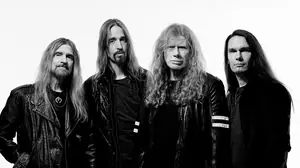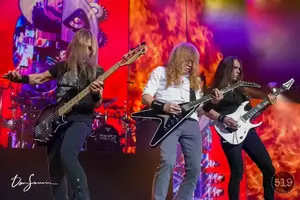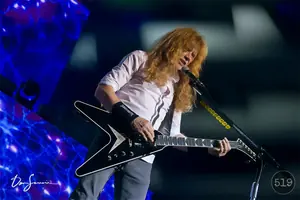
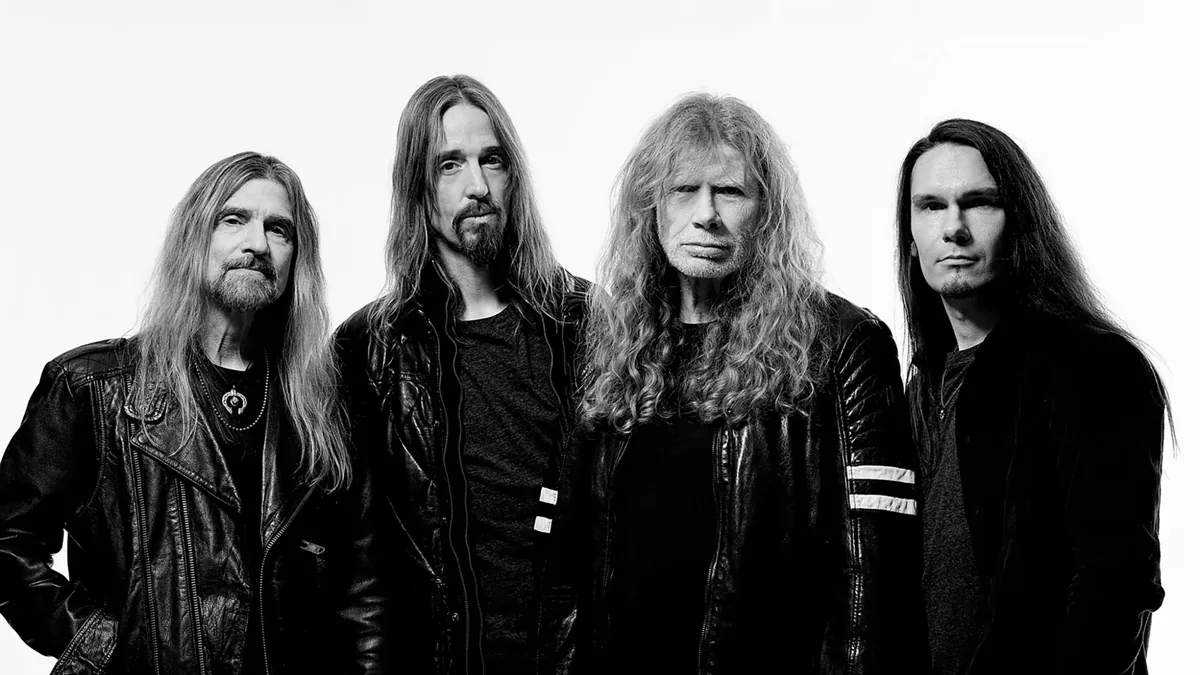

Listening back to these archival tapes from 2012, there’s a raw honesty in David Ellefson’s voice. It was the twenty-fifth anniversary of Peace Sells… but Who’s Buying?, an album that wasn’t just a record but a declaration of war on the Sunset Strip glam scene and a definitive statement in the thrash metal arms race. Time flies. But for Megadeth, that flight was turbulent, fuelled by ambition and desperation.
Ellefson recalls the moment with a certain detached wonder. “I don't feel 25 older,” he says, reflecting on the period. “Those were exciting times because it was our first major label album. And to finally feel like we're lifting off and be up into the majors was such a cool, fun process.” It’s easy to forget the context now, but in 1986, a band this aggressive getting a Capitol Records deal was a seismic event. The majors were still chasing the next Mötley Crüe, not four guys who looked like they’d just crawled out of a back alley.
But the bravado of the music belied the grim reality of their lives. “At the end of the day, we were still just this little band called Megadeth,” Ellefson notes. “We're a little band with a big name. And now we hear all these years later, and it's like we finally grew into our name, I guess.” That name was born from Dave Mustaine’s acrimonious split from Metallica, a shadow that would loom large for years.
The band that made Peace Sells was not a comfortable, well-funded machine. They were, in Ellefson’s words, broke and homeless. After a short North American tour for Killing Is My Business… and Business Is Good! with Canadian label mates Exciter, they returned to Los Angeles with nothing. The frustrations with their indie label, Combat Records, were boiling over. Combat was a legendary name in the underground, but it lacked the infrastructure to support a band with Megadeth’s global ambitions.
“Our hopes were so high,” Ellefson explains, “but the realities of being with a little indie label is they're just not set up to support the life of a big rock band.” So the writing sessions for one of thrash metal’s cornerstone albums took place in a downtown LA rehearsal space. It was a space that doubled as a home, with Ellefson, Mustaine and guitarist Chris Poland taking turns living there.
This wasn't just artistic angst. This was genuine, gut-level survival instinct channelled into music. They were street urchins, as he puts it, and that environment bled directly into the grooves of the record. The pre-production for the album was, unconventionally, a three-week tour on the East Coast in January 1986. They were road-testing the material in real time, and the reaction was immediate.
“Every night, we could tell that with the reaction to ‘Peace Sells… but Who's Buying?’, we knew we had a hit on our hands,” he says. That feedback loop was critical. It confirmed their instincts and solidified the arrangement of what would become their signature song and an MTV staple.
The album was initially recorded for Combat with producer Randy Burns. But fate, and a savvy A&R man from Capitol, intervened. After a show at Irving Plaza in New York City, a bidding war erupted. Capitol Records won, buying out their contract and the master tapes for Peace Sells. This was the big league.
It's interesting when you make an album when you know you've got nothing to lose versus making an album when you know you've got everything to lose. And Peace Sells was one of those where we just put everything we had on the line.
Capitol’s first move was to bring in Paul Lani to remix the album, to give it what Ellefson calls a “major label polish.” That polish included one of the most iconic and accidental hooks in metal history. “He actually is the one who in the chorus of ‘Peace Sells,’ he's the one who actually muted the band,” Ellefson reveals. “We actually recorded through that, but it was a mix move that he did. And, essentially, that helped be the final exclamation point to that song really becoming a big hit song for us.” It’s a classic case of a studio decision, a simple flick of a mute button, defining a song’s identity forever.
The album’s power isn’t just in its production tricks. It’s in its very DNA. “You can hear the hunger and the anger and just everything about our lives at that time really comes through. It's a dark album,” Ellefson insists. He points to a specific technical detail: the tuning. “The album is tuned down. If you use a Peterson Strobo tuner and you tune it 50¢ flat, basically, that's what tuning is. It's somewhere between an E and an E flat. And so it has this dark resonance about it.” That subtle shift gave the riffs a heavier, more sinister colour.
This was the sound of a band with absolutely nothing to lose. “It's interesting when you make an album when you know you've got nothing to lose versus making an album when you know you've got everything to lose,” he muses. “And Peace Sells was one of those where we just put everything we had on the line, which we didn't have much except our songs, our music, and our attitude.”
That attitude put them squarely in the crosshairs of the PMRC. With a major label push came major label scrutiny. The infamous Parental Advisory sticker was slapped on the cover, a move driven by Tipper Gore’s moral crusade. For a band built on anti-establishment rhetoric, it was less a punishment and more a validation. “To some degree, getting an explicit lyric stamp on your album was actually a badge of honor,” Ellefson states. It was free marketing to their target audience.
Of course, no conversation about early Megadeth is complete without addressing the Metallica feud. Ellefson is candid about how the media fanned the flames. “I remember sitting in interviews and people would walk in and that'd be the first question... and it would totally slant and change the entire mindset of the interview,” he recalls. “That would just set off a tirade... which again gave the media and the fans even more stuff to talk about. So it was sort of this self-perpetuating flame that turned into a roaring inferno.”
But Peace Sells was the turning point. It was the album that allowed Megadeth to finally begin to escape Metallica’s colossal shadow. It proved Mustaine wasn’t just a jilted ex-member but a brilliant songwriter and bandleader in his own right. This album, along with the work of their peers, laid the foundation for what would eventually be canonized as The Big Four: Metallica, Megadeth, Slayer and Anthrax.
The interview, conducted in 2012, also touches on Ellefson’s then-recent return to the band after a bitter, years-long estrangement from Mustaine. His perspective is one of hard-won maturity. The feud wasn't just about business disagreements. It was personal. “I think it was bad only because there was no communication between me and him,” he admits. The healing process began not in a studio, but over dinner, years before he would even rejoin.
He speaks about the corrosive nature of broken relationships within a band. “Sometimes you can be in bands and live and stand five feet from each other for twenty four hours out of a day and not even be friends with each other,” he says. “And when that starts to happen, that's when the real joy of being in a band... starts to erode. Bands are doomed when that happens.” Rebuilding that friendship was the prerequisite for rebuilding the band.
His time away, from 2002 to 2010, was not a hiatus but a period of profound growth. He wasn’t just the bass player from Megadeth anymore. He was a session musician, a songwriter, a husband and a father. “It made me a much better musician,” he reflects. “I think it shaped my character a lot better because I didn't have to, you know, be a guy in a band. I was able to just kinda be myself, and I got to grow up a little bit.”
Coming back wasn't about nostalgia. It was about bringing a more complete version of himself back into the fold. The timing was perfect, leading into the twentieth anniversary tour for Rust in Peace. It gave the reunited core a chance to get reacquainted on stage, celebrating their legacy before diving into the pressure of creating a new album, which would become Thirteen.
It was a smart move. As Ellefson puts it, creating music is an intimate, awkward process. “It's like a drop your trousers, show me yours kind of thing.” Jumping straight into that would have been a mistake. The tour allowed them to rebuild chemistry and camaraderie first.
Looking back at this conversation, what stands out is the perspective that only time can provide. The anger and hunger of Peace Sells were real, the products of a specific, desperate time. But the wisdom Ellefson shares comes from surviving that inferno, rebuilding bridges and understanding that the music, in the end, is secondary to the human connections that create it.
519 Magazine Archive: We are thrilled to officially unearth the Rockstar Weekly Digital Vault. This isn't just a re-post; it's a high-fidelity restoration of a pivotal era in music journalism. By pairing original print dates with modern retrospectives, we’re bridging the gap between historical rock-and-roll grit and the lightning-fast performance of today’s web. These stories—once locked in physical print and lost URLs—are now back, fully searchable, and optimized for a new generation of fans.
We are thrilled to officially unearth the 519 Magazine Digital Vault. This isn't just a re-post; it's a high-fidelity restoration of a pivotal era in music journalism. By pairing original print dates with modern retrospectives, we're bridging the gap between historical rock-and-roll grit and the lightning-fast performance of today's web. These stories—once locked in physical print and lost URLs—are now back, fully searchable, and optimized for a new generation of fans.