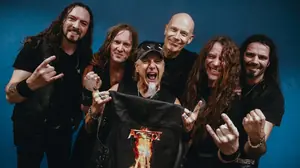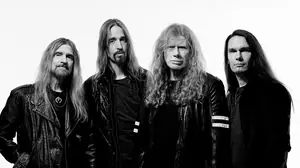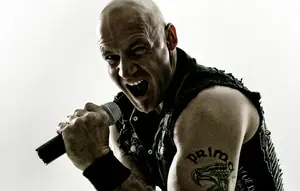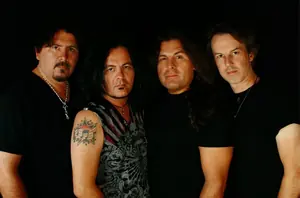
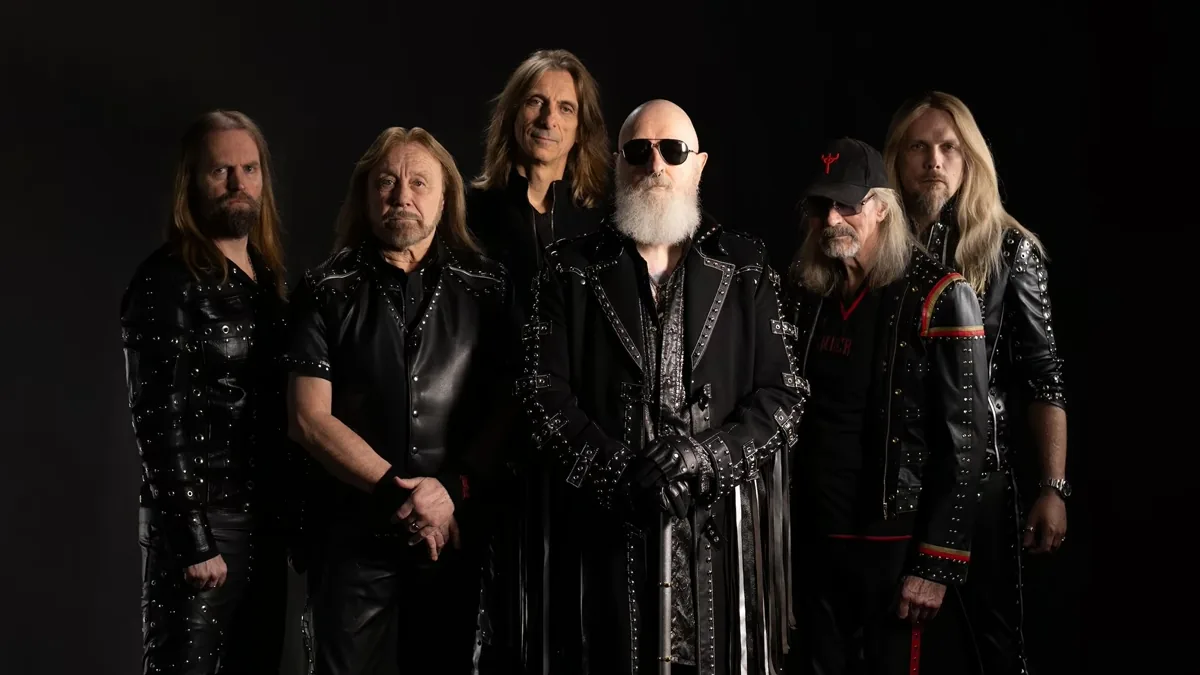

Looking at the raw transcripts from this August 2018 conversation with Ian Hill feels like tapping into a specific moment of defiance. Judas Priest had just unleashed Firepower, an album that had no business being as virile and critically lauded as it was. For a band staring down its 50th anniversary, this wasn't just another record; it was a declaration. They weren't a legacy act. They were a vital force. And Hill, the band’s anchor since the very beginning, laid out the blueprint for their late-career renaissance with his characteristic understated authority.
The album’s success wasn't an accident. It was a calculated production choice that bridged two distinct eras of metal. Hill explains the band’s decision to bring in outside producers for the first time in ages, a move that proved utterly brilliant. “We decided this time around to take on producers,” he says. “And, of course, Tom Allom’s name always pops up... And we also wanted a more modern edge, you know? So we knew Andy Sneap by reputation.”
This wasn't just hiring two guys. It was a fusion of ideologies. Tom Allom was the architect of their classic '80s sound, the man behind the board for monolithic works like Screaming for Vengeance and Defenders of the Faith. Andy Sneap was, and is, the go-to producer for modern razor-sharp metal. Pairing them with engineer Mike Exeter was a masterstroke, a deliberate effort to honour their legacy while refusing to be entombed by it. It was a direct answer to the question of how a classic band can sound contemporary without sounding desperate.
But the real magic of Firepower happened before the faders were even touched. It was about capturing a feeling, not just a performance. Hill details a fundamental shift in their recording process, one that pulled them away from the sterile precision of modern production. It was about getting back to the basics of five guys in a room.
“For the first time in ages, we actually went in the studio and played as a band live,” Hill recalls. “We ditched the click track, you know, and just let the songs flow as you go along.” This is the kind of detail that separates the good from the great. In an era where metal albums can often feel surgically assembled and quantized to soulless perfection, Priest chose to embrace the human element.
Hill’s analysis is sharp. He says this approach “gave it life, you know, gave it a soul rather than, like, a sort of very precise, but very sort of mechanical, you know, chunk chunk chunk chunk chunk.” That slight push and pull, the imperceptible shifts in tempo, is what makes a track breathe. It’s the difference between a machine and a monster. And Firepower is a monster.
This drive to create something with soul speaks to their larger philosophy of survival. Hill is acutely aware that many of their '70s and '80s peers have settled into being nostalgia circuits. Priest has actively resisted that fate. “It's something that we've, you know, we've always been current. We've always tried to take a step forward as well with everything we do,” he states. “And it's kept us relevant.”
The proof is in the crowd. While many veteran bands play to a sea of grey hair and faded tour shirts, Priest has cultivated a new generation. “If you look down at the first five, six rows, they're all young faces, which is great news,” Hill notes. It’s a direct result of remaining a creative entity, not just a human jukebox. Young fans don't just want to hear the classics; they want to be part of a living breathing scene.
Richie, I think, is largely responsible for injecting a whole new energy and and enthusiasm into the band. You know? And hence, we next thing you know, we're back in the studio again, you know, doing another record.
The band's adaptability extends beyond the studio. Hill’s take on the music video for “Lightning Strike” is a pragmatic look at a transformed industry. He remembers the old days of excess, where you’d “spend days and hundreds of thousands of dollars just to do a three minute video.” Now, he astutely observes, the game has changed entirely. The barriers to entry are gone and the distribution channels are infinite. It's about getting the art out there quickly and effectively, a lesson many of their contemporaries failed to learn.
That same blend of classicism and modernity is visible on the album’s cover. The artwork by Claudio Bergamin is a perfect visual representation of the music within: bold, simple, and instantly iconic. Hill mentions their longtime collaborator Mark Wilkinson, whose art is “very, very detailed, very intricate.” But for Firepower, they needed something else. “As soon as we saw it, it was comparatively simple, straight in your face, and sort of perfectly embodied the album title,” he says. They knew exactly what the project demanded.
Of course, this entire era of renewed vigour is built on a history of near-misses and dramatic shifts. The infamous Epitaph world tour almost a decade prior was meant to be a slowdown, a farewell of sorts. But one personnel change rewrote their entire future. The arrival of Richie Faulkner in the wake of K.K. Downing’s retirement was the catalyst.
“Richie, I think, is largely responsible for injecting a whole new energy and enthusiasm into the band,” Hill admits. “Next thing you know, we're back in the studio again, you know, doing another record.” Faulkner wasn't just a replacement; he was a revitalization. He was a fan who understood the band’s DNA but also possessed the modern chops and songwriting ideas to push them forward. Eight years in at the time of this interview, he was long past being the “new guy.”
Revisiting Hill’s comments on Downing’s departure is also telling. He’s diplomatic but the sting is still there. He calls the news a “huge broadside” and a “big hit.” At this point in 2018, the public acrimony between Downing and the band hadn't yet reached its boiling point. Hill’s words reflect a band that respected a founding member’s decision to retire, even as it left them in a lurch on the eve of a massive tour. They simply carried on.
The greater challenge, and the more poignant story, was the health of Glenn Tipton. His battle with Parkinson's disease had forced him to step back from full-time touring, a devastating blow for a musician whose identity is so completely fused with the band he helped build. Hill speaks of it with immense sadness and empathy. “His body just turned around and told him he can't do it anymore. It must be terrible,” he says.
Yet, even in this, there is defiance. Tipton’s occasional appearances on stage for the encores became legendary moments. Hill is careful to manage expectations, a sign of true friendship and respect. “I do not want anybody going out and buying a ticket on the strength of seeing Glenn because it might not happen,” he warns. But when it does happen, it's therapeutic for everyone: the band, the fans, and most importantly, for Glenn himself.
All of this—the lineup changes, the health scares, the near-retirements—has only solidified Hill’s perspective. As the one constant member for nearly 50 years, his view is unique. He’s seen it all from the beginning. “You start off just as a bunch of friends doing a hobby, hoping that everybody has the dream from the beginning,” he reflects. “With quite a lot of hard work and a bit of luck, we were able to turn the dream into a career.”
There’s no artifice in his voice. Just gratitude. “I wake up every morning and give thanks to what I've been able to do,” he says. “It's been a great ride for the past fifty years.”
So will there be an end? Yes. Hill is a realist. “The end is on the horizon,” he concedes. “But where, you know, when it's gonna be, I don't know.” The barometer for that final curtain call is simple and speaks volumes about the band’s integrity. “It'll be when we can't put on a quality performance, I think that'll be the time to hang our coats up.”
Until that day comes, Judas Priest will continue to be what they were in 2018: a band defined not by its past, but by its unwavering commitment to the present. They are the living embodiment of heavy metal endurance.
519 Magazine Archive: We are thrilled to officially unearth the 519 Magazine Digital Vault. This isn't just a re-post; it's a high-fidelity restoration of a pivotal era in music journalism. By pairing original print dates with modern retrospectives, we’re bridging the gap between historical rock-and-roll grit and the lightning-fast performance of today’s web. These stories—once locked in physical print and lost URLs—are now back, fully searchable, and optimized for a new generation of fans.
We are thrilled to officially unearth the 519 Magazine Digital Vault. This isn't just a re-post; it's a high-fidelity restoration of a pivotal era in music journalism. By pairing original print dates with modern retrospectives, we're bridging the gap between historical rock-and-roll grit and the lightning-fast performance of today's web. These stories—once locked in physical print and lost URLs—are now back, fully searchable, and optimized for a new generation of fans.