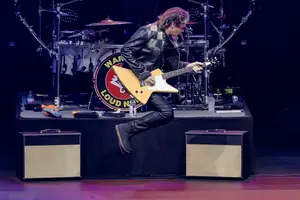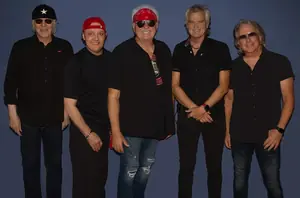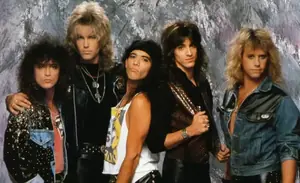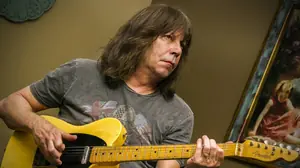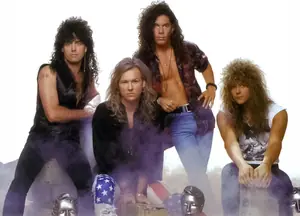
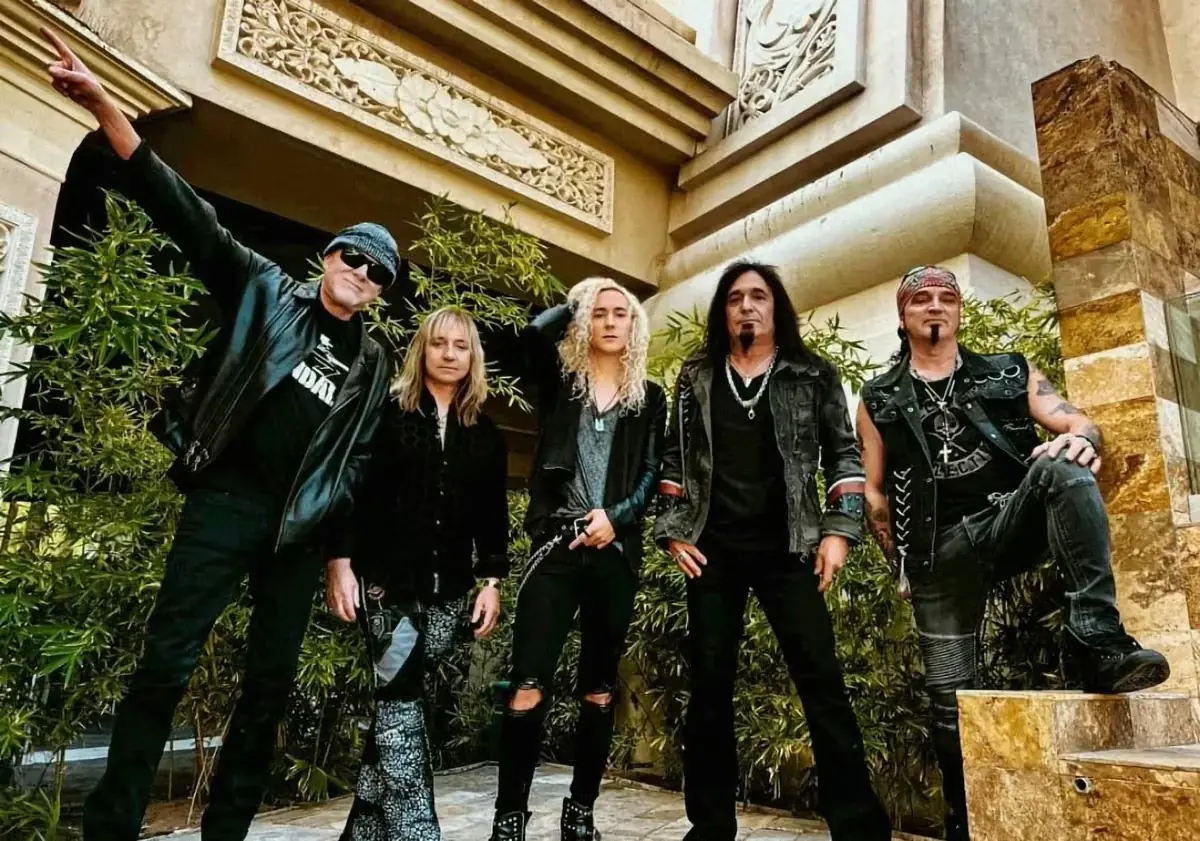
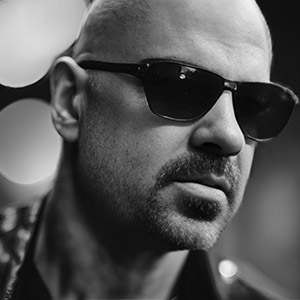
Listening back to these raw archival tapes from a 2009 interview with Great White’s Michael Lardie is a study in survival. It’s a snapshot of a band not just on the comeback trail but actively wrestling with its own identity. They had just dropped Rising, their second studio album since the classic lineup had reformed, and the air was thick with a sense of determined restoration. This wasn't just another record. It was a statement about what, and who, Great White truly was.
Lardie, ever the articulate anchor of the band, was quick to contrast the album's creation with its predecessor Back to the Rhythm. That first reunion record was a product of its time and circumstance, stitched together by file sharing and remote collaboration. A necessary evil for a band scattered across the country. But Rising was different. It was born from proximity and pressure, a deliberate choice to enter the studio with only half the material ready.
The result was a process Lardie clearly cherished. “The rest of the record was written as we were recording the first five songs,” he says, the enthusiasm still audible in his voice years later. “And to me there was a real stream of consciousness to be able to record that way.” You can hear that immediacy on the record. It feels less laboured, more instinctual. “Sometimes we were composing stuff at eleven, you know, 12:00 at night, and the next day we'd show it to each other and go, ‘Okay. What do you think? Okay. Let's record it.’ It was very organic that way.”
That organic feel gets to the heart of the matter. For over 25 years Great White has been a blues-rock band. Full stop. They’ve never chased trends or radically reinvented their sound. Some call that a limitation. But Lardie frames it as an unwavering commitment to their core chemistry. The secret sauce wasn’t a formula; it was the people. “It's this group of people that make Great White what it is and that's where the joy comes from,” he insists.
This conviction was forged in the wilderness years, the period Lardie bluntly refers to as the era of “Fake White” or the “B-Team.” After the original lineup splintered and before the reunion, frontman Jack Russell and guitarist Mark Kendall toured under the Great White banner with hired guns. The shows happened, the songs were played, but the soul was missing. It was a painful but necessary lesson in band chemistry.
Lardie recounts a conversation with Russell from that time, a moment of stark realization for the singer. “He would hear the songs and he would sing the songs, and he'd, you know, love the audience response, but then he just, like, it just wouldn't feel like it's supposed to feel,” Lardie explains. The final verdict was brutal. “He said he felt like he was covering his own material in a cover band.” You can’t manufacture that specific alchemy. It either exists or it doesn't.
And so the reunion wasn't a boardroom decision. It was a slow gravitational pull. Lardie, who had been playing with Night Ranger, remained a constant friend to Russell, a steady voice through the turbulence. The inklings started in mid-2006, culminating in a party at Jack's house that December where the vibe was undeniable. “I remember going to a party at Jack's house... and looking around going, ‘This feels just like it did five years ago. So we're not doing records right now because?’”
The inevitable first rehearsal was a moment of sonic truth. The kind of moment that makes or breaks a reunion before it even begins. For them it was instant confirmation. “After you finish the first song, you kinda go, ‘Okay. That's how it's supposed to sound. Okay,’” Lardie recalls. It was about reclaiming the intricacies, the unspoken cues, and the collective energy that only the five of them could generate.
We've always kind of been a blues rock band... we always knew our bread and butter was to go out and tour year after year after year because that's what helped us sell records. It wasn't that we were necessarily Top 40 darlings.
Of course, that sound didn't materialize out of thin air. It was built on a foundation of shared heroes. Led Zeppelin looms largest, but Lardie’s analysis goes deeper than just a sonic comparison. He pinpoints their influence not just in the riffs but in the masterful use of dynamics. “A song like ‘Rock Me’ is very much based in dynamics where you have a really big chorus. You have verses that are very atmospheric and very moody,” he says. It was about light and shade, not just brute force.
He saw this potential in the band long before they fully embraced it. He remembers the group’s very first record in 1983 sounding more like Judas Priest, a popular but ill-fitting suit. But between takes, he saw Mark Kendall’s true colours. “He'd be playing Hendrix and Clapton and Alvin Lee and all this stuff... That's when I saw Mark's soul,” Lardie says. He knew their bread and butter was blues-rock, not the “eighth-note driven Judas Priest thing.”
That blues-rock core was enriched by a wider palette of influences. The Beatles were the starting point for both Lardie and Russell, a childhood obsession that sparked the initial dream. “I remember being five years old watching them on the television... and I remember turning to my parents and saying, ‘That's what I'm gonna do,’” he shares. From there, the common threads emerged: The Rolling Stones, Aerosmith, and Zeppelin. These four bands formed the central pillar of Great White’s musical DNA.
Despite this potent combination, Lardie is refreshingly honest about their commercial success. They never set out to be a hit factory. Their biggest smash, the cover of Ian Hunter’s “Once Bitten, Twice Shy,” was almost an afterthought. “We just thought that that would be a fun song to do, and it would get us some reasonable radio play,” he admits. “We had no idea that it was going to become the monster that it did.”
Their career was built on sweat, not chart positions. “We always knew our bread and butter was to go out and tour year after year after year, because that's what helped us sell records. It wasn't that we were necessarily Top 40 darlings,” he states plainly. This is the ethos of a working band, a group that understood its value was proven on stage night after night.
That relentless work ethic came with a dose of fatherly advice that Lardie took to heart. His dad told him if he wanted a career he had to avoid the usual rock and roll pitfalls. It’s advice that helped him navigate a notoriously difficult industry for decades. A career that has been blessed with incredible highs and shadowed by unimaginable tragedy.
The interview touches on the 2003 Station nightclub fire, a subject Lardie handles with caution and gravity. He wasn't with the band at the time, playing with Night Ranger instead. He recalls the horrifying moment he found out. “My very dear friend Jack Blades called me up... he called me and said, ‘Turn on CNN right now.’ And I just, I just couldn't believe it.” He wisely refrains from speculating, his distance from the event demanding respect for those who were there. It’s a moment of profound sadness that will forever be part of the band’s story.
Yet the music endures. Lardie speaks with genuine wonder about the crowds they were drawing in 2009. The faces in the audience were changing. “You're starting to see grandpa, dad, and the grandkids, you know, at the shows with Great White shirts from 1989 on,” he says. “And then they're singing the lyrics to ‘Once Bitten, Twice Shy’ or ‘Rock Me.’” It’s the ultimate validation for any artist: to see your work passed down, connecting generations.
The only real critique one could level at the band during this period is that their sound, while powerful, was a known quantity. Rising wasn't about breaking new ground. It was about re-establishing the old ground, about proving the original five guys still had that singular spark. It was a consolidation of their strengths, a doubling-down on the blues-drenched hard rock that made them famous.
Listening to Lardie, you get the sense he was more than okay with that. The goal wasn't reinvention; it was resurrection. The reunion and the album were about the joy of playing with a specific group of people, of hearing the music sound exactly the way it was supposed to. It was the sound of a band coming home.
519 Magazine Archive: We are thrilled to officially unearth the Rockstar Weekly Digital Vault. This isn't just a re-post; it's a high-fidelity restoration of a pivotal era in music journalism. By pairing original print dates with modern retrospectives, we’re bridging the gap between historical rock-and-roll grit and the lightning-fast performance of today’s web. These stories—once locked in physical print and lost URLs—are now back, fully searchable, and optimized for a new generation of fans.
We are thrilled to officially unearth the 519 Magazine Digital Vault. This isn't just a re-post; it's a high-fidelity restoration of a pivotal era in music journalism. By pairing original print dates with modern retrospectives, we're bridging the gap between historical rock-and-roll grit and the lightning-fast performance of today's web. These stories—once locked in physical print and lost URLs—are now back, fully searchable, and optimized for a new generation of fans.