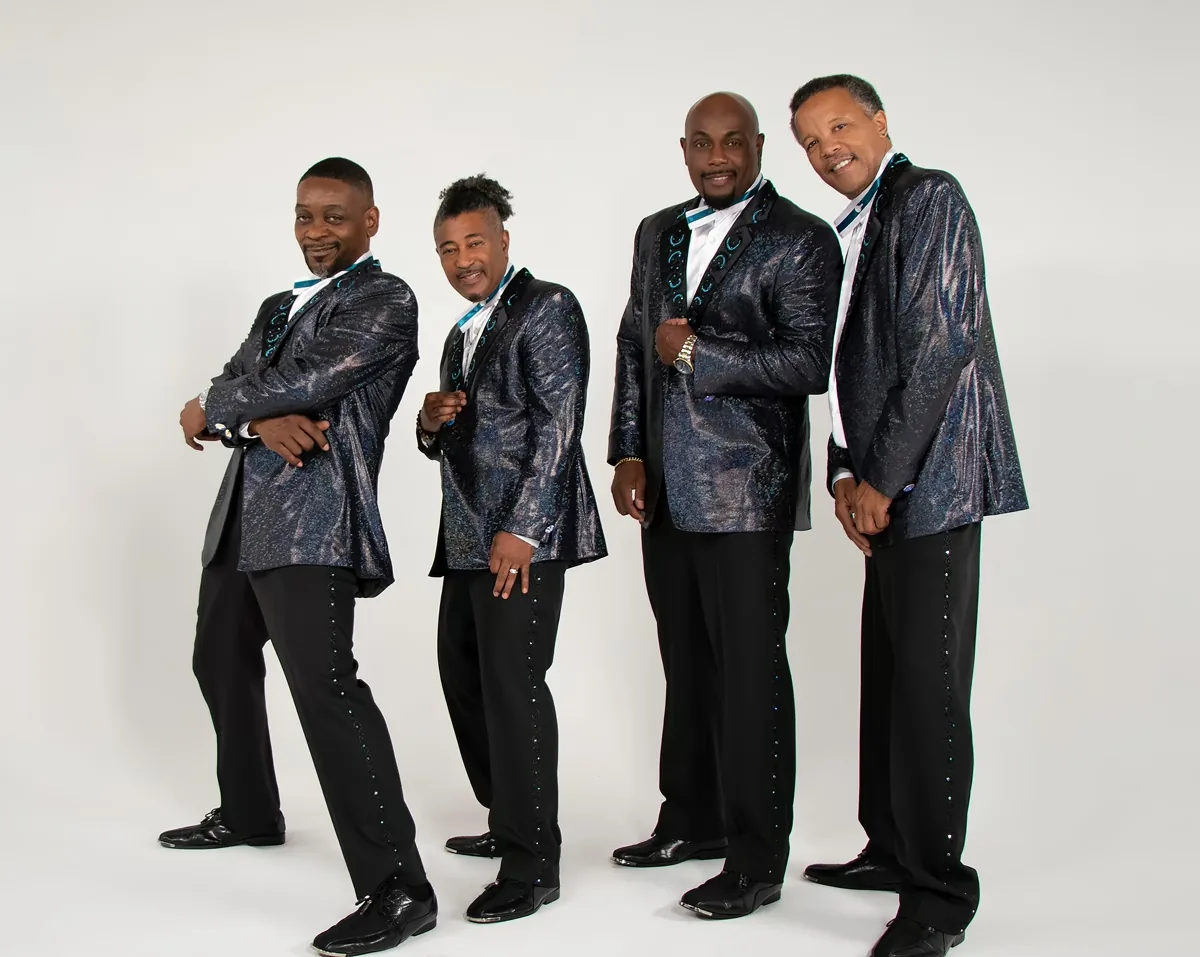

Looking back at these archival tapes from Aug. 7, 2012, is a strange and moving exercise. Hearing the relaxed, reflective voice of Bobby Smith, the iconic lead tenor of The Spinners, just a year before his passing in 2013, feels like unearthing a time capsule. This wasn't just another interview. It was a final accounting from a man who had seen the entire arc of popular music bend to his will, a quiet giant taking one last look over his shoulder.
Smith was 60 years into the game when he took this call. Six decades. Let that sink in. Most acts are lucky to get six years. When asked what kept the wheels turning, his answer was devoid of rock star ego. It was about the work and the fans. And it was about a pragmatic understanding of life after the spotlight. “I think about retiring, but then I'm not sure what I’d do with myself if I retire,” he says, his voice a warm, familiar hum. It’s a confession of purpose. The stage wasn’t a job; it was his entire architecture of being.
But their model for longevity was brilliant in its simplicity. They worked weekends and were home during the week. They weren’t chasing the dragon on endless tours. Smith viewed it as a form of semi-retirement, a sustainable rhythm that kept the music alive without killing the men who made it. It’s a veteran’s move, the kind of wisdom you only earn after thousands of nights under the lights.
The conversation inevitably turns to Motown. And for Smith, Hitsville U.S.A. was less a hit factory and more a university for the performing arts. His take on it is definitive. “I felt like I went to college, came out an A student,” he states. This wasn’t just about cutting records. It was about survival. In an era when The Spinners were not yet the chart-topping titans they would become, they learned to survive without a hit. A critical lesson.
They weren’t just singers. They were entertainers. Smith details a part of their act called the Motown Revue, where they would imitate label mates like The Supremes and The Temptations. This wasn't just mimicry; it was a masterclass in stagecraft, in understanding what moved an audience beyond a three-minute single. It was pure, unadulterated showmanship born from necessity.
And then there was the “Brown Beatles.” The name alone is a stroke of genius. Smith talks about homemade guitars and cutout drums, a DIY send-up of the British Invasion that became a sensation in its own right. He recounts a story where famed DJ Murray the K booked them at the Brooklyn Fox Theater specifically for that act, even after they had scored a major hit with “It’s a Shame.” They thought they had graduated beyond the gimmick. But the promoter knew better. “He said, ‘That’s the reason I hired you, because of the act, the Brown Beatles,’” Smith recalls. It proves a fundamental truth of the industry: the performance is the product, not just the song.
All of this was honed in Motown’s legendary Artist Development department, with choreography from the master, Cholly Atkins. They took advantage of the downtime, absorbing every lesson, every routine. They paid their dues, collecting what Smith bluntly calls “a lot of misfires” after their first hit. This period forged them into a polished, professional unit ready for the success that was to come. They were bulletproof by the time they hit the big time.
Basically, now we give our show to the hit records... because that's what people wanna hear. It's hard to get away from it. So even if you wanna do something different, it doesn't work as well.
Of course, that success truly exploded at Atlantic Records. The move was instigated by none other than the Queen of Soul, Aretha Franklin. She saw what The Spinners needed: a label where they wouldn't get lost in the shuffle. At Motown, with its deep roster of talent, they were just one of many. At Atlantic, they became a priority. It was the right move at the right time.
The partnership with producer and arranger Thom Bell was the final, crucial ingredient. Bell, a chief architect of the Philly Soul sound, crafted a lush, sophisticated and soulful backdrop for their harmonies. It was alchemy. “Thom Bell and The Spinners became, like, a great marriage,” Smith says. The string of hits that followed— “I’ll Be Around,” “Could It Be I’m Falling in Love,” “The Rubberband Man”—wasn’t a fluke. It was the result of perfect casting.
Through it all, the core of the group remained solid, anchored by Smith’s lifelong friendship with original member Henry Fambrough. In a business built on shifting alliances and colossal egos, their bond was the bedrock. “We were friends first before we formed a group,” Smith explains. They went to the same high school. That shared history, that pre-fame connection, insulated them from the pressures that tore so many other acts apart.
When speaking of career highlights, Smith doesn't point to a platinum record or a sold-out stadium. He points to a piece of pavement in Hollywood. “One of the highlights of my career is where we got a star on the Hollywood Walk of Fame,” he says with palpable pride. The context is everything. “At that time, we were the second black group to get one. The Mills Brothers was first... and The Spinners was the second group to achieve that.” It was a symbol of cultural validation, a permanent mark in a world that often treated Black artists as temporary commodities.
The interview also offers a startlingly intimate glimpse into music history with Smith’s memories of Michael Jackson. He wasn't just a fan; he was there. He tells an incredible story of being the guy from Motown sent to fetch the Jackson 5 from the side of the freeway after their station wagon broke down. “I'm the guy who went out and picked them up and brought them to Motown,” he says, the casualness of the memory making it all the more powerful.
He remembers watching a young Michael in the studio, a kid who seemed completely disengaged until the tape rolled. “When they turned the music on, he would hit it, nail it right on the head exactly like the guy asked him to do it,” Smith marvels. It’s a ground-level testament to a prodigy at work, a snapshot of genius before it became a global phenomenon.
But with success comes expectation. Smith is candid about how their live show evolved over the years. The complex, Broadway-style routines taught by Cholly Atkins were eventually phased out. Why? Because the audience came for the hits. It’s the critic’s only real point of contention: the necessary sacrifice of artistic exploration for fan service. Smith himself admits it. “That's what the people wanna hear. So we stick to the script,” he says. It’s a pragmatic, if slightly melancholy, reality for any legacy act.
They weren’t just singing songs; they were curating memories for generations of fans. The show became a vessel for nostalgia and shared experience. Smith understood this contract implicitly. “We learned how to entertain and make the audience feel like they are part of the act,” he notes. It was about connection, not just performance.
Near the end of the call, Smith mentions they were working on new material and that a compilation of unreleased Motown tracks, *Truly Yours*, was being released overseas. There was still a future, still music to be made. He was still looking forward.
Listening to this recording now, his words carry an added weight. They are the reflections of a man who had nothing left to prove but still loved the work. He was a consummate professional, a foundational voice in the great American songbook and a gentleman to the very end. The interview captures the quiet dignity of a legend who understood his place in the cosmos of soul music. And he knew, better than anyone, that you can’t take an ego to the bank.
519 Magazine Archive: We are thrilled to officially unearth the Rockstar Weekly Digital Vault. This isn't just a re-post; it's a high-fidelity restoration of a pivotal era in music journalism. By pairing original print dates with modern retrospectives, we’re bridging the gap between historical rock-and-roll grit and the lightning-fast performance of today’s web. These stories—once locked in physical print and lost URLs—are now back, fully searchable, and optimized for a new generation of fans.



We are thrilled to officially unearth the 519 Magazine Digital Vault. This isn't just a re-post; it's a high-fidelity restoration of a pivotal era in music journalism. By pairing original print dates with modern retrospectives, we're bridging the gap between historical rock-and-roll grit and the lightning-fast performance of today's web. These stories—once locked in physical print and lost URLs—are now back, fully searchable, and optimized for a new generation of fans.