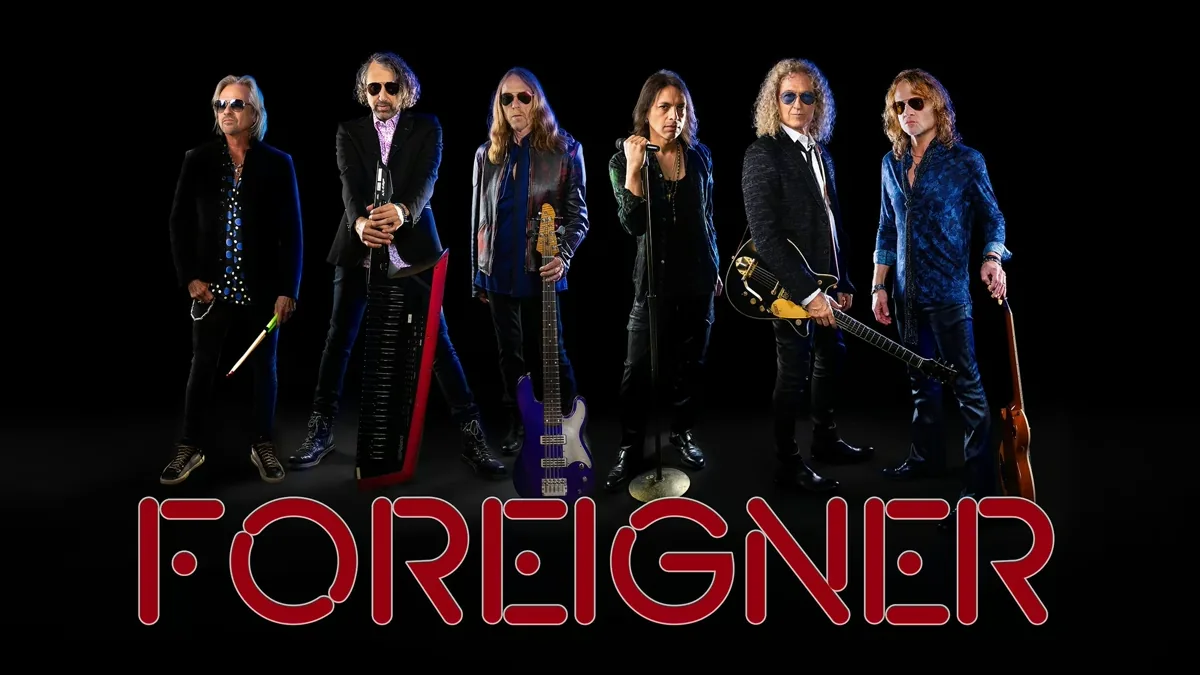

Looking at the raw transcripts from this Jan. 22 2019 conversation with Jeff Pilson feels like unearthing a time capsule from the precise moment before the world shut down. At the time Foreigner was a relentless touring machine, a prime example of how legacy rock had pivoted from record sales to a bulletproof road economy. And at the centre of that engine for 15 years was Pilson, a figure who proved to be far more than just a hired gun.
When he joined in 2004, the idea of a decade-plus run seemed absurd. He corrects the record immediately: it was his 16th year, not 15th, a small but telling detail about his investment in the gig. “Absolutely not. Not in the least,” he says about expecting such longevity. The initial plan was a world away from the global tours that would come to define this era of the band.
“When I first joined, the plan was just to do mostly weekend warrior work because I was still doing a lot of production work with bands,” Pilson recalls. This was the tail end of an era. “That was back when record labels were still signing bands, although that was about to end quickly.” He knew the brand was solid, the songs were unimpeachable, but the industry was in freefall. The idea of rebuilding Foreigner into an arena-level act was a long shot, not a guarantee.
But that’s exactly what they did. Alongside vocalist Kelly Hansen, who joined shortly after, Pilson became part of the nucleus that resurrected the band’s commercial fortunes. He speaks of it with the earned perspective of someone who was in the trenches. “We struggled together. When we first joined Foreigner, we had to build it back up. And you know, there is something that happens to a band when they experience that together. There's no question.”
This wasn't a plug-and-play gig in a nostalgia act. It was a ground-up reconstruction with Mick Jones as the foundational link to the past. The first two years were a grind, but Pilson insists the struggle was fueled by belief. “It was a struggle with a lot of enthusiasm behind it and we were highly motivated and we believed in it. And very quickly it became apparent we were a great band.” That shared history forged a bond that became the band’s secret weapon.
His entry into the Foreigner universe is a classic piece of rock and roll serendipity, a story born from Hollywood. The connection was forged on the set of the 2001 film Rock Star, a loving satire of 80s metal excess starring Mark Wahlberg and Jennifer Aniston. “Jason Bonham and I played the bass player and drummer of the fictional band,” Pilson explains. “So when Jason started working with Mick Jones in 2004, they called me up.” The chemistry was instant, and he’s been there since.
But Pilson’s connection to the band goes back even further to a moment of pure magic in 1978. It’s a story he tells with obvious delight, a perfect intersection of his past and future. As a young musician in Seattle, he had just purchased a Mellotron, a primitive tape-replay keyboard famous for its use by The Beatles and Yes. It was still on layaway at a local music store.
The store called with an unbelievable request. “They said ‘Hey. That Mellotron that you have that you're making payments on, well, Foreigner just got into town. Their Mellotron broke and they need one. Will you rent it to them?’” Pilson agreed immediately. The payoff? A ticket to the show. “As I'm walking into Memorial Stadium in Seattle, ‘Cold as Ice’ is playing with the Mellotron part going on in the middle, and I walk in the stadium hearing my Mellotron in the stadium.” It’s an incredible full-circle moment, a piece of personal history that now connects him directly to the band’s legacy. He still owns that very instrument.
My view of the bass is that its fundamental purpose is to move you know, propel the song with the groove, and to, enhance the song. It's really about the groove more than anything.
As a multi-instrumentalist whose home is filled with gear, including a 1908 Steinway grand piano, his perspective on the role of the bass is particularly sharp. He grapples with the instrument’s core challenge: serving the song versus personal expression. It’s a tightrope walk every great bassist understands. For him, the verdict is clear.
“My view of the bass is that its fundamental purpose is to move, you know, propel the song with the groove and to enhance the song,” he states. “It's really about the groove more than anything.” This philosophy is the key to his success in Foreigner, a band whose architecture is built on melodic precision and rhythmic drive. It’s not about flashy solos; it’s about making tens of thousands of people feel the pocket.
Many would assume the jump from the aggressive hard rock of Dokken to the polished arena rock of Foreigner is a jarring transition. Pilson dismisses this notion entirely. “Less than you might think,” he says. “A lot of people assume that it's like apples and oranges. It's really not.” He points out the obvious but often overlooked truth: Dokken was built on the blueprint Foreigner helped create.
“The early Foreigner was hard rock with great melody and big choruses. And that was something we aspired to,” he explains. He sees his role as honouring that foundation, perhaps with a slightly heavier touch live. And he offers a fantastic piece of insider intel: “Even Mick Jones, I always laugh. Mick Jones is a closet rocker, man. He really is. He just, when he plays guitar, he rocks.”
The conversation naturally turns to his other projects, a reminder of his deep roots in the 80s metal scene. He speaks warmly of the 2016 Dokken reunion tour, noting it was “very pleasant” and that the band got along better than expected. A new song they recorded for the live release was shockingly easy to create, a stark contrast to the band’s notoriously difficult studio sessions of the past. “It's probably the most painless recording Dokken has ever made,” he marvels.
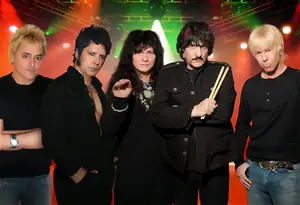
This creative energy also fueled The End Machine, a project with his former Dokken bandmates George Lynch and Mick Brown, plus Warrant’s Robert Mason. At the time of this interview, he was buzzing about the record. It represents the heavier side of his musical identity, a necessary outlet and a powerful statement of his continued relevance in that world.
Back in the Foreigner camp, the question of new music is met with a dose of modern-day pragmatism. A full album? Unlikely. “With our touring schedule, it's just not a practical thing,” he admits. Instead, the band has adopted the new industry model: curated packages that mix live tracks, re-recordings, and a handful of new songs. It’s a strategy that keeps the brand vital without the immense risk and labour of a full-length LP in a market that no longer supports it.
He clarifies that many of the re-recordings are for practical business reasons, like sync placements in movies and commercials. But there’s also artistic exploration. He proudly points to their stripped-down acoustic version of “I Don't Wanna Live Without You” and a revamped take on “The Flame Still Burns” as examples of how the current lineup puts its own stamp on the catalogue.
Beyond the records, Foreigner had also become a vehicle for philanthropy and even a theatrical production. Pilson details their work with Shriners Hospitals for Children and MusiCares, a commitment to giving back that is deeply embedded in the band’s operations. He’s also the music supervisor for Jukebox Hero, the musical based on the band’s songs, which saw a successful run in Canada.
He speaks with pride about the musical’s integrity, a project steered by Canadian promoter Jeff Parry. “We wanted the music to be spot on,” he stresses. For Mick Jones, it was a career landmark. “What a fabulous thing for a writer to have, you know, a musical based around your music.” It’s another way of cementing the Foreigner songbook into the cultural lexicon for generations to come.
Revisiting this interview reveals Pilson as the consummate professional. He is a musician who fully grasps his role as a performer, a producer, a songwriter, and a custodian of a legendary brand. He balances a deep respect for the past with a clear-eyed understanding of the present-day music industry.
His journey from a kid in Seattle renting his keyboard to his heroes to becoming a 16-year veteran of that same band is remarkable. He isn’t just playing the bass in Foreigner. He is a key part of the machinery that has kept the band not just alive but thriving in the 21st century. And that is a legacy all its own.
519 Magazine Archive: We are thrilled to officially unearth the 519 Magazine Digital Vault. This isn't just a re-post; it's a high-fidelity restoration of a pivotal era in music journalism. By pairing original print dates with modern retrospectives, we’re bridging the gap between historical rock-and-roll grit and the lightning-fast performance of today’s web. These stories—once locked in physical print and lost URLs—are now back, fully searchable, and optimized for a new generation of fans.
We are thrilled to officially unearth the 519 Magazine Digital Vault. This isn't just a re-post; it's a high-fidelity restoration of a pivotal era in music journalism. By pairing original print dates with modern retrospectives, we're bridging the gap between historical rock-and-roll grit and the lightning-fast performance of today's web. These stories—once locked in physical print and lost URLs—are now back, fully searchable, and optimized for a new generation of fans.