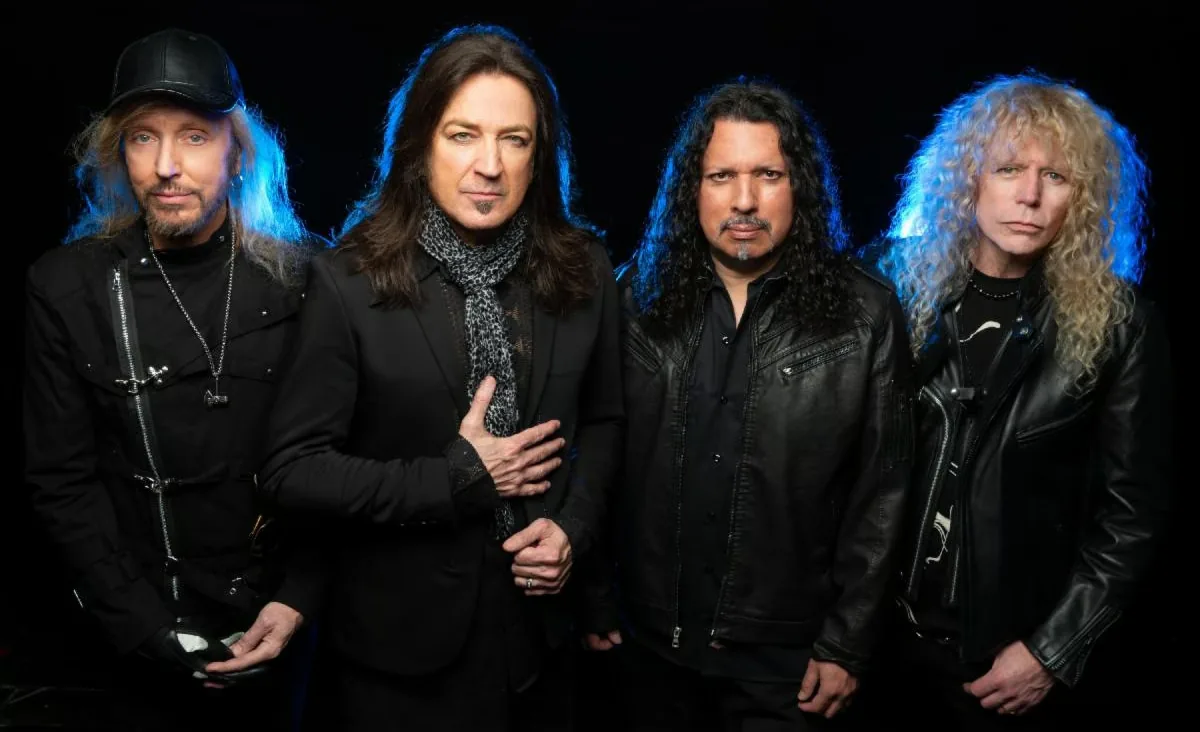
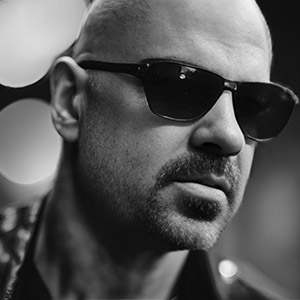
Listening back to these raw archival tapes from a 2013 call with Michael Sweet is like unearthing a time capsule. Stryper was at a fascinating crossroads, having just dropped Second Coming, an album of re-recorded classics, and was staring down the barrel of releasing what would become No More Hell to Pay. It was a moment of deep reflection and defiant forward momentum, a band grappling with its past to define its future. And Sweet, ever the articulate frontman, was holding nothing back.
The conversation kicks off around Second Coming, and it’s immediately clear this wasn't just some nostalgic cash grab. It was a calculated business decision born from the labyrinthine hell of music licensing. Sweet lays out the industry reality with stark clarity. The original masters were owned by Hollywood Records, a complication that hamstrung their ability to place Stryper’s formidable catalogue in film and television.
“We originally set out to rerecord the songs just for the purpose of making things much easier for our publishing company and for ourselves in terms of pitching songs to film and TV for licensing,” he says, the pragmatism cutting through any artistic pretense. This was about control. By creating new master recordings, they owned the product outright, streamlining a process that was otherwise bogged down in corporate permissions and delays. It was a shrewd move, a band taking back its own legacy one re-tracked guitar solo at a time.
But what started as a business necessity quickly morphed into an artistic one. As they got into the studio, the project took on a new life. They weren't just recreating the songs; they were correcting them. This is where the real meat is for any longtime fan. Sweet gets granular about the sonic flaws that haunted him for decades, the kind of obsessive details only a creator would lose sleep over.
He points to the “symbols that were gated on the record To Hell with the Devil accidentally” and the notorious lack of bass guitar on Soldiers Under Command. These weren't revisionist history; they were studio repairs. The goal was to create a cohesive sonic signature across their most formative material, something the disparate production styles of the 80s never allowed. “The production, I think, far exceeds the production of the first three albums. It's crisper, punchier, louder, clearer. It just sounds better,” he states with earned confidence.
And he’s not wrong. The production on Second Coming is undeniably modern and muscular. Yet, here lies the only real critique: in fixing the imperfections, some of the original era’s accidental charm was inevitably lost. The raw, almost tinny aggression of the originals was a product of its time, and while the new versions are technically superior, they don't transport you back to 1986 in quite the same way. It’s the classic dilemma of remakes: precision often comes at the cost of personality.
The conversation then pivots to the heaviest cross Stryper has always had to bear: the “Christian rock” tag. You can hear the weariness in Sweet’s voice, the fatigue of fighting a two-front war for 30 years. He was, and remains, a rock musician first. The message is the mission, but the music is the medium, and he bristles at how the former has so often overshadowed the latter.
He recounts a discussion with guitarist Oz Fox, who favoured embracing the label. Sweet’s perspective is brutally honest and commercially astute. “I feel like... it puts limitations on a band when you put the tag Christian rock band because there's so many people out there that aren't Christians that may want to listen to the band... that may possibly not listen to the band just because of that one simple word,” he argues. “It closes doors.”
You've worn a lot of yellow throughout your career. Is yellow one of your favorite colors? It's not. I talk about that in the book. It's my least favorite colour. Yeah. I guess that's kind of God's sense of humour.
This wasn't about denying their faith. It was about refusing to be ghettoized. He rightly points out the hypocrisy of the industry, citing Carrie Underwood’s massive hit “Jesus, Take the Wheel.” Her song about faith didn’t brand her a “Christian country artist” and limit her to a niche market. Stryper, however, was never afforded that luxury. They were a rock band comprised of four Christian guys, a simple distinction the world seemed determined to ignore.
Of course, that stance made them pariahs to both sides. Rock fans were skeptical of the message and Christian communities were scandalized by the medium. Sweet sounds like a man who has weathered a thousand storms when he talks about the constant criticism. It’s a profound look into the psychological toll of being a true outlier.
“We get it from all sides, and we always have,” he admits. “We've been under attack for a long time from all areas, and we've developed thick skin. But at the same time, there are points in our lives when we feel like we've been through a 15 round boxing match with Muhammad Ali in his prime.” It’s a stunningly vulnerable admission. The image of the band, beaten and wiped out, stands in stark contrast to their triumphant, fist-pumping anthems.
Sweet then takes us back to the very beginning, before the yellow and black, to his days on the Sunset Strip. He was a kid living the life, smoking, drinking and chasing the same rock and roll dream as the guys in Mötley Crüe and Poison. He wasn't living a Christian lifestyle. He was in the thick of it. The turning point came during a chance encounter with Arthur Blessitt, the famed evangelist known for carrying a giant cross through the streets of Hollywood.
The moment, as Sweet describes it, was a spiritual gut punch. “It was kinda like a knife through the heart, you know, because I knew. I knew exactly what he was saying,” he recalls. That seed, planted on a Hollywood street corner amidst the chaos and decadence, eventually took root. Soon after, he and his bandmates rededicated their lives and their music, and Stryper was born.
On a lighter note, the interview finally demystifies the band’s iconic colour scheme. The origin is almost comically mundane: it was all his brother, drummer Robert Sweet. Robert developed a fascination with the warning aesthetic of yellow and black California highway signs, stealing them to adorn their rehearsal space. It spiralled from there, from the drum kit to the mic stands to their homemade spandex and carpet leg warmers.
But in a hilarious twist, Michael confesses his true feelings about the colour. “It's not. I talk about that in the book. It's my least favorite colour,” he laughs. “I guess that's kind of God's sense of humour.” It’s a perfect anecdote, a reminder that behind the global brand was a bunch of kids in a garage, one of whom just really, really liked the colour yellow.
Looking back from 2013, Sweet was also reflective of his four-year stint with the legendary band Boston. The experience was a glimpse into a different world of rock stardom. He talks about flying on private planes from the venue to the hotel, staying in Ritz-Carltons and experiencing a level of luxury that, even at their peak, Stryper never did. It was a bittersweet period, however, as his late wife Kyle was sick at home, a reality that tempered the glamour with a heavy dose of guilt.
The final part of the call was all about the future, which is now our past. He was electric with excitement for No More Hell to Pay, an album he correctly predicted would be a powerful return to form. He boldly claimed it would stand alongside their 80s masterpieces, and for many fans, it did just that. The record was a blistering, unapologetic slab of classic metal that proved the band still had fire in its belly.
He also teased his solo album and his memoir, Honestly, projects that would further peel back the layers of the man behind the frontman. He spoke of his creative process, of songs constantly buzzing in his head, a gift that sometimes feels like a burden. “Sometimes it almost drives me crazy because there are times when I need to focus on something else and I can't because I'm thinking about a song,” he reveals.
This 2013 interview captures Michael Sweet in his purest form: a deeply faithful man, a savvy businessman and an eternally restless creative. He was an artist fighting to honour his past while refusing to be imprisoned by it. He was a rock star who had been through the fire and emerged with his voice, and his convictions, fully intact.
519 Magazine Archive: We are thrilled to officially unearth the Rockstar Weekly Digital Vault. This isn't just a re-post; it's a high-fidelity restoration of a pivotal era in music journalism. By pairing original print dates with modern retrospectives, we’re bridging the gap between historical rock-and-roll grit and the lightning-fast performance of today’s web. These stories—once locked in physical print and lost URLs—are now back, fully searchable, and optimized for a new generation of fans.


We are thrilled to officially unearth the 519 Magazine Digital Vault. This isn't just a re-post; it's a high-fidelity restoration of a pivotal era in music journalism. By pairing original print dates with modern retrospectives, we're bridging the gap between historical rock-and-roll grit and the lightning-fast performance of today's web. These stories—once locked in physical print and lost URLs—are now back, fully searchable, and optimized for a new generation of fans.