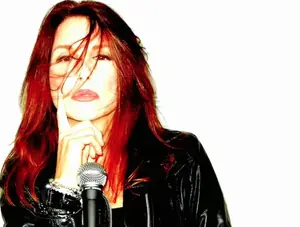
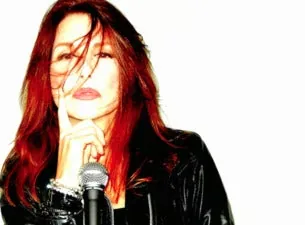

Looking back at these archival tapes from Mar. 1, 2012, is a fascinating exercise. The raw grit in Lee Aaron’s voice isn't just from a lingering cold, it’s the sound of an artist at a crossroads. Here she is, seven years deep into a self-imposed recording hiatus, navigating the terrain between rock royalty and full-time motherhood. The industry had moved on, grunge had come and gone, but the Metal Queen was quietly plotting a new campaign from her home base in Surrey, B.C.
The central tension of this period was parenthood. Aaron is brutally honest about the seismic shift. After years of believing she could just strap a baby into a tour bus, reality hit hard. “I didn’t wait this long in my life to finally have children to sort of farm them out to a nanny all the time,” she says, her conviction cutting through the speaker. “I just think this time is so precious.” This wasn’t a break; it was a reprioritization. And it was a move that many in the business, especially for a female artist, would have considered career suicide. But Aaron framed it as an investment in her own humanity.
While the new music was percolating on iPhones and tape recorders scattered around her house, she undertook a different kind of project: an archeological dig into her own past. The result was a three-DVD anthology, Rarities, Studio & Live. This wasn't some slick, label-mandated cash grab. It was a painstaking, hands-on labour of love born from boxes of unlabelled tapes in her basement. She describes it as a “mammoth project” and you believe her.
She and her husband waded through hours of VHS tapes, microcassettes and fan-shot footage, a chaotic collage of formats from a bygone era. “What I was hoping to do was put out something for fans that did not include my commercially successful videos,” she explains. The goal was to unearth the moments between the hits: backstage clips, forgotten interviews and raw live performances. It required sending a mess of analog media to a guy in Toronto for authoring, then meticulously time-coding every single clip. It sounds exhausting. It also sounds essential.
But let's be direct. An artist curating their own history is always a tricky proposition. While the collection is a gift to the die-hards, it’s also a controlled narrative. You see the evolution Aaron wants you to see. The project’s strength is its rawness, but its one flaw is that we’re only seeing the cringe she’s willing to share. It’s a curated vulnerability, which is an art form in itself.
And she admits, some of it was deeply cringeworthy. “Oh my gosh. How did I ever think those red spandex pants were even remotely possible?” she laughs. It’s a relatable moment. For most of us, our awkward phases are buried in dusty photo albums. For an artist like Aaron, they’re immortalized on film, a permanent record of every fashion misstep and youthful proclamation. “Every stage of your development as a human being is there,” she reflects, a statement that carries the weight of a life lived in the public eye.
That past came roaring back to life at the Sweden Rock Festival the previous year. It was a moment of profound validation. Despite her time away from the spotlight, the welcome was overwhelming. “I walked up on stage and to be, you know, just sort of treated like you’re this absolute goddess,” she recalls, the surprise still evident in her voice. “It just kinda took me aback. Reminded me of the old days for sure.” The entire episode was pure rock and roll chaos, complete with guitars lost by an airline in Chicago and a crew that miraculously pulled together a backline just in time.
You haven't been knocked down by the industry yet. You haven't been hurt or disappointed by any failure. So you just believe anything's possible.
The experience in Sweden seems to have reinforced the deep, almost spiritual, shift that motherhood had triggered. Aaron speaks with startling candour about her postpartum struggles and the identity crisis that followed. The realization that her life as a touring musician had to stop was a shock. “On my deathbed, what am I gonna do?” she asks, posing the question that redefined her entire existence. “Am I gonna, like, hug all my gold records close and be so happy that I had this illustrious, amazing career? Or do I wanna be surrounded by people I love?”
This epiphany, she says, made her a better artist and a better person. It gave her more compassion, more patience and a deeper well of emotion to draw from as a songwriter. It was a recalibration that allowed her to reconcile the leather-clad warrior of the 80s with the mother and jazz singer of the 2000s. She found a way to play the old hits with a sense of “tongue in cheek nostalgia” modernizing arrangements and acknowledging the passage of time without disowning it.
Of course, some parts of that past are harder to reconcile than others. The interview takes a serious turn when the subject of her infamous Oui magazine pictorial comes up. Her tone shifts. This isn’t nostalgia; it’s a reckoning. “I hesitate to use words like manipulated, but I was definitely kind of bulldozed into that decision,” she states plainly. For years, she felt the shoot forced her to fight for musical credibility, trapping her in the box of a sex symbol.
She reveals that she sought counselling to deal with the shame and regret, particularly when struggling to start a family. “I thought God was punishing me,” she admits, a raw and vulnerable confession. But in a move that defines her resilience, she transformed that pain into purpose. She began working with organizations that help women exit human trafficking, using her own experience of exploitation to connect with and empower young women. “I’ve tried to take it… and channel that into a positive way to help young women with their self-esteem as opposed to encouraging them to be objectified.”
Her perspective on the industry itself is just as sharp. She dismisses the corporate rock formula of creating superstar ensembles, arguing that true magic comes from organic chemistry. “I don’t think you can necessarily pluck people out of all-star bands and throw them together and think they’re always gonna have chemistry,” she says, citing U2 and Kings of Leon as examples of bands with real synergy. She knows from experience, recounting how her biggest hit was written with her ex-boyfriend and guitarist John Albani, not the high-priced LA writers the label sent her to.
That industry knocked her down hard in the mid-90s. As grunge wiped corporate rock off the map, Aaron found herself half a million dollars in debt and filing for bankruptcy. Her manager jumped ship and the machine that built her up left her behind. It was during this dark period that she returned to her first love: jazz. It wasn't a calculated career move but a retreat to what brought her comfort. It started with small club gigs in Vancouver and snowballed into a legitimate second act, playing jazz festivals across the country.
She argues passionately that her jazz explorations made her a better rock singer, teaching her the art of improvisation and encouraging her to take more liberties with her own classic material. She rejects the idea that an artist has to be one thing. “Look at Robert Plant,” she counters. “He does this awesome album with Alison Krauss and T-Bone Burnett, and then he also, you know, sang in Led Zeppelin. I’m sure he’s still capable of doing both.”
The conversation closes with a road story for the ages, a harrowing tale from a 1985 tour with Bon Jovi. It involves a clueless bus driver, a three-hour detour in the wrong direction and a terrifying, unauthorized drive through communist East Germany before the wall came down. With machine guns on every corner, the German opening act was praying while Aaron and her tour manager were just trying to get to the gig. It’s a snapshot of a time when the world was a different place and touring was a far more dangerous game.
Listening to this tape a decade later, you hear an artist redefining success on her own terms. Lee Aaron in 2012 is no longer the naive teenager from her debut album, nor is she just the pin-up from the magazine covers. She is a survivor, a mother, a songwriter and a musician who has earned the right to her past, both the cringeworthy and the triumphant. And she was just getting ready to write her next chapter.
519 Magazine Archive: We are thrilled to officially unearth the Rockstar Weekly Digital Vault. This isn't just a re-post; it's a high-fidelity restoration of a pivotal era in music journalism. By pairing original print dates with modern retrospectives, we’re bridging the gap between historical rock-and-roll grit and the lightning-fast performance of today’s web. These stories—once locked in physical print and lost URLs—are now back, fully searchable, and optimized for a new generation of fans.
We are thrilled to officially unearth the 519 Magazine Digital Vault. This isn't just a re-post; it's a high-fidelity restoration of a pivotal era in music journalism. By pairing original print dates with modern retrospectives, we're bridging the gap between historical rock-and-roll grit and the lightning-fast performance of today's web. These stories—once locked in physical print and lost URLs—are now back, fully searchable, and optimized for a new generation of fans.