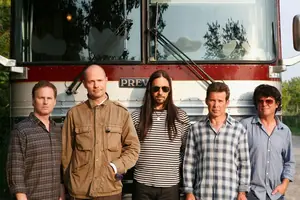

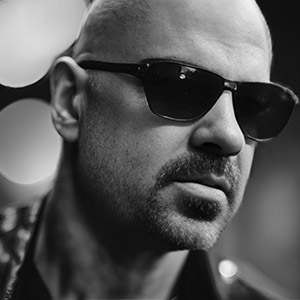
Listening back to this archival tape from June 11, 2013, feels like cracking open a time capsule. The industry was in a weird place, still figuring out its digital footing, and here was Tom Keifer, a voice that defined a specific kind of slick, blues-drenched hard rock, finally stepping out on his own. The air was thick with questions. After nearly 20 years since his last studio output with Cinderella, could he still connect? Did anyone still care? The answer was sitting right there in the grooves of The Way Life Was, an album that took a decade to make.
A decade. Let that sink in. Most bands live and die in that timeframe. But for Keifer, it was a necessary marathon. Looking back, his explanation on the tape sounds less like an excuse and more like a mission statement. "I never really imagined that I'd spend ten years making it," Keifer says, his voice carrying the calm of a man who has wrestled his demons to a draw. "But it was produced independently of a label, there were no budget restrictions or deadlines or release dates that we had to adhere to, so we didn't. We just kept working on it 'til it felt right."
This wasn't just artistic indulgence. It was a deliberate rebellion against the machine that had chewed up and spat out his generation of rockers. He talks about the old Cinderella records, masterpieces of the genre, being cranked out in six-month pressure cookers. Six days a week, endless hours, with little time for reflection. Decisions made on the fly, driven by a ticking clock and a shrinking budget. That was the game then.
But this was different. This was the Pro Tools era, and Keifer used it to his full advantage. He’d work intensely for months, tracking vocals and guitars in his Nashville studio. Then he’d hit save, close the session and head out on the road with Cinderella for three months. He wouldn't listen to a single note. This self-imposed distance gave him what every artist craves but rarely gets: objectivity. He could return with fresh ears, keeping what worked and mercilessly cutting what didn't. It was a process of refinement that bordered on obsession.
The result is an album that is meticulously crafted. Every harmony, every slide guitar lick, every drum fill feels considered and intentional. The only real critique you could level at it, even then, was that this decade-long process may have sanded off some of the raw, ragged edges that defined his early work. It’s a polished, mature statement, but sometimes you miss the sound of a band about to go off the rails.
And make no mistake, this was always going to be a Tom Keifer album, not a Cinderella record. The genesis of the project was rooted in band politics and legal hell. He reveals that Cinderella was legally barred from recording due to a soured record deal, a situation that landed them in court. That’s when he struck out on his own, funding the project himself, determined to avoid the corporate entanglement that had wounded him before.
That pain is palpable when he talks about the nineties. The whole scene changed. Grunge arrived like a flannel-clad meteor, and the major labels engaged in a mass execution of their eighties cash cows. "We did Still Climbing, and when we were recording that record, the writing was on the wall," Keifer recalls. He knew Mercury wasn't going to promote it. "Unfortunately, I found out that I was right. And they didn't really promote that record and shortly after that dropped us."
That sense of betrayal runs deep. You can hear the sting of it in his voice, even years later. "I think there's still a pretty bad taste in our mouths from being dropped from our original record company that we made a whole lot of money for, and they just tossed us aside," he says. This history is the bedrock upon which his solo career was built. It explains the fierce independence, the refusal to compromise and the sheer stubbornness of taking 10 years to get it right.
I was told I'd never sing again... a doctor ran a neurological test and discovered that I had a partially paralyzed vocal cord. It's been a battle ever since... most people who get that, they never sing again.
His strategy for returning to the label system was brilliant. Instead of going to the suits with hat in hand, begging for a budget, he delivered a finished, mastered album. He flipped the entire A&R power dynamic. It becomes a simple yes or no proposition. There's no guesswork. You hear what you get. Merovee Records and industry veteran Jack Ponti heard it, loved it and got behind it. It was a veteran move from a guy who had learned the hard way.
But the album’s emotional centre isn’t just about industry battles. It’s about a literal, physical one. The story of his vocal cord paralysis is harrowing. To be a singer, one of the most distinctive of his era, and be told your instrument is broken beyond repair is a nightmare. "I was told I'd never sing again," he states, the words hanging heavy in the air. "It was in the early nineties. I woke up one day and literally overnight, my voice just went away."
Doctors were stumped. There were no nodes, no polyps, none of the usual suspects. Finally, a neurologist diagnosed him with a partially paralyzed vocal cord. A career death sentence for most. "Most people who get that, they never sing again," he explains. "It can't really be cured with medicine or surgery. So you just have to retrain it."
And that’s what he did. He worked with vocal coaches and speech pathologists, engaging in a grueling daily regimen of exercises just to maintain his voice. An hour or two, every single day, whether on tour or not. It’s a staggering level of discipline. The swagger on stage masks an incredible vulnerability and a relentless work ethic that fans never see. His signature rasp is no longer just a stylistic choice; it's a testament to his sheer will to perform.
This personal struggle is woven into the fabric of the album. The title track, 'The Way Life Was', isn’t just a catchy phrase; it’s the thesis statement for the entire collection of songs. These are tales of struggle, heartbreak and resilience, all filtered through his blues and roots-rock sensibility. It’s a diary set to music.
He wasn't alone in this process, either. His wife, Savannah Keifer, was a crucial partner, co-writing many of the tracks and co-producing the record alongside Chuck Turner. This was no vanity credit. "We work really well together and she's a very talented musician and songwriter," he says, genuine respect in his tone. "And we approach music and writing the same way... she doesn't really force things either."
Their shared philosophy of letting a song breathe and develop naturally is key to the album’s organic feel. They wouldn't force a lyric or a melody. If a song wasn't finished today, it might not be finished for a year. This patience is the antithesis of the modern, content-driven music machine. It’s an old-school approach to artistry.
Ultimately, listening to this interview again confirms what was clear at the time: The Way Life Was was an act of defiance. It was Keifer planting a flag in the ground, declaring that he would operate on his own terms. He wasn’t chasing trends or trying to recapture the glory days of 1988. He was simply telling his story.
The guiding principle was uncompromising. "When I produced this record, the idea was don't care how long it takes, don't care how much money it costs, it's gonna be great or we're not gonna release it," he says. That’s the sound of an artist taking back control.
It’s a powerful statement. For all the talk of changing tides and shifting scenes, the core of rock and roll has always been about authenticity. And there is nothing more authentic than a man who had to fight the industry, fight his own body and fight the passage of time to finally be heard again, exactly the way he wanted.
519 Magazine Archive: We are thrilled to officially unearth the Rockstar Weekly Digital Vault. This isn't just a re-post; it's a high-fidelity restoration of a pivotal era in music journalism. By pairing original print dates with modern retrospectives, we’re bridging the gap between historical rock-and-roll grit and the lightning-fast performance of today’s web. These stories—once locked in physical print and lost URLs—are now back, fully searchable, and optimized for a new generation of fans.
We are thrilled to officially unearth the 519 Magazine Digital Vault. This isn't just a re-post; it's a high-fidelity restoration of a pivotal era in music journalism. By pairing original print dates with modern retrospectives, we're bridging the gap between historical rock-and-roll grit and the lightning-fast performance of today's web. These stories—once locked in physical print and lost URLs—are now back, fully searchable, and optimized for a new generation of fans.