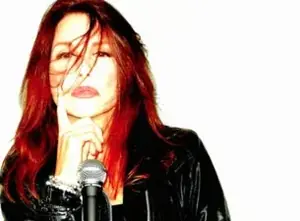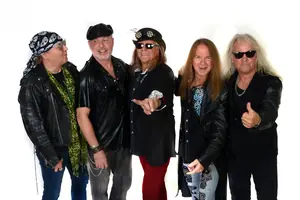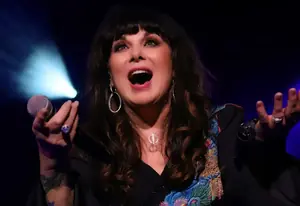
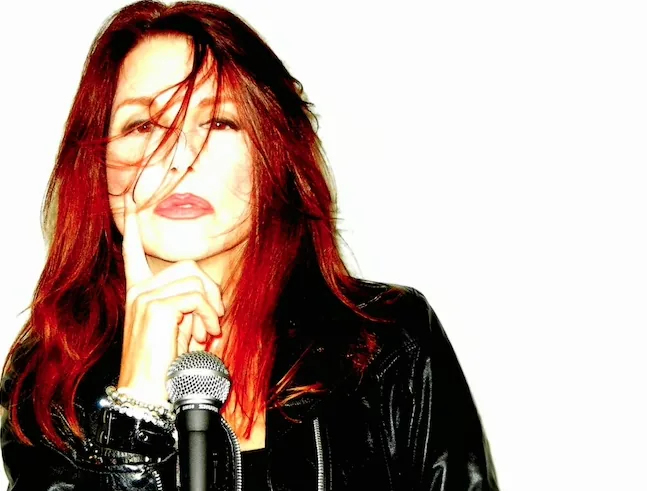
Revisiting the raw transcripts from our Jun. 14 2019 conversation with Lee Aaron is a trip into a very specific moment in time. The Canadian rock icon was riding high on the critical success of Diamond Baby Blues a swaggering confident record that felt less like a comeback and more like a rightful reclaiming of the throne. With a new live album on the horizon and a headlining slot at the ill-fated Roxodus festival looming she sounded energized liberated and remarkably clear-eyed about the machine she’d spent a career navigating.
This wasn't just a victory lap. It was a statement. The period that began with 2016’s Fire and Gasoline represented a genuine resurgence one built not on nostalgia but on the sheer quality of the material and the calibre of the musicians she had surrounded herself with. And she knew it. There was a confidence in her voice that cut through everything a sense that she was finally making music entirely on her own terms free from the corporate pressures that defined her early career.
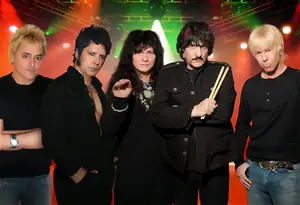
But it all started with the band. A band she correctly assessed as world-class. “Not to sound too braggy pants here, but I have a fantastic band,” she says. This wasn't just idle praise. With her husband John Cody on drums Sean Kelly on guitar and David Reimer on bass she had assembled a unit of seasoned pros who were also elite songwriters. It was a collective not just a backing band.
The creative dynamic was explosive and it elevated the music beyond a simple throwback exercise. “The three of us are all really seasoned songwriters,” Aaron explains. “So it's kinda really cool to be in a band like this now where we can get in a room together and just, like, come up with fantastic hooks and go, wow. Okay. Let's do that.” That collaborative energy is baked into the DNA of her modern records giving them a vitality that many legacy acts struggle to find.
Aaron was pointed in her assessment of this new chapter’s quality. “Unlike some, you know, some artists come back many years later and they do something, but it just doesn't match the quality of what they've done in the past,” she states directly. “And I think with the work that we've done recently and I when I say that, I mean, I'm crediting my bandmates as well, not just myself. I think the work that we've done lately matches the quality if not surpasses what we've done in the past.” It’s a bold claim. But she’s not wrong. The blues-drenched hard rock of her recent output feels more authentic and lived-in than anything she’s ever recorded.
The proof was set to be documented with a new live package recorded in Germany a market that never abandoned her. “It is a live album DVD package,” she confirms detailing a release culled from shows at the Bang Your Head Festival and Nuremberg’s Hirsch nightclub. This wasn’t just a concert film; it was a testament to her enduring power on the European stage a place where the Metal Queen moniker never faded.
Her partnership with guitarist Sean Kelly was clearly a cornerstone of this era. They were simpatico creative foils. “We joke around,” she says. “We're like the Steven Tyler and Joe Perry of the Lee Aaron band.” But the comparison she draws between this partnership and her iconic work with John Albani in the eighties is far more revealing. It’s a tale of two vastly different music industries.
And here is the absolute crux of her modern renaissance: freedom. The collapse of the old record label system while financially disruptive was artistically liberating. “The nice thing I have with Sean is that we are not under the umbrella of huge corporate record company pressure, which is the way it was kind of the way it was for John and I in the eighties and nineties,” Aaron reflects. The candour is striking.
Unlike some artists come back many years later and they do something, but it just doesn't match the quality of what they've done in the past. I think the work that we've done lately matches the quality if not surpasses what we've done in the past.
She pulls no punches describing the old guard. “There was an entire industry of suits that made their living off music. That doesn't exist anymore, really,” she says. “They'd pull out a couple of current hits and go, can you write something more like this? And we're like, it's not very inspiring when we're being asked to write songs like somebody else's songs.” This insight explains everything about the artistic choices she’s made since going independent in 1992.
Of course no conversation with Lee Aaron is complete without addressing the legacy of “Metal Queen.” Looking back she approaches the topic with a mix of academic distance and personal wisdom. She sees the persona for what it was. “When I look back at some of my songwriting back then, it was coming from the perspective of a 19 or 20 year old girl,” she admits. “Lacking a huge amount of life experience and being full of, you know, piss and vinegar and bravado and but not really knowing completely what I was talking about.”
She understands now how the song’s intended message got lost in translation. She intended it as a “pushback feminist statement” a comic book-style narrative of a heroine prevailing against evil. But the gatekeepers of the era saw something else entirely. “All they saw was, oh, there's a woman getting her arms set on fire. That's violence toward women,” she recounts of the video being banned in the UK and Australia. It’s a stark reminder of the era's moral panics and how easily female empowerment could be misconstrued as provocation.
For years the song became an albatross. The tag “Metal Queen” carried a weight of assumptions she found suffocating. “It brought about a lot of real negative ideas for people that I must be this woman that lives a certain type of lifestyle that's, you know, doing drugs and alcohol, that's promiscuous,” she says. “It was frustrating for me because I was just like, oh my gosh. Everybody's missed the feminist message here.” For a time she simply refused to play it.
But time and a maturing audience have healed that wound. She has come to terms with the track recognizing its place as an anthem for a generation of fans who grew up alongside her. The costume itself is now a museum piece residing at the National Music Centre in Calgary a certified piece of Canadian cultural history.
That image was part of a broader industry trend she battled constantly. The hyper-sexualization of women in eighties rock was a directive from on high. “There was a real agenda back then,” she concedes. “Women were just, especially in rock and roll videos, all sexualized... scantily clad women that were pretty much ornamental.” Her decision to go independent in 1992 was a direct response a move to reclaim her own image and sound.
It’s a history she has openly discussed with her own daughter whose reaction to the past is a perfect generational barometer. When her daughter finally saw the infamous “Metal Queen” video she was utterly unimpressed. “She literally lasted like half of the video and she's like, that's it?” Aaron laughs. “She was bored. She got off my knee because it wasn't CGI and it didn't have all these special effects that she was used to seeing.” In a world of Miley Cyrus and Katy Perry her mom’s early work looks positively tame.
This leads to the one point of gentle contention: her relationship with the word “metal.” Aaron states plainly “I've never really considered my music metal.” While it’s true that her biggest hits like those on BodyRock were AOR anthems with huge guitars her debut album and the “Metal Queen” track itself are foundational texts of Canadian heavy metal. Her reframing is understandable given the pigeonholing she endured but it feels like a slight revision of history. The music was heavy. It was metal. And it was glorious.
Her argument hinges on the quality of the songwriting itself. She notes that almost all her material translates to an acoustic guitar a true test of a song’s melodic integrity. “To me, it's all about the song. Is the song strong?” That focus has been the one constant throughout her entire genre-hopping career from metal to pop-rock to jazz and back to blues-rock.
At the time of this interview she was buzzing about the upcoming festival season particularly the massive Roxodus lineup. “It's like the rock amazing classic rock festival summer,” she enthused. The tragic collapse of that festival just weeks later adds a layer of dramatic irony to her words. But it doesn't diminish the truth of the moment: she was back on the biggest stages from Heavy Montréal to Germany’s Wacken Open Air.
Ultimately this transcript captures an artist at peace with her past and in full command of her present. Lee Aaron survived the industry machine the shifting musical tides and the weight of her own iconography. She emerged not just intact but stronger more authentic and making some of the best music of her life. She is no longer just the Metal Queen. She is the architect of her own legacy.
519 Magazine Archive: We are thrilled to officially unearth the 519 Magazine Digital Vault. This isn't just a re-post; it's a high-fidelity restoration of a pivotal era in music journalism. By pairing original print dates with modern retrospectives, we’re bridging the gap between historical rock-and-roll grit and the lightning-fast performance of today’s web. These stories—once locked in physical print and lost URLs—are now back, fully searchable, and optimized for a new generation of fans.
We are thrilled to officially unearth the 519 Magazine Digital Vault. This isn't just a re-post; it's a high-fidelity restoration of a pivotal era in music journalism. By pairing original print dates with modern retrospectives, we're bridging the gap between historical rock-and-roll grit and the lightning-fast performance of today's web. These stories—once locked in physical print and lost URLs—are now back, fully searchable, and optimized for a new generation of fans.