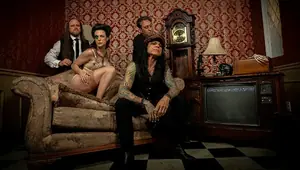
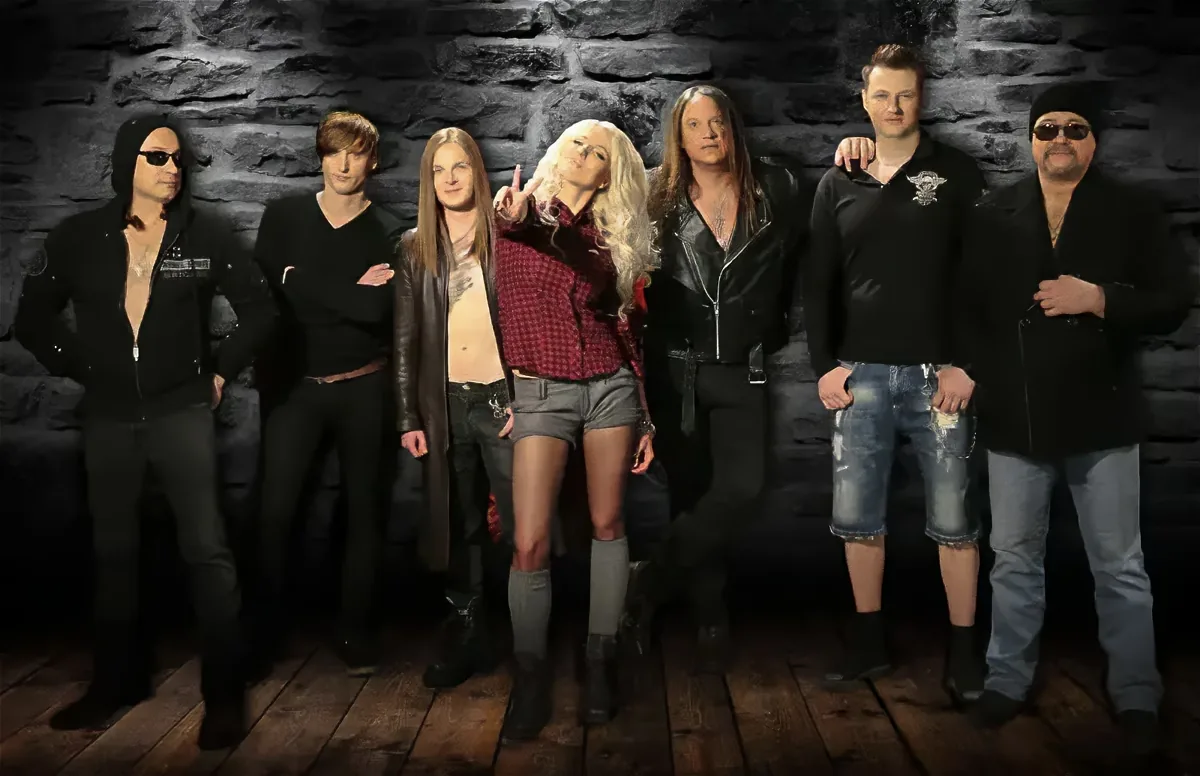

Listening back to these raw archival tapes from Feb. 28, 2011, you can hear the hum of a transatlantic call and the faint, crackling ambition of a band trying to breach the Iron Curtain of rock and roll. On the line from Moscow, just past midnight his time, is Oleg Savilev, manager and lyricist for the Russian hard rock outfit Pushking. He’s talking about an album that was, by all accounts, a logistical nightmare and a stroke of mad genius: The World as We Love It.
This record wasn't just another album. It was a statement piece, a meticulously coordinated assault on the Western market. The concept was audacious. Take a batch of songs from their extensive Russian-language back catalogue and re-imagine them for an English-speaking audience. But this was no simple translation job, a point Savilev is keen to clarify.
He makes it clear they weren't just running lyrics through a machine. They were crafting entirely new narratives. And this is where the project gets interesting. It was about cultural transposition, not literal translation. “We wrote an absolutely new story,” Savilev says, his voice cutting through the static. He explains how a Russian track called 'Darling' about a “crazy lady” was completely rewritten to become 'Cut The Wire'.
This creative process speaks to a deeper understanding of the market. Savilev touches on the inherent differences in writing for two distinct cultures. “The flavour that you have inside the language and the history… is a little bit different than the life of Russian people,” he explains. “Stories could be common for Russia, they cannot be recognized in English because different countries have different traditions and different history.” It’s a sharp piece of analysis that most bands never even consider.
But the real headline was the guest list. It reads like a Rock and Roll Hall of Fame induction ballot. Pushking, with producer Fabrizio Grossi, managed to wrangle an unbelievable roster of talent, turning the album into a who's who of classic rock royalty. This wasn't just a gimmick; it was the entire strategy.
Take the collaboration with Steve Vai on 'My Reflections'. The band didn't just send him a track with a space for a solo. They sent him the bones of the song and let him build the entire sonic structure around it. “We gave the song out to Steve Vai and we were waiting for his decision because he played all guitar parts there,” Savilev recalls. “That means that we didn't give him any kind of idea for arrangement. That is totally his feeling of the song.” It was a massive gamble that paid off, showcasing a level of trust rarely seen in projects this big.
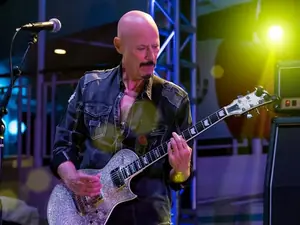
And they tailored the material to the artist. When they targeted Billy Gibbons of ZZ Top, they had an existing English track called 'Last Message'. But the fit was all wrong. “When you try to imagine how Billy could sing something connected with the last message, it goes crazy in my mind,” Savilev laughs. So, they rewrote it again, turning it into 'Night Rider', a biker anthem perfectly suited for Gibbons' Texas grit. That’s smart A&R.
They had just one day off and they devoted it to our record. So that's nice.
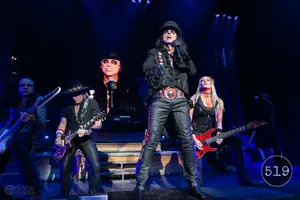
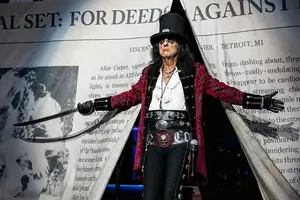
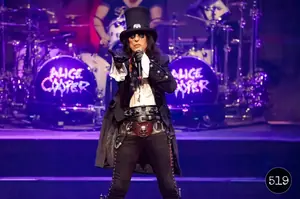
The sheer dedication of the guest artists is another recurring theme. The story of landing Alice Cooper is pure rock and roll lore. Cooper, on tour in Germany, used his only day off to go into a studio and track his vocals for 'It's Our World'. His guitarist, Keri Kelli, was there to help with the session and add his own parts. “They had just one day off and they devoted it to our record,” Savilev says, the appreciation still evident in his voice years later.
Of course, with great talent comes great bureaucracy. The process wasn't always smooth. Savilev’s candidness about the industry machine is refreshing. He notes that the musicians themselves were universally easy to work with. The problems came from their handlers. “Any difficulties that you sometimes have, they are connected with their attorneys, with their managers,” he states bluntly.
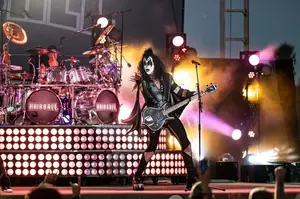
The session with Paul Stanley of KISS is a prime example. After months of waiting, Stanley was finally scheduled to record when his wife went into labour. The session was postponed, naturally. But beyond personal delays, the legal wrangling was immense. Management teams would approve a vocal performance but not a music video appearance. Joe Bonamassa was approved for a guitar part but not for singing. It was a high-stakes game of permissions and contracts.
And here lies the album’s only real artistic critique. In its quest for star power, The World as We Love It sometimes feels more like a brilliant tribute compilation than a cohesive statement from Pushking itself. The band’s own identity is occasionally eclipsed by the very legends they recruited to elevate it. It’s a tough balancing act and they almost pull it off, but the sheer gravity of names like Cooper, Stanley and Vai is hard to escape.
But you have to understand why they went this route. Savilev paints a stark picture of the Russian music scene in the early 2010s. Rock was not mainstream. Pop music dominated the airwaves and the arenas. His comparison is brutal and effective. A ZZ Top show in Moscow might draw the same 4,000 fans as one in Amsterdam, but Moscow’s population was 15 million while Amsterdam’s was under one million.
He points to Metallica, who could sell out multiple 50,000-seat stadiums in São Paulo but were relegated to a single 12,000-capacity show in Moscow. “You can imagine the difference,” he says, the frustration palpable. For Pushking, breaking out of that market wasn't just a desire, it was a necessity for survival and relevance on a global scale.
Looking back, the interview captures a band at a critical juncture. They had just released their magnum opus, a project years in the making. Savilev was already talking about the next album, a record that would feature maybe two or three stars, but would primarily be about “showing what Pushking can do without big names.”
He also mentions a desire to work with a more modern sound, distancing themselves from the '80s aesthetic that defined The World as We Love It. “We would like to show North America and European people that Russian people are not just people who know just drinking vodka, eating black caviar,” he says with a mix of humour and defiance. “We can do something else.”
The conversation ends with Savilev planning a personal trip to Canada, to visit Montreal, Toronto and Vancouver, scouting a country they were desperate to tour. That tour never quite materialized on the scale they hoped. But the album remains a fascinating artifact. A testament to a band that refused to be defined by geography, assembling their own team of rock and roll avengers to prove they could stand on the world stage.
It was an incredibly ambitious, wildly expensive and borderline impossible project. And it stands as one of the most unique crossover attempts in rock history. A beautiful, chaotic document of a band reaching for the stars, and for a moment, actually grabbing a handful of them.
519 Magazine Archive: We are thrilled to officially unearth the Rockstar Weekly Digital Vault. This isn't just a re-post; it's a high-fidelity restoration of a pivotal era in music journalism. By pairing original print dates with modern retrospectives, we’re bridging the gap between historical rock-and-roll grit and the lightning-fast performance of today’s web. These stories—once locked in physical print and lost URLs—are now back, fully searchable, and optimized for a new generation of fans.
Get Tickets

We are thrilled to officially unearth the 519 Magazine Digital Vault. This isn't just a re-post; it's a high-fidelity restoration of a pivotal era in music journalism. By pairing original print dates with modern retrospectives, we're bridging the gap between historical rock-and-roll grit and the lightning-fast performance of today's web. These stories—once locked in physical print and lost URLs—are now back, fully searchable, and optimized for a new generation of fans.