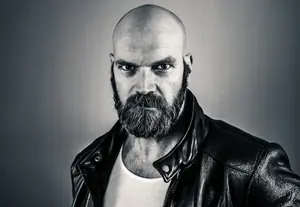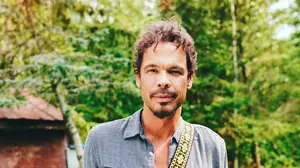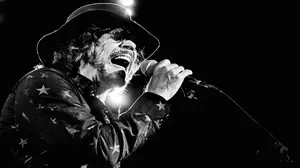


Looking at the raw transcripts from this era is a fascinating exercise. It captures Johnny Reid at the precise moment he decided to detonate the genre walls that had been built around him. The conversations surrounding his album Revival were less about promoting a record and more about documenting a full-blown artistic declaration of independence. This wasn't a pivot. It was a schism.
For years Nashville had tried to figure out what to do with the Scottish-born Canadian with the powerhouse voice. Was he a country singer? A balladeer? A pop-crossover act? The industry loves its boxes and Reid was defiantly round. But with Revival he grabbed the Sharpie and drew his own box. It was big it was loud and it was soaked in the Memphis soul and Motor City rock he grew up loving.
The album’s sound was a direct challenge to the slick country-pop dominating the airwaves. It was greasy and horn-heavy a throwback to a time when records were made by a dozen people sweating in a room together. And he knew exactly the vibe he was chasing. He points to a cover of a Delbert McClinton tune as a key indicator. “It sounds like an old Bob Seger tune. The horns are there,” Reid says describing the track “Every Time I Roll the Dice”. He wasn't just name-dropping; he was pinpointing the album's DNA. This was music for the factory floor and the Saturday night dance hall not the corporate boardroom.
The album’s mission statement arrived early in the creative process. “The first song that I wrote for the record was ‘Soul Train’,” he explains. “And that was sort of a fulcrum, if you will, for the rest of the material on the record.” That single track set the coordinates for the entire project an unapologetic dive into R&B swagger and soulful arrangements. It was a calculated risk aimed at serving his loyal audience while also educating them on the music that truly moved him.
Beyond his own compositions Reid curated a specific set of covers to bolster the album's thematic core. He put his own aggressive spin on a Kevin Breit song transforming it from its original form. “Obviously, when Kev wrote it and recorded it, it was a kind of swampy blues take style,” Reid notes. “And I just wanted to add a little bit of tempo, and so I took a more aggressive, you know, little bit more aggressive approach to the song.”
The influences were proudly worn on his sleeve. When discussing another track he was working on he made comparisons that would make a Nashville exec nervous. “I think it sounds a little bit like a Rod Stewart groove on there,” he says. This wasn't about chasing trends. It was about chasing a feeling a specific brand of blue-collar rock and soul authenticity.
This shift wasn't a whim. It was the culmination of years spent navigating the industry’s expectations. Reid speaks with the clarity of an artist who has finally seized the controls. “As a young artist, I think you're always trying to listen in, and you listen and you listen, and sometimes the vision for what you want as an album gets diluted by other opinions,” he admits. Revival was the antidote to that dilution. It was pure uncut Johnny Reid.
But the album wasn't just a stylistic exercise. The lyrics cut deeper than ever before. He contrasts the joyous story-songs like “Memphis” with tracks of profound emotional weight. He speaks of one song in particular “Cry No More” with a raw honesty that is startling. He held onto it for years waiting for the right moment. “I was never brave enough to record it,” he confesses.
As a young artist I think you're always trying to listen in and you listen and you listen and and sometimes the vision for what you want as an album it gets diluted by other opinions.
The song tackles the hidden tragedy of a mother’s alcoholism a story he felt compelled to tell. “It’s a very personal song. It's a relationship between a woman and a girl... a woman and mother who nobody knew she was drinking. Nobody knew until it was almost too late.” Placing this harrowing narrative on an album filled with upbeat soul numbers was a testament to his confidence. He trusted his audience to follow him wherever the music went.
This artistic confidence led him to finally address the question that had followed him his entire career: What kind of artist are you? His answer is definitive and dismissive of the entire premise. “I just wanted to be Johnny Reid,” he states plainly. “And for me that was writing and recording music the way that I wanna write them and the way I wanna record it.”
He has no interest in defining himself for the industry’s convenience. “Through the years I've been called a soul singer. Through the years I've been called a country, you know, country singer, and a Celtic singer, and a rock and roll singer, and all this stuff. I'm just really trying my best to be myself.” He’s content to let the music speak for itself and let others apply whatever label they need.
The perfect punctuation to this idea came from his legendary producer Bob Ezrin. Reid tells a story of someone walking into the studio and asking Ezrin what kind of record he was making. Ezrin’s reply was simple and profound. “He looks at the guy and he goes, ‘No, man. It's a Johnny Reid record’,” Reid recounts. “And I thought, you know, of all the years... that was the best answer I've ever heard anybody give. It's a Johnny Reid record.”
To back up this new identity on the road he completely overhauled his live show. This wasn't just about playing new songs; it was about creating a new experience. “I wanted to bring on stage what was in the studio that day,” he explains. “So three backup singers three horns two guitars keys drums percussion.” It was a massive undertaking a travelling soul revue built to bring Revival to life in the most authentic way possible.
Even his catalogue hits like “Darlin’” and “A Woman Like You” were not immune to the change. He planned to completely rework them to fit the new sonic landscape. “I want to rearrange these songs so that they can fit the vibe,” he says. It was a bold move ensuring that longtime fans would hear their favourites in a completely new light.
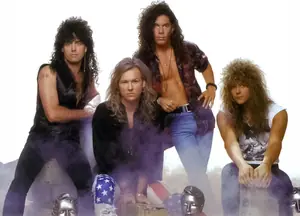
The tour itself was a celebration of Canadian talent. He tapped the incredible Jessica Mitchell to open the shows. And in a stroke of genius he enlisted 80s icons Glass Tiger as special guests. “I just finished producing Glass Tiger's album and it just sort of made sense,” he says. He planned to bring them out mid-show to perform songs together creating a unique cross-generational event.
The conversation inevitably turns to his identity. Born in Scotland a longtime resident of Canada and doing business in Nashville where does he belong? His answer is immediate and passionate. “I'm definitely Scottish,” he begins. “However, I moved to Canada and I became a Canadian, and one of the... greatest experiences that I've ever had was the day that I became a Canadian.”
His gratitude toward his adopted home is palpable. “The country opened up its heart to me, and for that, I don't think I'll ever be able to repay Canada for the kindness and the opportunity that it's given us.” He draws a clear line between his home and his work. America is where his children were born and where he does business but his identity is clear.
“So when people ask me where I'm from, I'll say I was born in Scotland, but I'm from Canada. So I'm very proud to be Canadian.” It’s this deep sense of self that ultimately fuels the music. He knows who he is and with Revival he finally made a record that sounded exactly like it.
519 Magazine Archive: We are thrilled to officially unearth the 519 Magazine Digital Vault. This isn't just a re-post; it's a high-fidelity restoration of a pivotal era in music journalism. By pairing original print dates with modern retrospectives, we’re bridging the gap between historical rock-and-roll grit and the lightning-fast performance of today’s web. These stories—once locked in physical print and lost URLs—are now back, fully searchable, and optimized for a new generation of fans.
Get Tickets


We are thrilled to officially unearth the 519 Magazine Digital Vault. This isn't just a re-post; it's a high-fidelity restoration of a pivotal era in music journalism. By pairing original print dates with modern retrospectives, we're bridging the gap between historical rock-and-roll grit and the lightning-fast performance of today's web. These stories—once locked in physical print and lost URLs—are now back, fully searchable, and optimized for a new generation of fans.