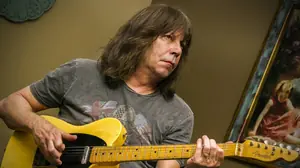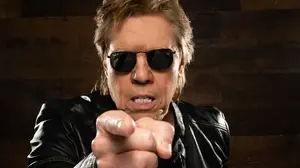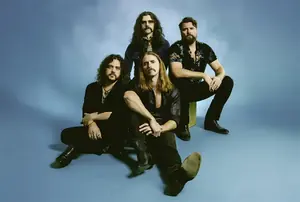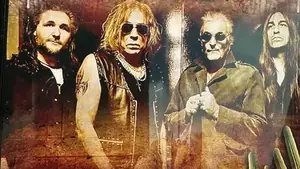

Looking at the raw transcripts from this late 2023 conversation with Scott Holt is to look at the blueprint of survival in the rock and roll majors. Seven years after their last studio effort, Foghat roared back with Sonic Mojo, an album that wasn't so much a comeback as it was a loud, declarative statement of purpose. Holt, the band’s frontman and guitarist, was candid about the band’s unhurried process. This isn’t a young band chasing trends or desperately trying to fulfill a label contract. This is a veteran outfit operating on its own clock.
“I think the way we work is we sort of just we're constantly writing. We're constantly creating new music. And then when, you know, the bucket's full, that's when we put the record out,” Holt says. That bucket, it turns out, was filled with a potent brew of influences history and personal reflection. It speaks volumes about a band that has earned the right to move at the speed of inspiration not commerce. It’s a luxury few afford.
The album’s title itself, Sonic Mojo, is a direct nod to the band’s DNA. Holt, a Tennessee native steeped in the blues, immediately connects the term to its American roots. “As a blues guy coming up, mojo was kind of a term that they used a lot,” he explains, referencing the great Muddy Waters. “The mojo was kind of a good luck charm.” This isn’t just branding. It’s an acknowledgment of Foghat’s entire career arc: four British musicians who fell in love with American blues and supercharged it for arena audiences.
They were translators. And Sonic Mojo sees them returning to the source material with renewed vigour. It’s a celebration of the foundational music—blues country R&B and soul—that has always been the band's bedrock. The title is less a boast and more a humble tribute to the magic they’ve been chasing for over 50 years.
That chase was tested during the album's creation. The band’s anchor and sole remaining original member, drummer Roger Earl, recorded his parts while battling a significant shoulder injury. Holt’s respect for the man is absolute. “Watching him work through, you know, all last year, we toured with his shoulder injured. We recorded the record with his shoulder injured. He never complained about it,” Holt recounts. “When he was playing, you didn't know he was hurting at all.”
This isn't just a story about toughness; it's a metaphor for the band itself. Earl’s refusal to compromise his performance, to deliver anything less than 100 percent, is the very ethos of Foghat. It’s the engine room’s integrity personified. The pocket groove remains deep and unshakable, injury be damned. It’s a work ethic forged in a different era of the music industry entirely.
The band’s creative process was fostered in a unique environment: a combination rehearsal space recording studio and living quarters in Florida. Holt describes it as an incubator for creativity. “You get up in the morning, and you can immediately start creating music,” he says. “It's probably the most effortless that I've ever created a record with because it's just the creativity is all around you.” This communal setup bleeds into the music, giving Sonic Mojo a loose limber feel that defies the sterile click-track precision of many modern rock records.
It's kinda bittersweet. You know, we're I'm real proud that we were able to record his songs, and I and I wish he was here to hear them.
But a profound sense of loss hangs over the project. Three songs were co-written by Savoy Brown founder Kim Simmonds, who passed away before he could record his parts. The connection is deeply personal and historic. Roger Earl’s first major gig was with Simmonds in Savoy Brown before he and singer Dave Peverett left to form Foghat. The collaboration was meant to bring things full circle.
“He wrote three great songs that we put all three of them on the record, but, unfortunately, he passed away before he could record with us,” Holt says, his tone shifting. “It's kinda bittersweet. You know, we're, I'm real proud that we were able to record his songs, and I wish he was here to hear them.” It imbues the album with a weight and poignancy that is both heartbreaking and beautiful.
One of those tracks, “Time Slips Away” penned by Simmonds during his terminal illness, forced the band to confront mortality head-on. Holt admits to the artist’s necessary detachment during the recording process. “You have to sort of divorce yourself from the emotion while you're working,” he explains. “And it's only after you listen to the playback that you can let your heart open up.” The result is a song that transcends its tragic origins to become a universal reflection on the finite nature of our time.
The album also takes an unexpected turn with “Wish I’d Been There” an ode to country legend Hank Williams with lyrics by Roger Earl’s brother Colin. Holt, who grew up just south of Nashville, embraced the chance to flex his country muscles. “I guess I'm bringing a hillbilly element to the Foghat situation,” he jokes. And while some might see it as a stylistic detour, it’s entirely consistent with the band’s history of honouring all forms of American roots music, from Chuck Berry to their past covers of blues and rock classics.
This philosophy of musical freedom is a core tenet, laid down by Earl himself. Holt recalls questioning if a certain song was a “Foghat kinda song” early in his tenure. Roger immediately shot back, “Of course, it's Foghat... it's Foghat because we're playing it.” That mandate is the key to the current lineup’s vitality. It’s not about mimicking the past; it’s about channelling the spirit through new vessels. Holt Bryan Bassett and Rodney O’Quinn aren’t impersonators; they are the next chapter.
That chapter involves a delicate balancing act. Holt is keenly aware of his responsibility. “There's a responsibility to honor the history of the band while still moving forward,” he states. “We're not a tribute band.” The setlists reflect this, weaving new tracks like “She’s a Little Bit of Everything” seamlessly alongside monolithic classics like “Fool for the City” and “Slow Ride”. It works because the energy is consistent.
When asked how they translate their famous live power into a studio recording, Holt is blunt. It’s not a translation; it’s the default setting. “If you come to a rehearsal, it sounds like a concert because we're playing with that same level of intensity,” he says. There is no off switch. This is the essence of boogie rock—a genre built on feel momentum and relentless energy.
The band’s reverence for its source material is evident in the covers chosen for Sonic Mojo, from Willie Dixon to B.B. King. But they are never rote copies. “When we play a Muddy Waters song, we don't sound like Muddy Waters,” Holt asserts. “You have to take that song and strip it down and then put yourself into it.” This is the tradition of the British Blues Boom in microcosm: interpretation not imitation. They filter the classics through their own unique sonic identity.
Holt’s own entry into the band was a natural progression, forged in the side project Earl and the Agitators. He’d already been co-writing with the band for their 2016 album Under the Influence. The chemistry was established long before he stepped up to the centre microphone, making the transition feel less like a lineup change and more like a family affair.
Ultimately, revisiting this discussion reveals Sonic Mojo as more than just a collection of songs. It’s a document of resilience, a tribute to lost friends and a testament to the enduring power of American music as seen through a British lens. It’s the sound of a band that knows exactly who they are and feels no need to apologize for it. The mojo, it seems, is still working just fine.
519 Magazine Archive: We are thrilled to officially unearth the 519 Magazine Digital Vault. This isn't just a re-post; it's a high-fidelity restoration of a pivotal era in music journalism. By pairing original print dates with modern retrospectives, we’re bridging the gap between historical rock-and-roll grit and the lightning-fast performance of today’s web. These stories—once locked in physical print and lost URLs—are now back, fully searchable, and optimized for a new generation of fans.
We are thrilled to officially unearth the 519 Magazine Digital Vault. This isn't just a re-post; it's a high-fidelity restoration of a pivotal era in music journalism. By pairing original print dates with modern retrospectives, we're bridging the gap between historical rock-and-roll grit and the lightning-fast performance of today's web. These stories—once locked in physical print and lost URLs—are now back, fully searchable, and optimized for a new generation of fans.