
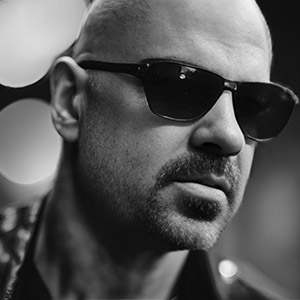
Looking back at these archival tapes from late 2010, the hiss and hum feel like a time machine. On the line is Jake Gold, a name etched into the very bedrock of the Canadian music industry. He was, and is, an institution. The man who saw the fire in The Tragically Hip, the sharp-tongued judge on Canadian Idol and a manager who built careers the old-fashioned way: with grit, instinct and an unshakeable belief in the power of the road.
This was a moment when the industry was deep in its digital panic, but Gold sounds unflappable. His voice is direct, carrying the weight of someone who has seen it all. He didn’t get here by reading textbooks. He got here by doing the work. It all started with a primal love for the noise. “I saw the Beatles when I was six,” he says, the statement landing with the casual gravity of a life-altering event. That was the spark.
From there, he was singing in high school Top 40 bands, a kid immersed in the sound. But he quickly realized his place wasn't at the centre of the stage. “I really wasn't much of a performer,” Gold admits. Instead, he found his calling in the wings, on the road, in the machinery that makes the show happen. In 1979, he was the light guy for a rock cover band, crisscrossing Ontario and Quebec, learning the geography of the grind one gig at a time.
That experience became his gospel. Hearing him talk, even a decade ago, you understand that for Gold, the road is everything. It’s the crucible where talent is forged into legacy. When asked how the business has changed, his perspective is brutally simple, almost defiantly so for the era. “It's just been the delivery system that's changed in terms of how people get their music,” he argues. “But you still have to be really good. You still have to be on the road to actually build your following. You still have to do all of those things. None of that stuff just happens.”
This wasn't a formula. It was a philosophy, one he saw as immutable. “The road has separated the strong from the weak,” he states. It’s a harsh truth, but one that defined his entire approach to artist management. The bands that survive the relentless cycle of load-ins, soundchecks and cheap motels are the ones that last. The recording is merely the “calling card” that gets you in the door; the live show is what keeps you in the room.
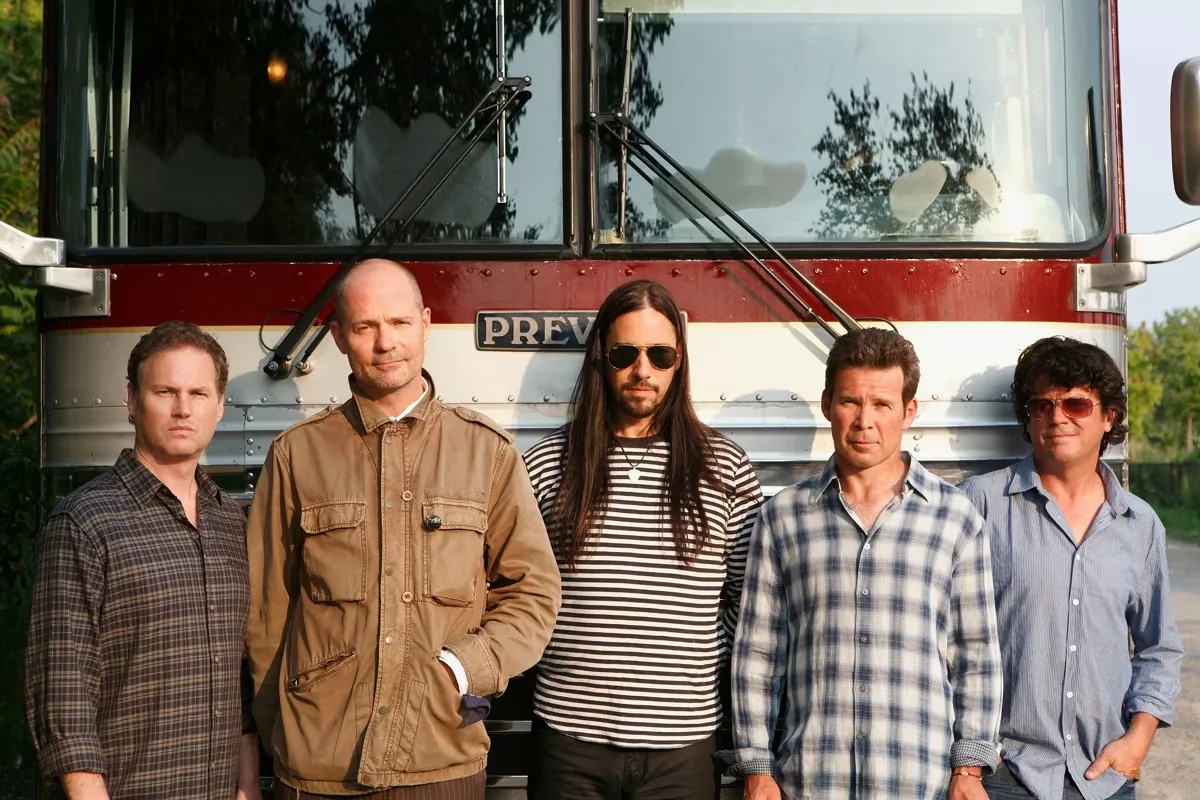
And no band proved his philosophy more than The Tragically Hip. The origin story is now the stuff of Canadian legend. His partner, Allan Gregg, and he received a demo tape. That was it. No industry hype, no pre-existing buzz, just raw sound on magnetic tape. They set up a showcase for the band in Toronto in August 1986, and the reaction was instantaneous. It was chemical.
“Thirty seconds into the first song, I looked at my partner, and I went, we should sign these guys,” Gold recalls. There was no hesitation. He knew. But what he knew wasn’t that he had a hit single. He knew he had a live entity, something fierce and undeniable that had to be witnessed in person.
But the success wasn’t quick. That’s a myth. Gold bristles at the notion. “We signed them in '86. We didn't even put out their first record till '87,” he clarifies. “They were on the road doing 200 shows a year. They were playing nonstop.” This was labour. They built their audience town by town, bar by bar, building a constituency that would become a nation. Everything was based around the live show because, as Gold says, “we knew the band live was unbelievable.”
The road has separated the strong from the weak.
This hands-on, learn-as-you-go ethos is central to Gold’s entire career. He didn't study A&R at a university. When a friend in a band told him, “You should be our manager,” Gold’s response was honest: “I don't really know anything about it.” The reply he got back set the course for his life: “No. No. You'll be really good at it.” So he did it.
He is rightly skeptical of institutional learning for his line of work. “There's no such thing as education in management,” he says flatly. “You have to do it. They have all these schools, and the schools are fine in sort of learning the terminology and learning how things work… But at the end of the day, you have to do it. You have to actually go out and do it.” It’s a mentality born from experience, not theory.
That pragmatism served him well when he stepped into the national spotlight as a judge on Canadian Idol. It’s a fascinating detail that he, along with Sass Jordan who he would later manage, had to audition for the role. He wasn’t just appointed. He had to earn the chair. Once there, he understood the assignment perfectly.
His role, he says, was to “make good TV at the end of the day. It's not really about the rest of it.” It’s a refreshingly candid take on the reality of music competition shows. He wasn’t there just to scout talent, though he did sign the Pigott Brothers from the show’s final season. He was there to be a character, a foil, a voice of authority in a televised spectacle. Still, his core instincts remained. He was always looking for that spark, for an artist “that moved me, you know, that made me feel something different than I did before.”
Looking back from today, Gold’s 2010 analysis of the industry’s changes feels a bit too tidy. To say only the “delivery system” had changed was to underestimate the seismic cultural and economic shifts already underway. The rise of streaming, the collapse of album sales and the dawn of the social media artist were rewriting every rule in the book. His focus on the road, while still valid, was becoming just one piece of a much more complex puzzle. It's the only point in the tape where a veteran's certainty perhaps overlooked the scale of the disruption.
Still, his career continued to evolve. He signed established acts like Sass Jordan and Adam Cohen, Leonard’s son, proving his skills weren’t limited to developing new talent from scratch. He understood the labour involved in working with artists at any stage. “Everything's work,” he says simply. There are no easy gigs.
Beyond management, he was a creator. He executive produced the show Master Tracks, a concept he developed with Jeff Rogers to showcase Canadian bands and the producers who shaped their sound. It was another way to champion the ecosystem of Canadian music, putting a spotlight on the craft behind the hits.
But when pressed for a defining moment across three decades, it wasn’t a gold record or a sold-out arena that came to mind first. It was the War Child benefit concert in Winnipeg. An idea sketched out in an office that grew into a massive event with 100,000 people, raising thousands for charity.
“That's always, like, the greatest feeling,” Gold reflects, his voice softening slightly. “When you can sit down and think of something and then actually pull it off.” It’s a statement that encapsulates his entire career. He was never just a passenger. He was a driver, an architect, a guy who saw potential—in a band, in a television show, in a charitable idea—and had the tenacity to build it into something real.
He’s a lifer. Thirty years in the business, and when asked what’s next, the answer is simple: “What I'm doing. Straight ahead. Keep going.” The tape clicks off, but the impression remains. Jake Gold is a man who understands that in music, as in life, you build your legacy one show at a time.
519 Magazine Archive: We are thrilled to officially unearth the Rockstar Weekly Digital Vault. This isn't just a re-post; it's a high-fidelity restoration of a pivotal era in music journalism. By pairing original print dates with modern retrospectives, we’re bridging the gap between historical rock-and-roll grit and the lightning-fast performance of today’s web. These stories—once locked in physical print and lost URLs—are now back, fully searchable, and optimized for a new generation of fans.
We are thrilled to officially unearth the 519 Magazine Digital Vault. This isn't just a re-post; it's a high-fidelity restoration of a pivotal era in music journalism. By pairing original print dates with modern retrospectives, we're bridging the gap between historical rock-and-roll grit and the lightning-fast performance of today's web. These stories—once locked in physical print and lost URLs—are now back, fully searchable, and optimized for a new generation of fans.