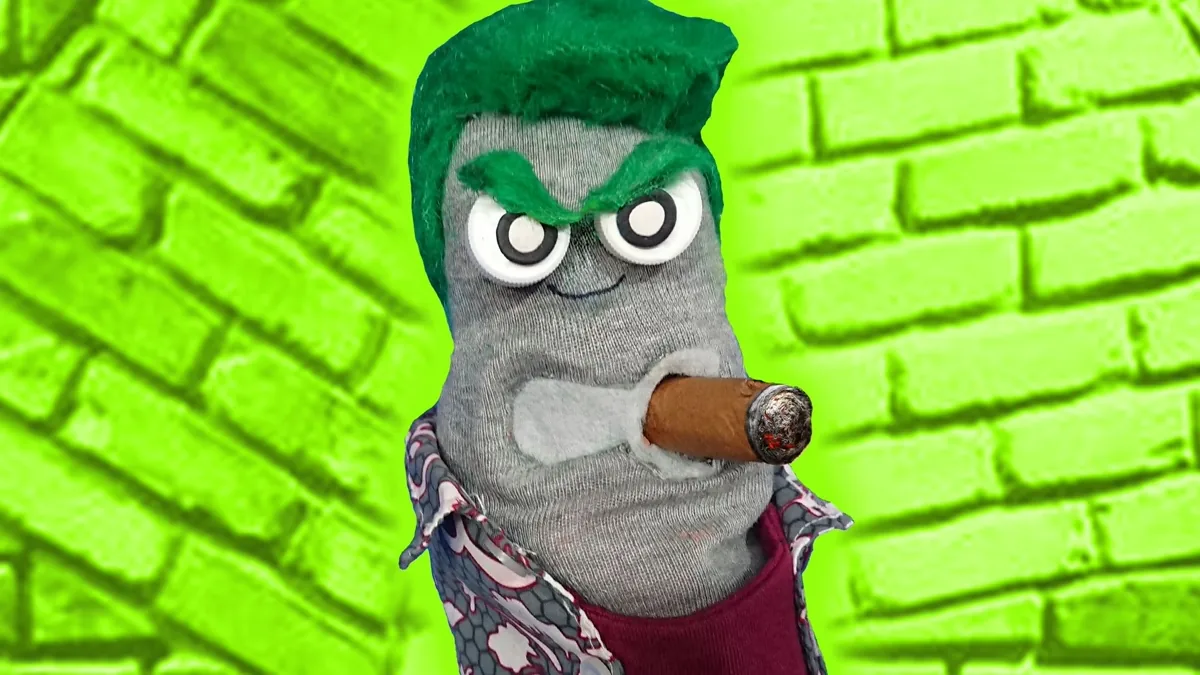
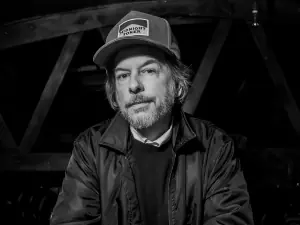
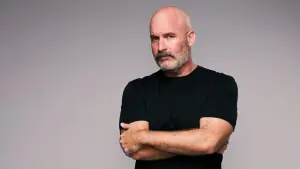
Looking at the raw transcripts from this Jan. 25 2019 exchange is like unearthing a time capsule from the apex of internet outrage culture. It was a moment when the digital town square had devolved into a series of walled gardens each with its own manicured reality. Into this fray stepped two of Canadian media’s most recognizable and defiantly unfiltered voices Ed the Sock and Liana K armed with a live tour bluntly titled the “War on Stupid”.
Their mission was a direct response to a cultural shift they saw as catastrophic. The duo felt a genuine demand for a return to sanity. As Steven Kerzner, the man behind the sock, explains it was a call to action. “We heard the call of the people we heard them rending their garments at the wave of idiocy around us. And we stepped forward to once again shine light on reason and intelligence using humor.” This wasn't just about a nostalgia tour. It was a diagnosis of a society losing its collective mind.
The central problem as they saw it was the death of the shared experience. The old media gatekeepers, for all their faults, forced a kind of cultural compromise. Kerzner uses the perfect analogy of terrestrial radio where you had to endure songs you hated to hear the ones you loved. This forced acquiescence to the tastes of others created a baseline of social cohesion. But the smartphone and the algorithm killed that.
Now people curate their entire reality, blocking out anything that challenges their worldview. It’s a self-imposed isolation that breeds a toxic certainty. And Ed, as always, had the crudest yet most accurate metaphor for it. “It's kind of like people are kind of like sitting in their car smelling their own farts,” he says. “There's a comfort in the smell of your own fart... That is the metaphor for the Internet.”
This digital self-satisfaction created a population terrified of being wrong. Intelligence became conflated with unwavering ideological purity. Liana K saw this as a breeding ground for a new kind of social terror where nuance is obliterated. “One mistake can be the death of you and it's not you don't even get to determine for yourself whether it's a mistake. The world decides you were wrong. It's very Kafkaesque.” It’s a chillingly prescient observation of the social media dynamics that would only intensify in the years to follow.
And both of them were quick to point out this fragility wasn't a partisan issue. It was a generational and technological sickness infecting all sides of the political spectrum. Kerzner argues that intellectual laziness had become a bipartisan virtue. “The snowflakes are equally as fragile on the right as the left,” he states. “They wanna sit there huddled in their little rooms listening to things that just tell them how smart they are when in fact they're not smart. They're making themselves actively stupider.”
The primary casualty of this new hyper-sensitive environment was comedy. A war on humour was being waged not by governments but by the audience itself. Comedians were retreating from university campuses and the threat of de-platforming loomed over any joke that pushed a boundary. It marked a fundamental inversion of comedy’s social contract. “It used to be, the statement was, 'F you if you can't take a joke,'” Kerzner says. “Now it's, 'F you if you can't even tell it's a joke.'”
This is where Liana K provides some of the interview's most profound historical context. She points to the Canadian first-wave feminist movement as a model for effective social change through humour, not rage. “The difference between the Canadian first wave feminists and the British and American first wave feminists was humor,” she explains. “The Canadian advocates were much more effective without causing as much damage because they used humor. It's amazing to go back and see this stuff. Everything was tongue in cheek. It wasn't angry.”
The snowflakes are equally as fragile on the right as the left. They wanna sit there huddled in their little rooms listening to things that just tell them how smart they are when in fact they're not smart.
This historical lens sharpened their critique of contemporary comedy which they saw as safe and self-congratulatory. They single out Saturday Night Live for its toothless political satire, calling it a regurgitation of internet talking points rather than sharp commentary. Liana goes further, arguing its portrayals of powerful women like Nancy Pelosi and Hillary Clinton were regressive. She says the show reinforces the idea that “there's something inherently wrong with ambitious women. If you think you're good enough to run the place prepare to be mocked.”
Their tour was the antidote, a space for people exhausted by the shrieking partisans. It was a promise of intelligent irreverence. Liana frames it perfectly: “Prepare to be offended for your own good.” This wasn’t about being cruel. It was about reintroducing the public to intellectual resilience through laughter. Ed was, as ever, more direct. “We're taking a blowtorch to the snowflakes.”
The tour was also the ground-level launchpad for a much bigger project, the FU Network. This proposed digital platform was their attempt to solve the internet's curation problem. It wasn't to be an unmoderated free-for-all but a space guided by a simple yet crucial philosophy. “Our slogan is, 'Smart ass begins with smart,'” Kerzner says. The goal was to reclaim intelligent discourse from both the sanitized corporate mainstream and the cesspools of trolling.
They established a clear ethical line in the sand for the network. “One of our commandments is, 'It's one thing to say something which may offend people,'” Kerzner clarifies. “It's another thing to say something intended to offend people. And we don't want anybody who says things just to rile people up.” This distinction is the core of their entire project, separating provocative thought from simple hate.
But the conversation also highlights Liana K’s unique and often overlooked role in this dynamic. While Ed is the cigar-chomping id, Liana is the intellectual anchor with deep roots in gaming and geek culture. She speaks powerfully about the double standards faced by women in entertainment who dare to be both intelligent and sexual. She notes that while George Clooney’s sex appeal never undermines his perceived intelligence, a woman using the same tools is often dismissed or degraded.
Her perspective is born from a career spent navigating these biases. Her very stage name Liana K is a reference to Joseph K. from Kafka’s *The Trial*, chosen because she learned early on that “when you're a woman in the media, you are always guilty of something. Nobody's gonna tell you actually what that is, but they're gonna let you know you're guilty of something.” It’s a deeply personal and intellectual foundation for her public persona.
The duo’s chemistry is built on this tension between Ed’s anti-zen chaos and Liana’s grounded intellectualism. Their live shows were famously unscripted, a high-wire act of topical commentary and mutual antagonism that felt dangerously real in an era of polished and pre-approved content. They were bringing the raw, unpredictable energy of their MuchMusic heyday to a world that had forgotten what spontaneous authenticity looked like.
Revisiting their plans and pronouncements from 2019, it’s clear they were identifying the cultural cracks that would soon become gaping chasms. They saw the destructive potential of algorithm-driven discourse, the weaponization of offense, and the desperate need for spaces where people could disagree without dehumanizing one another.
Their tour, which hit Southwestern Ontario stops from London to a curiously maligned Tillsonburg, was a physical manifestation of this fight. It was an attempt to reconnect with an audience they felt had been abandoned by mainstream media—the vast, sane majority caught in the crossfire between two screaming extremes.
Liana’s excitement for shows in college towns like Waterloo was particularly telling. She saw them as ground zero for the “fragile rigid thinking” they were there to challenge. It wasn’t about antagonism for its own sake but about a kind of intellectual vivisection to help people “learn to cope with a world where not everybody thinks the same way they do.”
The entire enterprise was a bet on the enduring power of human connection over digital alienation. They lamented the loss of authentic interaction, something Ed knew intimately from his days on the street for MuchMusic. That’s what they were chasing on the road and what they hoped to build with their network—a return to real conversations with real people.
Ultimately, this 2019 interview captures a pivotal moment. It's a snapshot of two Canadian icons refusing to go quietly into the night. They were railing against the dying of the light not with anger but with the one weapon they believed could actually make a difference: a really good joke told without fear.
519 Magazine Archive: We are thrilled to officially unearth the 519 Magazine Digital Vault. This isn't just a re-post; it's a high-fidelity restoration of a pivotal era in music journalism. By pairing original print dates with modern retrospectives, we’re bridging the gap between historical rock-and-roll grit and the lightning-fast performance of today’s web. These stories—once locked in physical print and lost URLs—are now back, fully searchable, and optimized for a new generation of fans.
Get Tickets









We are thrilled to officially unearth the 519 Magazine Digital Vault. This isn't just a re-post; it's a high-fidelity restoration of a pivotal era in music journalism. By pairing original print dates with modern retrospectives, we're bridging the gap between historical rock-and-roll grit and the lightning-fast performance of today's web. These stories—once locked in physical print and lost URLs—are now back, fully searchable, and optimized for a new generation of fans.