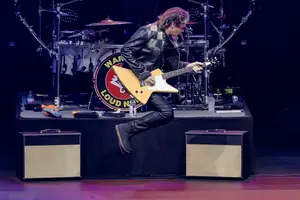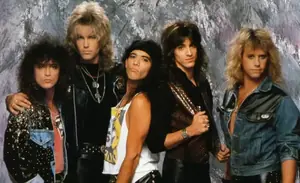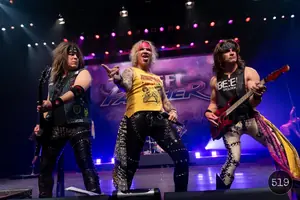


Listening back to this raw archival tape from the fall of 2009, you can hear the hum of a hotel room television in the background. It’s a fittingly mundane sound for an interview that pulls back the curtain on one of the most polarizing bands in metal history. Stryper guitarist Oz Fox, on a day off in Vancouver, sounds relaxed but pointed. He’s in the middle of a reunion tour that felt less like a victory lap and more like a high-stakes campaign to win back the hearts and minds of a fractured fanbase.
The band was touring behind Murder by Pride, an album that was a direct, unapologetic course correction. And it needed to be. Their previous effort, 2005’s Reborn, had landed with a thud among the faithful. It was a modern rock record masquerading as a Stryper album, and the dissonance was jarring for a crowd raised on screaming solos and yellow-and-black spandex.
But Fox is candid about its origins. It was never really a Stryper record to begin with. “Basically, Reborn was an album that was all the music was written by Michael, and it was actually originally written for a solo album that he was gonna release,” Fox says. It was a pragmatic decision, a way to get product out with new bassist Tracy Ferrie, but it alienated the very people who kept the band’s legacy alive. The sound was wrong, the vibe was off and the fans let them know.
So for Murder by Pride, the mandate was clear: go back. Go back to the soaring vocals, the harmonized guitar leads and the anthemic choruses that defined them. Fox explains that after hearing the fan feedback, Michael Sweet consciously pivoted. “He had already kind of put together a handful of ideas that had the sound, the old sound,” Fox notes. “When we laid out the tracks for Murder by Pride, I mean, right away, we could tell the format of the music was a lot like the old style. And so recording everything was almost like going back in time.”
But the album wasn't just a calculated exercise in nostalgia. A devastating personal tragedy sharpened its emotional edge. Michael Sweet’s wife, Kyle, had been diagnosed with ovarian cancer, a battle she would tragically lose in early 2009. That raw, real-world pain bled into the songwriting. Fox believes it fundamentally changed the album’s lyrical core. “A lot of heartfelt lyrics came to mind to Michael,” he reflects. “The lyrics that came out for the songs, I believe that in a lot of ways changed because of what was going on with his wife.”
That sense of mortality and reconciliation spilled over into the band’s lineup. The tour was initially announced with an awkward, almost unworkable premise: new bassist Tracy Ferrie and original bassist Tim Gaines would both be on the road, splitting the show. It was a logistical and emotional nightmare waiting to happen. But the passing of Sweet’s wife provided a moment of clarity.
Life was too short for half-measures. “After my wife passed away, his whole heart started going more towards, ‘Hey, you know what? Life is too short’,” Fox recalls. The message was about healing relationships. The convoluted two-bassist idea was scrapped, Ferrie graciously bowed out to be with his own growing family and Tim Gaines was back in full-time. It was the classic lineup, the one that mattered.
Still, bringing Gaines back wasn't without its own baggage. Fox admits there was some hesitation. “You have to kind of just sit back and think about all that stuff when you are thinking about bringing somebody back into the band,” he says. But the chemistry was undeniable. “Playing the music for Tim was like riding a bike and he jumped right back into it and everything just kinda came together.” Any reservations were gone within days.
Basically, Reborn was an album that was all the music was written by Michael, and it was actually originally written for a solo album that he was gonna release.
The interview also forces Fox to look back at the original split in 1992, a death that came not with a bang but a whimper. He lays the blame squarely on industry mechanics and shifting ambitions. Enigma Records, their longtime label, went bankrupt, leaving them adrift. Their new home, Hollywood Records, had no idea what to do with a Christian glam metal band in the age of Nirvana.
“The bankruptcy with Enigma kind of left a bad taste in a lot of people's mouths,” Fox says. “When we got to Hollywood Records… no one wanted to hear about Stryper.” The momentum was gone. Michael Sweet, likely seeing the writing on the wall, wanted a solo career. And that was that. The machine just stopped.
The band tried to soldier on, with Fox even taking over lead vocals for a few European dates. But the internal vision was fractured. Fox wanted to find a new guitarist; drummer Robert Sweet wanted a new singer. It was a stalemate. “I was running out of money and so I quit the band and went on to get a regular job,” Fox states with startling frankness.
His post-fame life is a dose of reality for anyone who thinks rock stardom is a permanent state. He went back to what he knew before the band hit it big: warehouse distribution. “I actually started working for JBL speaker company,” he says. “I became a supervisor because I knew the business so well.” He was raising a family, living a normal life, shipping speakers around the world while his gold records collected dust.
Music, however, never fully left. The 2003 reunion tour pulled him back in, and by 2005 he had quit the warehouse for good. But even then, survival meant hustling. He started teaching guitar and, most surprisingly, joined a classic rock cover band in Las Vegas. “I would drive every weekend out to Las Vegas to play with this band and make money,” he says. It’s a humbling image: a guitarist from a multi-platinum band grinding it out on the casino circuit to pay the bills.
The conversation pivots to the band’s very identity. When asked if they play “Christian metal,” Fox is quick to reframe the label. He’s clearly wrestled with that tag for decades. “I don't like to call it Christian metal,” he clarifies. “I like to call it metal with a positive message. And the reason why we play that is because we feel there is a calling in our lives to share our faith with people.” It’s a subtle but important distinction, positioning them as artists with a message, not evangelists with guitars.
His views on the darker side of metal are earnest, if a bit simplistic. He sees black metal and its associated ideologies as a genuine spiritual threat, driven by people who are “lost and blind.” His critique isn't of the music itself—the blast beats or the tremolo picking—but of the real-world consequences he perceives.
What truly bothers him is when art inspires action. “What upsets me is that too many people get into the black side of metal and then live out what is being promoted, getting into drugs, alcohol, satanism, whatever,” Fox insists. “When the fans start to live out the actual genre then it becomes a problem.” It's a critique that misses the nuance and theatricality of the genre, but it comes from a place of genuine concern, however misguided it may seem to secular metalheads.
When asked what God would think of Stryper, his answer is one of unconditional acceptance. “I think he loves us. He loves each one of us individually regardless of who we are, what we've done, or whether we've done it right or wrong.” It’s this core belief that has always set Stryper apart. In a genre that often champions darkness and rebellion, their rebellion was one of defiant light.
And his one question for Jesus? It’s not about the meaning of life or the mysteries of the universe. It’s charmingly practical. “What's my mansion gonna look like in heaven?” he laughs. It’s the perfect answer for a man who has spent his career trying to reconcile rock and roll excess with righteous faith.
This 2009 snapshot captures a band at a crossroads. They weren’t kids anymore. They had navigated fame, failure, death and day jobs. Murder by Pride was more than a comeback; it was a restatement of purpose. They had to sound like Stryper again because, in the end, that’s all they could be. And as this tape reveals, they were finally at peace with that.
519 Magazine Archive: We are thrilled to officially unearth the Rockstar Weekly Digital Vault. This isn't just a re-post; it's a high-fidelity restoration of a pivotal era in music journalism. By pairing original print dates with modern retrospectives, we’re bridging the gap between historical rock-and-roll grit and the lightning-fast performance of today’s web. These stories—once locked in physical print and lost URLs—are now back, fully searchable, and optimized for a new generation of fans.
We are thrilled to officially unearth the 519 Magazine Digital Vault. This isn't just a re-post; it's a high-fidelity restoration of a pivotal era in music journalism. By pairing original print dates with modern retrospectives, we're bridging the gap between historical rock-and-roll grit and the lightning-fast performance of today's web. These stories—once locked in physical print and lost URLs—are now back, fully searchable, and optimized for a new generation of fans.