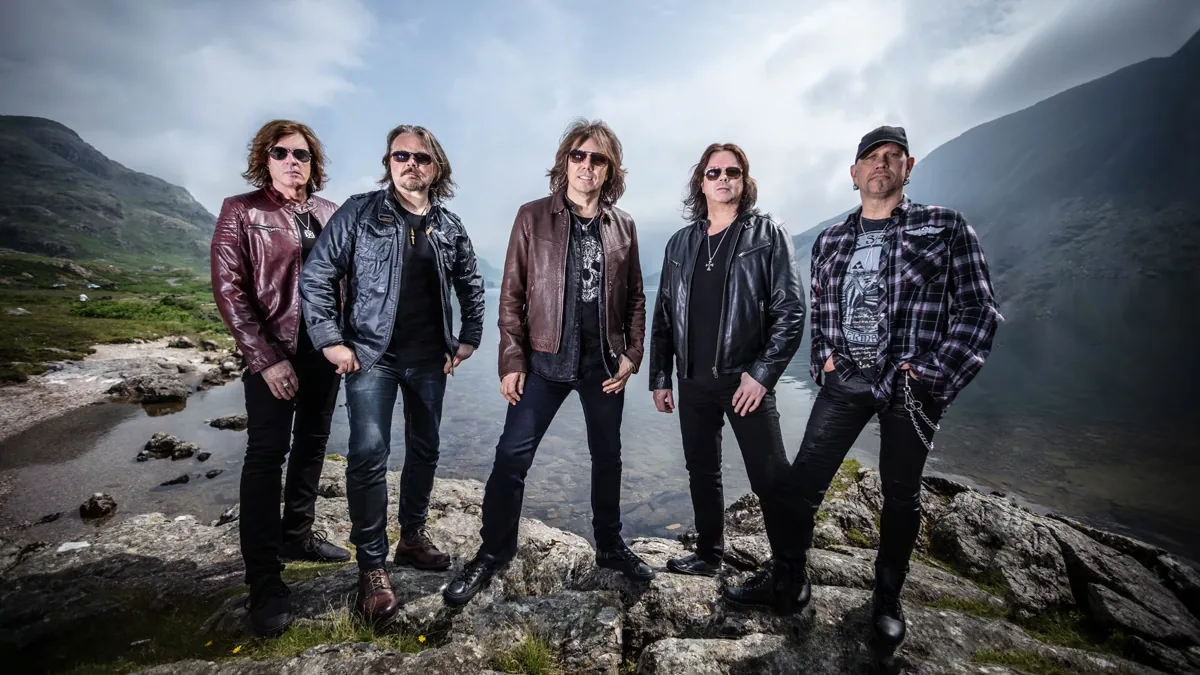
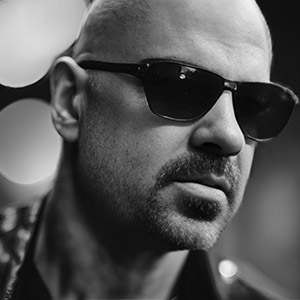
Looking back at these archival tapes from May 30, 2013, feels like unearthing a time capsule. The raw audio crackles with the transatlantic hum of a call to Stockholm. On the line is Mic Michaeli, the keyboardist for Europe, a band then on the cusp of celebrating its 30th anniversary by headlining one of the world's premiere rock festivals. It was a moment of triumph, a coronation in their home country. But hearing Michaeli’s words now, it’s clear this was also a band still wrestling with its own colossal legacy and the ghost of a North American market that had long since moved on.
The centrepiece of our conversation was the Sweden Rock Festival. This wasn't just another gig. For Europe, it was hallowed ground. A full-circle moment. Michaeli is quick to point out its foundational role in their second act. “When we reunited the band Europe in 2003, Sweden Rock Festival was the first festival that we did,” he says, the pride still evident in his voice a decade later. “The first real festival, the first show, basically.” To return there as headliners for their 30th anniversary was more than just a booking; it was a statement.
And they weren't just playing the hits. This was a victory lap with esteemed company. They planned to bring out friends and heroes, a flex of their own rock and roll bona fides. “Like, for example, Scott Gorham from Thin Lizzy and Michael Schenker from UFO and Scorpions,” Michaeli lists. It was a clear signal: we are not just the band that wrote that one synth riff. We are a part of this lineage. We belong here, alongside the architects of the genre.
But to understand the weight of that moment, you have to understand the silence that preceded it. The infamous 12-year hiatus. Michaeli, with the benefit of hindsight, calls it a “twelve-year coffee break” but the reasons for it run deeper than simple fatigue. The machine had started to grind to a halt around the 1991 album Prisoners in Paradise. The fun was gone, replaced by industry politics.
“We had the guys that we knew on the record company in the United States, they were all, you know, fired, and there were new people coming in,” he recalls. “They had their ideas. They were sort of interfering in what songs they thought were gonna be on the album. We just felt exhausted.” It’s a classic tale of A&R meddling, but it speaks to a larger shift. The glam metal gold rush was over and the labels were getting nervous.
The breaking point was simple and profound. Michaeli recounts a question he once got during the band's peak. “A journalist who was asking, ‘How long do you think you will go on for?’ And my answer was as long as we have fun. And I think we just didn't have that much fun anymore.” That’s the sanitized version. The reality is that the entire musical climate had changed. Grunge had landed like an asteroid and bands like Europe were suddenly dinosaurs.
The break, however necessary, proved to be restorative. It allowed them to explore other projects and, more importantly, to miss each other. The spark to reunite came from a one-off gig. “We were asked to put the band together at the millennium,” Michaeli explains. They played just two songs before midnight. It was enough. “We just felt that, look, I mean, we were just gluing together and it felt great. And that was a spark that sort of made us say, maybe we should put this band together again.”
Yet, one major casualty of that coffee break was North America. They never truly got it back. Michaeli points to a pivotal error in judgment during their '88-'89 tour with Def Leppard, a trek that was putting them in front of massive arena crowds. “Unfortunately, someone not in the band thought that we should sort of jump off that tour and go to Asia,” he says, the frustration still palpable. “In retrospect, looking at it, I think it was a really bad decision. We should have kept on playing with Def Leppard and touring in North America.”
A journalist was asking how long do you think you will go on for? And my answer was as long as we have fun. And I think we just didn't have that much fun anymore.
That decision created a chasm that proved impossible to cross. When they tried to return, the market had typecast them. “It seems to be that people want us to be an eighties band,” he laments. “And we feel that we have sort of evolved to a twenty-first century band more these days. We don't really want to be seen as an eighties act.” It’s the eternal struggle for a legacy act: the audience wants the comfort of nostalgia while the artist craves the validation of the present.
This desire to be a band of ‘today’ was the driving force behind their then-new album, Bag of Bones. They enlisted producer Kevin Shirley, known for his raw, live-off-the-floor approach with acts like Joe Bonamassa and Iron Maiden. It was a conscious effort to shed the polished sheen of their past. It was also terrifying. “It was a bit scary, yeah. But it was so much fun,” Michaeli admits. “It felt so much alive.”
Shirley’s honesty was apparently brutal. Michaeli tells an incredible story about the genesis of the track “Firebox”. Shirley heard the demo and was unimpressed. “He was saying, like, ‘Guys, you sound like shit. What is this song?’” Michaeli laughs. “We showed him a demo of the song and he was like, ‘Oh, alright. It's supposed to sound like that. Guys, go in there again and practice a little bit.’ That song was very close to not making it on the last album, but in the end, it did.”
Of course, you can't talk about Europe without talking about *that* song. The synth riff heard around the world. What’s fascinating is that the band, and Michaeli in particular, had no idea what they had. When the label suggested “The Final Countdown” as the lead single, his reaction was disbelief. “I remember saying, ‘No way. It's not gonna work.’ That's a weird song to release as a single at all because it's got like a synth sound fanfare going on and it hasn't got a sort of a vocal chorus at all.”
He finishes the thought with a dose of humility that only comes from being proven so spectacularly wrong. “More people than I voted for ‘The Final Countdown’ as the first single and I was sort of proven wrong. I'm happy for that now.” It’s a perfect rock and roll anecdote, a reminder that the biggest cultural moments often happen by accident, not by design.
While “Carrie” became their biggest chart hit in the States, it’s “The Final Countdown” that defines them. That keyboard line is their blessing and their curse. A hook so dominant it overshadows a deep and varied catalogue. But it’s also the reason they were headlining Sweden Rock 30 years later.
Reflecting on that three-decade career, Michaeli avoids talk of platinum records or sold-out arenas. He focuses on the chemistry, the almost telepathic connection between five guys from a Stockholm suburb. He compares it to breaking in a new pair of shoes. “They don't feel that good until you've worn them for some time. And I think it's the same thing with a band. Everything just fits. When we play together, it's an amazing thing.”
The real victory, he suggests, wasn't the fame or the fortune. It was the realization that came after the long break. “The best thing is that we finally realized that we should play together,” he says with conviction. “We realized that we belong together and we can do magic together.”
That magic was being put to the test for the Sweden Rock show. They were digging deep into the catalogue, playing songs they hadn't touched in years and some that guitarist John Norum had never played at all. It was a challenge, even for a band as seasoned as them. Michaeli even jokes about Joey Tempest having to sing lyrics written as a teenager. “It's maybe not always that fun to do, but he's doing it.”
As our call wound down, Michaeli shared a final, fond memory of Canada. It wasn't about a specific show or city, but a feeling. A sense of connection. “As soon as we crossed the border to Canada, for some reason, I felt that it was like we could relate to people. People were more like us for some reason. I can't put my finger on it, but we felt very much at home being in Canada.”
Listening to this tape now, years later, Europe’s story feels complete. They survived the machine, the breakup and the brutal cycle of nostalgia. The 2013 Sweden Rock show wasn't just an anniversary party. It was the triumphant sound of a band that had finally, after 30 long years, become comfortable in its own shoes.
519 Magazine Archive: We are thrilled to officially unearth the Rockstar Weekly Digital Vault. This isn't just a re-post; it's a high-fidelity restoration of a pivotal era in music journalism. By pairing original print dates with modern retrospectives, we’re bridging the gap between historical rock-and-roll grit and the lightning-fast performance of today’s web. These stories—once locked in physical print and lost URLs—are now back, fully searchable, and optimized for a new generation of fans.
We are thrilled to officially unearth the 519 Magazine Digital Vault. This isn't just a re-post; it's a high-fidelity restoration of a pivotal era in music journalism. By pairing original print dates with modern retrospectives, we're bridging the gap between historical rock-and-roll grit and the lightning-fast performance of today's web. These stories—once locked in physical print and lost URLs—are now back, fully searchable, and optimized for a new generation of fans.