
Holding the physical translucent vinyl of *The Other Side of Mars*, you feel the weight of four decades of Sunset Strip history pressing against your palms. It is a heavy, tactile thing. For 40 years, Mick Mars was the silent, snarling engine behind Mötley Crüe, providing the architectural grit that kept the band from floating away on a cloud of hairspray and tabloid headlines. Now, at 72, he is finally stepping out from the shadow of the brand. The album, which dropped Feb. 23, is not just a debut; it is an exorcism of sorts.
But this is not a nostalgia trip. Anyone expecting *Dr. Feelgood* Part Two is going to be sorely disappointed. Mars has traded the neon-soaked hedonism for something darker, more cinematic and decidedly more personal. He has spent years being the guy in the hat behind Nikki Sixx and Tommy Lee. And now, he is just Mick. The record moves from bone-crushing metal to lush, piano-driven melancholia with a fluidity that suggests these ideas have been simmering in a pressurized cooker for a long time.
The transition has not been without its external noise. We all know the headlines. There are legal battles, estrangements and enough drama to fill a decade of *Variety* back issues. We decided to ignore all of that. Not because we were told to, but because the music deserves a clean room. This conversation was about the craft, the gear and the sheer stubbornness required to make a solo record when most of your peers are busy playing golf in Florida. Mars is not ready for the rocking chair.
"I needed to be Mick Mars, not a Mötley Crüe parody or whatever you want to call it," Mars tells 519 Magazine. "I've had ideas that weren't quite fit for Mötley Crüe that I did for me as a solo artist. It's not just about experimenting with genres, but also understanding the rhythmic aspects of music. I aim for a broader spectrum of ideas and sounds that come from my creative mind."
That spectrum is wide. You hear it in "Memories" and the sweeping, orchestral "Undone." These tracks feel more like film scores than radio hits. But then you get hit with the "Mars crunch"—that specific, mid-range heavy guitar tone that defined an era. Tracks like "Loyal to the Lie" prove that while the man might be retired from the road, his fingers haven't lost the ability to conjure a riff that feels like a punch to the solar plexus.
"It's challenging to label it, but that's how my mind works," Mars explains. He is right. The album defies the easy categorization that marketing departments love. It is a chaotic, beautiful mess of influences. "This album is quite diverse, but it still retains the Mars crunch," Mars says. "There are songs like 'Undone' and 'Killing Breed' that lean towards orchestration and cinematic elements, which I love. It's not progressive like Dream Theater or King Crimson, but it's my take on music, more cinematic and meaningful, while still maintaining some heavy elements."
The cinematic obsession is not a late-career affectation. It goes back to the very beginning. While other kids were listening to the radio, Mars was dissecting the work of Max Steiner and the early masters of the silver screen. There is a drama in those old scores that he has managed to bake into the DNA of this record.
"Surprisingly, my appreciation for that era's music began when I watched the 1931 King Kong movie as a child," he recalls. "The orchestration and everything about it just captivated me." You can hear that 1930s scale in the way he layers his guitars. It is big, theatrical and slightly menacing.
But why wait until now? Why take 40 years to put your name on the front of the sleeve? The answer is simple: loyalty. For better or worse, Mars was a company man. He put the needs of the Crüe machine ahead of his own creative whims for nearly half a century.
"When I was with Mötley Crüe, the band came first for me," Mars explains. "When I'm Mick Mars, that's when I can focus on myself, take time off, and work on my solo projects. It's been an ongoing process, but I believe the end result has turned out quite well."
The freedom seems to have triggered a floodgate. Usually, when a legacy artist releases a solo debut at 72, it is a one-and-done affair. A bucket list item. But Mars is already looking at the next set of charts. He is not just finishing a chapter; he is starting a new volume.
"The next album I'm working on, now that I'm not touring, will explore even more diversity, possibly dipping into different styles," he reveals. This is the sound of a man who has finally been given the keys to his own studio and has no intention of handing them back.
One of the standout moments on the record is "Killing Breed." It is a track that feels particularly visceral, dealing with the kind of systemic pressure that Mars has lived through in the high-stakes world of arena rock. It is a song about the weight of expectations and the breaking point of the human spirit.
""Killing Breed" is about dealing with someone like a boss who constantly berates and pressures you, making you feel inadequate despite your best efforts," Mars explains. "Eventually, you have to say, 'I can't give you more; I've given my all.' That's when you're up against the 'Killing Breed,' the person pushing you too far."
To bring these visions to life, Mars surrounded himself with a rotating cast of high-calibre talent. He worked with Paul Taylor, Jacob Bunton and the powerhouse drumming of Ray Luzier. If there is one critique to be made, it is that the varying vocalists can sometimes make the album feel like a collection of brilliant singles rather than a unified narrative. But perhaps that is the point. Mars is the director, and these are his actors.
“Yes, I intend to continue working with Paul Taylor,” Mars mentions. “Jacob, on the other hand, has numerous commitments, so it's uncertain. However, there's a guy named Brian Gamboa on the album, who Paul introduced me to. He added a unique quality to 'Killing Breed' and 'Undone.' I'm open to exploring different voices and talents, even if it means deviating from the one-voice-one-album approach. Variety in voices and styles is something I appreciate.”
Most of it has to do with my health. My body has taken quite a beating over the years. After 40 years, I decided to retire from extensive touring. However, I might consider small, one-off shows in intimate venues like the House of Blues.
Mars does not just hear music; he sees it. He describes his creative process in a way that suggests a mild form of synesthesia. When he is writing a riff, he is painting a picture. It is a visual, almost tactile experience that explains why his solos have always felt so deliberate and structured.
“It might sound a bit strange, but sometimes I perceive music in colours,” Mars explains. “Occasionally, I envision an image when creating music, similar to stepping back to see a painting's progress. It's a method I've used for a long time.”
This colour-based approach created a unique atmosphere in the studio. For the session musicians, working with Mars was a departure from the standard "show up and shred" mentality of the Nashville or LA scenes. There was a sense of play, an invitation to break the rules.
“There was some anticipation, especially among the other musicians I brought in,” Mars recalls. “It wasn't about reinventing the wheel, but for them, it was a departure from the norm. We experimented and had fun with it. Ray Luzier, for instance, understood the direction perfectly. Musicians like Paul Taylor have a certain approach, but they also appreciate breaking free from the norm. It's about letting go and enjoying the creative process.”
And let's be real about the physical reality here. Mars has been fighting Ankylosing Spondylitis for most of his life. It is an inflammatory arthritis that eventually fuses the spine. Watching him on stage during those final Crüe tours was a lesson in pure, unadulterated willpower. The decision to stop touring wasn't a choice; it was a biological necessity.
“Most of it has to do with my health. My body has taken quite a beating over the years,” Mars explains. “I'm 72 now, and many of these health issues have been with me since a young age. Although I wasn't diagnosed until my 20s, I knew what I was dealing with. The constant touring, traveling, and performing around the world became increasingly challenging. After 40 years, I decided to retire from extensive touring. However, I might consider small, one-off shows in intimate venues like the House of Blues.”
The grit required to play through that kind of pain for four decades is unfathomable to most. But Mars dismisses the struggle with a shrug. He is not looking for sympathy. He is looking for a new guitar cable.
“There's nothing I can do about it, but it is what it is,” he says. “I got a bit lucky to have a little more flexibility. So that's all good.”
Even the simple things are a battle. He talks about the daily indignities of his condition with a dark sense of humour that only someone who has stared down a lifetime of chronic pain can possess.
“Sometimes I drink a glass of water and choke. And I'm not exaggerating, it's stupid. I go, what? It's not fun,” Mars says with a laugh. It is a brutal reality, but it has not dampened his desire to create. If he cannot be the guy running across an arena stage, he will be the guy in the studio making sure every note is perfect.
“A lot of people say the same thing I'm going to say. It's like they won't stop playing until they're gone. And the same here,” Mars states. “I just have to limit myself to my studio or small venues. And that's what I'm doing now.”
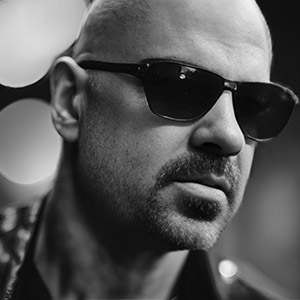
The aesthetic of the new era is stark. Everything is black and white. From the music videos to the promotional photography, there is a noir sensibility at play. "Loyal to the Lie" feels like a horror movie soundtracked by a Marshall stack.
“I wanted to do something that was just big and mean. I like that stuff. Video noir. That's why I named the last song 'LA Noir,' because it has that black and white old movie feel. That's the vibe," Mars says. He knows his brand. He knows that at this stage of the game, the shadows suit him better than the spotlights.
“I’m not getting any younger. Black and white makes it better,” Mars states. It is a sharp, honest assessment. There is no vanity here, only a commitment to the mood.
The record also serves as a vault for ideas that have been waiting for their moment. One instrumental track features a lick that has been sitting in Mars' back pocket since the Clinton administration.
“I wrote that lick many years ago, probably 20 or 25 years ago. I needed one more song, and there's a handful to choose from, but I decided to use this lick and see what I could do with it,” explained Mars. It is a testament to his curation. He doesn't throw anything away. He just waits for the right context.
Some of the seeds for *The Other Side of Mars* were sown during the Crüe's "final" tour back in 2016. The world moved on, a pandemic shut down the planet and the industry shifted, but Mars kept chipping away at these songs in the dark.
“Things come and go, interruptions happen, like pandemics, and they slowed the project down a bit. But I've had ideas for quite a while,” noted the guitarist.
Working without a band committee has been a revelation for him. There are no arguments about setlists or stage pyro. There is only the music. “Yes, it's all fresh. No limits,” Mars declares.
He brought in Michael Wagener to produce, a man who knows the Mars sound better than almost anyone. Wagener was behind the board for *Too Fast for Love* in 1981. Bringing him back for the solo debut feels like a full-circle moment, a return to the source.
“Michael's great. Not once, not one time did that guy ever tell me what to do, how to do. He recorded the way I heard things. I guess he captured it. He's a great guy.”
Looking back at the 40-year circus of Mötley Crüe, the scandals, the overdoses and the sheer absurdity of it all, Mars remains remarkably unsentimental. He doesn't want to rewrite history. He lived it, and he’s fine with the scars.
“That's what made Mötley Crüe, Mötley Crüe. All the antics, everything that happened – it's all part of it.”
There is one piece of history he wants to ensure is attributed correctly, though. The name. The brand that launched a thousand t-shirts and a million bad decisions. It wasn't a marketing executive or a lead singer who came up with it. It was the guy in the Victorian house.
“I was sitting with another cover band in the living room. We all lived together in this old Victorian house,” recounted Mars. “The bass player walks in and he goes, 'Well, this is certainly a motley looking crew.' And I went, 'That's the name of my band.' So, I kept it for all those years."
He waited until he found the right "crazy bastards" to fill out the lineup. “I wouldn't change anything. Crazy bastards,” laughed the guitarist.
Now, the unit is different. The mission is different. But the fire is clearly still there. Mick Mars has spent a lifetime being the foundation for others. On *The Other Side of Mars*, he is finally building something for himself.
“It’s like a unit. It’s like I do things just a little differently than that. But I wrote with Motley, and now I'm writing for myself, so I can take it anywhere,” Mars asserted. And based on what we've heard, "anywhere" is exactly where he is headed.