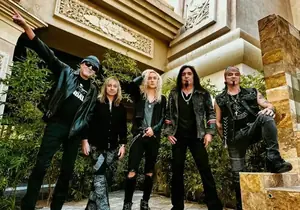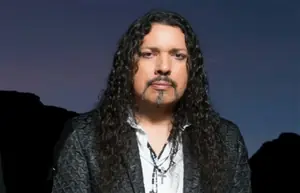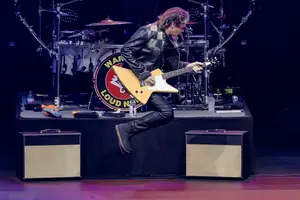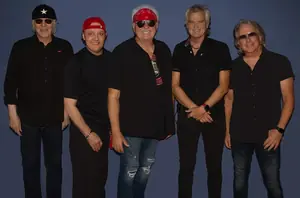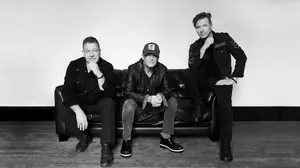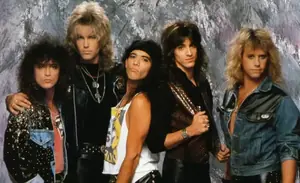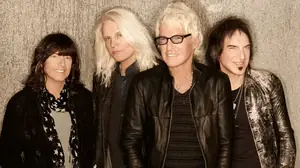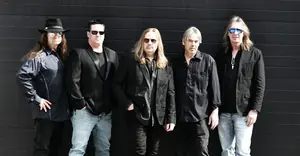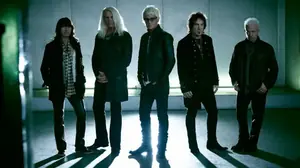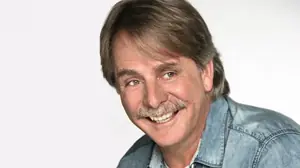


Listening back to these raw 2011 tapes from the Rockstar Weekly archive is an exercise in time travel. The crackle on the line can’t mask the conviction in Greg Volz’s voice. This wasn’t just another interview. It was a manifesto for a resurrection, a declaration that Classic Petra, the definitive arena-rock lineup of Christian music’s most formidable band, was back after 26 years in the wilderness. And the story of its return is less a calculated business decision and more a string of inexplicable, almost divine, coincidences.
It all began, as Volz recounts, with a moment of divine ventriloquism. A promoter called, offering a 20-date tour with White Heart. A solid offer for a solo artist. But something else came out of Volz’s mouth. “For some strange reason, out of my mouth came these words. ‘Well, yeah, I can do that, but why not just have Petra go out and do it with them?’” he says, still sounding surprised years later. “And he said, ‘Well, can you do that?’ And I didn't realize what I said. I felt like I was a donkey.”
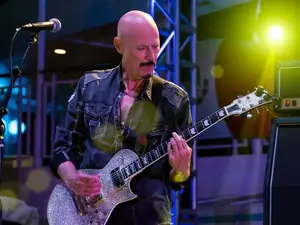
That donkey kickstarted a machine that had been dormant for a quarter-century. The call went out to the classic early-eighties lineup: bassist Mark Kelly, drummer Louie Weaver and guitarist Bob Hartman. The promoter wanted that band, the one that recorded albums like Not of this World and Beat the System. The one that defined a genre. Finding them was the first hurdle. Kelly, it turned out, was living just down the road in Dallas, completely off the radar. But one by one, they all said yes.
Of course, the industry is a fickle beast. The original promoter vanished, changing his mind “out of nowhere.” But the fuse was lit. The band, already re-energized, pooled its money to re-record some of its biggest anthems for an album fittingly titled Back to the Rock. It was a statement of intent. A declaration that this wasn’t just a nostalgia act. This was a sonic update, a re-staking of their claim.
Then the miracles, as Volz frames them, started piling up. The band’s tour manager from 1985, a man who had gone on to work with Lionel Richie, Linda Ronstadt and REO Speedwagon, reached out on Facebook after 25 years of silence. Hearing the news, his response was immediate: “I’m in.” He started making calls, leveraging two decades of industry capital. Sony was in. TBN, the Trinity Broadcasting Network, was in for a television special. It was a cascade of green lights.
The first gig back? A full-blown television special with 10 HD Blu-ray cameras. No pressure. “This doesn't make any sense in the natural. The first concert that we're gonna play together is a television special. We haven't played together in twenty five years,” Volz explains. They rehearsed for just four days, talking more than they played, and found the old chemistry was still there. In another twist, Volz tracked down the original, massive stage set from the Beat the System tour, which he had donated to a Texas church 25 years prior. It was sitting in a storage closet, waiting.
But this reunion was never just about the music or the logistics. Volz is clear on this. The mission was spiritual. He speaks of a word that came to him in prayer: “prodigals.” “I sense that what the Lord is saying to me is that there are prodigals, thousands and thousands of prodigals out there that came in during the Jesus movement back in the early seventies that have gotten lost in the cracks along the way,” he says. The tour became a clarion call to a generation that grew up on Petra but had been hurt by the church system and walked away.
Ministry can be tough. It can kill you. I mean, it can wreck your family. It can wreck your life. And it wasn't like I mean, on the road, we had bible studies on the bus every day. It wasn't the band. It was that family needs attention.
The proof, for Volz, came nightly at the autograph table. He tells a story from a small gig in Circleville, Ohio, with the kind of awe that still raises the hair on his arms. “These three guys walk up to us and they say, ‘We are three brothers. We have not talked to each other or seen each other in twenty years because we've been estranged. And we all came to this concert not knowing that the other one was coming because we all love Petra.’ As a result of the ministry during that concert, those brothers were reconciled.” For the band, that was the entire point. That was the win.
Yet, the realities of the road are brutal and unforgiving, a sharp contrast to the spiritual highs. The physical toll of a global tour on bodies now 25 years older was immense. Volz describes a punishing European leg that sounds like a forced march. “We finished the show 11:30 at night, got on the bus. Woke up the next morning or actually next afternoon in Switzerland. Twelve, you know, fourteen hour drive in the bus, played the concert, got on the bus, drove all night to the next place,” he recounts. “It's like, I thought they were trying to kill us. But we shot through it and we said to ourselves, we'll never do that again.” It’s a stark reminder that even a mission from God is subject to the laws of exhaustion.
This relentless grind is precisely what broke things apart the first time. Volz is brutally honest about his 1985 departure. It wasn't creative differences or rock and roll cliché. It was survival. “The big reason was that I had been on the road for four years of 300 days, 285 days, 275 days, 270 days a year. And my family was falling apart,” he admits. “Ministry can be tough. It can kill you. I mean, it can wreck your family. It can wreck your life.” It was a choice between his band and his home. He chose home.
The interview also pulls back the curtain on the band’s chaotic, decade-long climb to the top. This was no overnight success. Volz confirms the legendary story of being courted by REO Speedwagon in 1976, six weeks before Petra called him from the very same Illinois studio. He turned down mainstream rock stardom because he couldn’t sing their material. He chose the harder path.
That path was anything but straight. He details a history of exploding drummers, financial insolvency and multiple breakups. For years, Petra was a part-time affair, with members working day jobs to pay the bills. The band that fans knew in 1981 was a miracle in itself, born from a simple demo tape with future classics like “Never Say Die” and “The Coloring Song.” That tape, sent to Star Song records, changed everything. “The day he gets the tape, he called me up and he said, and I quote, ‘This is God. We need to get in the studio now,’” Volz remembers. Suddenly, Petra was a “ten year overnight success.”
That success put them directly in the crosshairs of the conservative church establishment, which saw rock and roll as the devil’s music, regardless of the lyrics. The band was on the front lines of a culture war they never asked for. “The Christians try to kill us for about ten years. You know, they threw stones and told us we are the devil and the preachers preached against us from pulpits and on television programs and they sent us straight to hell,” Volz states, matter-of-factly. “Meanwhile, people's lives were being changed and people were coming to the Lord. So, I mean, what do you do? You take it.”
This history of struggle and conviction informs the reunion. There’s a sense of unfinished business, but also of wisdom gained. They weren’t going to make the same mistakes. The goal was to harness the old chemistry, which Volz insists is still potent, and create something new. At the time of this recording, they were already talking about a second volume of re-recorded hits and, more importantly, a full album of brand new material.
Ultimately, this 2011 conversation captures a unique moment of rebirth. It’s a portrait of an artist and a band rediscovering their purpose. It’s not about reliving the glory days. It’s about understanding why those days mattered and bringing that same message of hope to a new, and older, audience. For Greg Volz and Petra, the mission was always bigger than the music. And after 26 years, it was time to get back to work.
519 Magazine Archive: We are thrilled to officially unearth the Rockstar Weekly Digital Vault. This isn't just a re-post; it's a high-fidelity restoration of a pivotal era in music journalism. By pairing original print dates with modern retrospectives, we’re bridging the gap between historical rock-and-roll grit and the lightning-fast performance of today’s web. These stories—once locked in physical print and lost URLs—are now back, fully searchable, and optimized for a new generation of fans.
We are thrilled to officially unearth the 519 Magazine Digital Vault. This isn't just a re-post; it's a high-fidelity restoration of a pivotal era in music journalism. By pairing original print dates with modern retrospectives, we're bridging the gap between historical rock-and-roll grit and the lightning-fast performance of today's web. These stories—once locked in physical print and lost URLs—are now back, fully searchable, and optimized for a new generation of fans.