
pable Rise: Mike Reno on the Architects of Arena Rock and Red Leather Pants
SLUG: loverboy-at-40:-mike-reno-on-pants-producers-and-perseverance
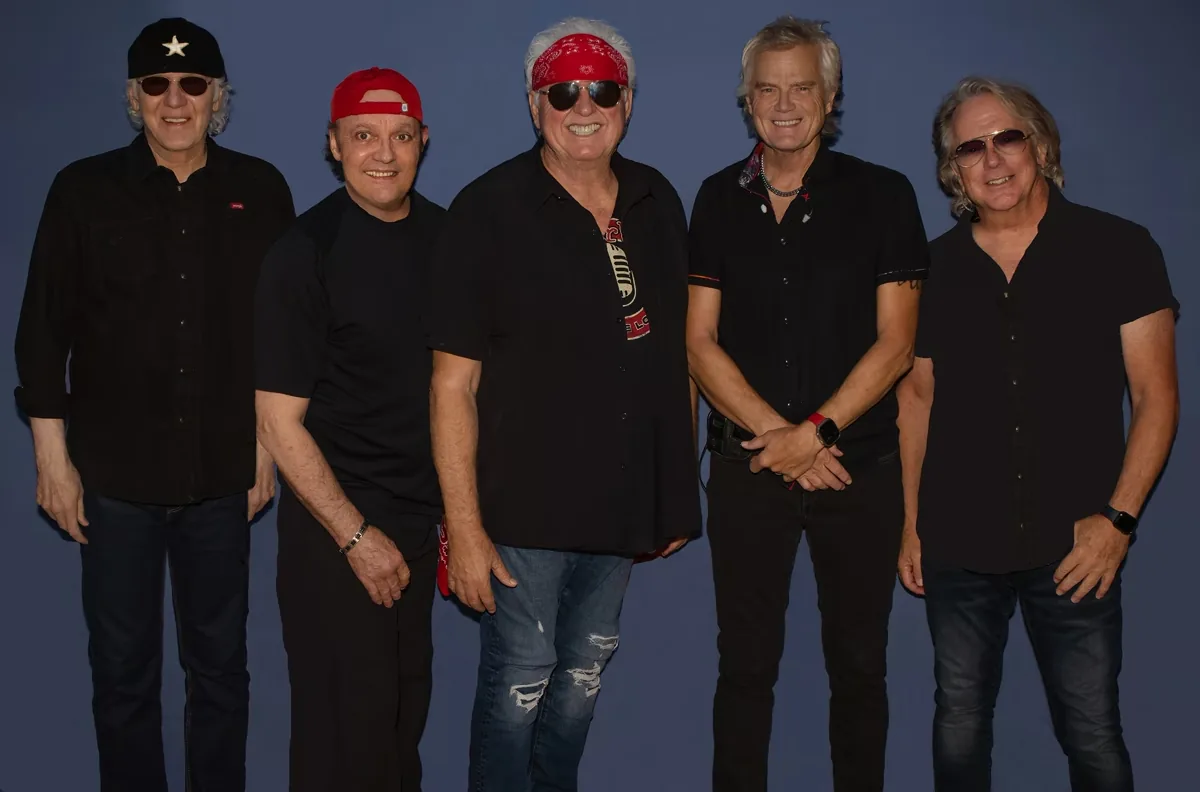
Editor's Note: Mike Reno and the band remain a touring powerhouse, having just completed their first-ever Australian tour in March 2026. The band is currently headlining their 2026 North American Summer Tour, celebrating the 45th anniversary of their multi-platinum album Get Lucky.
STOP
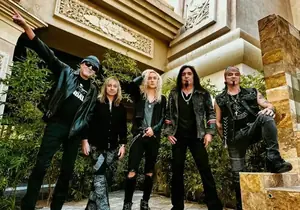
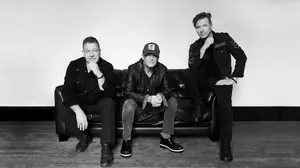
Looking at the raw transcripts from this 2020 conversation with Mike Reno feels like opening a time capsule. It was the 40th anniversary of Loverboy’s debut album, a milestone that feels both impossibly distant and culturally immediate. This wasn't just another band hitting a round number. This was a moment to take stock of a career forged in the crucible of late-70s ambition and the absolute peak of arena rock dominance. Reno, ever the road warrior, was speaking from California just hours before jetting off to Baltimore, Maryland, then Vancouver and Las Vegas. The hustle never stopped.
But back in 1979, it almost never started. The path to getting signed was a brutal lesson in industry gatekeeping. It’s easy to forget that before Loverboy became a staple of AOR radio, they were just another hungry Vancouver act getting doors slammed in their faces. Reno recounts the parade of label reps who passed on the band. It was a trifecta of rejection before one man saw the future. “Finally, Jeff Burns from Columbia Records said, 'I can see this. I can hear this. I can feel this. This is happening. I'm gonna give you the okay to cut a record,' and we were just over the moon,” Reno says. That one ‘yes’ changed everything.
And what a moment to get a ‘yes’. The Vancouver music scene was about to explode, and Loverboy was standing directly at ground zero. The team they assembled for that first record is the stuff of legend. You had a producer just hitting his stride, a young engineer with a golden ear, and a coffee guy who would go on to mix some of the biggest rock records ever made. It was a perfect storm of talent coalescing at Little Mountain Sound Studios.
“We got our first producer was Bruce Fairbairn, and he was just getting started in the business,” Reno recalls. Fairbairn, who had produced Prism, was a master of capturing raw energy. He wasn’t there to reinvent the wheel. He was there to make sure the wheel was perfectly recorded as it barrelled down the highway. He understood that the magic of Loverboy was its live-off-the-floor power, a chemistry that couldn’t be manufactured.
Fairbairn’s genius was in his restraint. He let the band be the band. His approach was simple: keep the vibe positive, keep the process rolling, and keep it on budget. This hands-off guidance created the space for a sound that was polished but never sterile, powerful but always hook-laden. It was the formula that would later turn Bon Jovi and Aerosmith into global titans.
Then there was the man behind the board. “It's where Bob Rock got his start as an engineer, and he's now one of the biggest producers in the world,” Reno states, a fact that still carries a sense of awe. And the assistant? “Our assistant engineer and coffee guy Mike Fraser was gonna turn out to be one of the biggest producers in the world after, you know, producing and recording and mixing all the AC/DC albums.” Think about that. Fairbairn, Rock, and Fraser. All in one room, all coming up together. It was lightning in a bottle.
The band’s work ethic was relentless, but Fairbairn imposed a structure that prevented burnout. No marathon sessions until four in the morning. They were in at 10 a.m. sharp, ready to work. It was a professional’s schedule, which in the wild world of rock and roll was its own form of rebellion. This discipline was crucial because in the analog era, there was no safety net. There was no Pro Tools to fix a flat note or a sloppy rhythm.
We didn't know that Bruce Fairbairn was gonna be one of the biggest producers in the world. We didn't know that Bob Rock was gonna be the one one of the most successful producers in the world. We didn't know that our assistant engineer and coffee guy, Mike Fraser, was gonna turn out to be one of the biggest producers in the world.
Reno speaks with a palpable sense of pride about the musicianship required in those days. “Back then, you know, you had to be spot on,” he explains. “We kinda prided ourselves in playing well, which I don't know if a lot of groups do that anymore.” It’s not just nostalgia. It’s a fundamental difference in artistic philosophy. When every take counted, the performance had to be perfect. The pressure was immense, but it forged a tighter, more powerful band.
Nowhere is that spontaneous magic more evident than in the story behind their breakout hit “Turn Me Loose”. The track was seemingly in the can, but Reno felt a pull to revisit it. He showed up at the studio on a day off, interrupting a guitar session with Paul Dean, and demanded to sing it again. It was a massive inconvenience. It meant changing tapes, realigning machines, and setting up a new mix – a two-hour ordeal for one vocal take.
But he insisted. “When I sang it the second time, I changed a bunch of the inflections. I changed the way I sang it. I changed a few words, and I put the scream in. And it changed the whole song,” Reno remembers. “The guys looked at me like, 'Holy Christ. What is going on with this guy?'” He walked out sweaty, looked up at the sky, and saw a full moon. That one take, born of a strange lunar energy, transformed a good song into an immortal rock anthem.
This trial-by-fire approach extended to their songwriting. Before hitting the studio, they’d road-test new material far from the Vancouver scene by booking shows on Vancouver Island. If they could get strangers dancing to songs like “The Kid Is Hot Tonite” or “Working for the Weekend,” they knew they were onto something. It was market research conducted at 120 decibels.
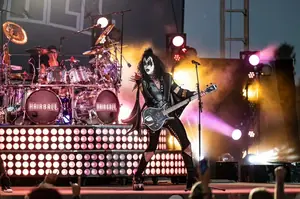
Their very first gig was a baptism by fire opening for KISS at the Pacific Coliseum. The New York Dolls were supposed to be the opener but were denied entry into Canada. Loverboy got the call last minute without a permanent bass player. They recruited Scott Smith, who would become their permanent bassist, and he was literally learning the bassline for “Turn Me Loose” in Reno’s ear moments before they played it. They survived a tough crowd, a testament to their readiness.
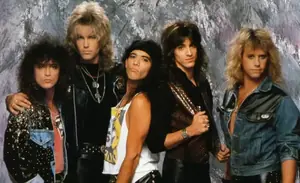
Of course, you can’t talk about early Loverboy without mentioning the pants. The iconic red leather pants. They weren’t a calculated marketing ploy but a happy accident. A publicist’s husband owned Meadow Leather in Gastown and offered the band clothes on credit. “The best, the pair that fit me the best and the softest, were the red leather ones,” Reno says. Paired with the iconic artwork for the Get Lucky album, they became part of rock and roll iconography, a symbol of an entire era.
But breaking out of Canada was the real challenge. The secret weapon was manager Bruce Allen, who had the connections from his years with BTO. He got the band on a tour with Kansas, booked by legendary promoter Don Fox. The result was bizarre. Loverboy was killing it every night with crowds going wild thanks to early radio play, yet fans couldn't find the album in stores. The disconnect caused an industry firestorm involving Rolling Stone magazine and CBS Records in New York. The dam broke, and millions of records started moving. They had arrived.
All these years later, the drive remains. Reno mentions his old friend from his Moxy days, John Power of Windsor, and reflects on the journey. He left Moxy in Toronto feeling creatively stifled and drove across the country intending to land in California. But a stop in Calgary changed his life. He met Paul Dean, they started writing, and the nucleus of Loverboy was formed. They’ve been working together since 1978, a partnership that has outlasted nearly all of their peers.
The accolades eventually came, most notably a 2009 induction into the Canadian Music Hall of Fame at the Juno Awards. It was a hometown coronation in Vancouver’s Rogers Arena. “The honour, we were honoured by everyone in the music business that we've never worked with, never met along the way,” Reno says humbly. “The video put together from all the people we'd had contact with over the years is pretty humbling.”
Yet perhaps the most surreal moment of recognition happened not on a stage but in a small hotel bar at the legendary Sunset Marquis in Hollywood. Reno was waiting for a ride when a man approached him. “He reaches over with his hand. He goes, 'Aren’t you Mike Reno from Loverboy?' And I went, 'Yeah.' 'Aren’t you Bruce Springsteen?' He laughed. We both laughed. That was kind of a cool moment.” It was a sign that their music had cut through everything, reaching even the most rarefied air.
Forty-four years after that debut album, the band’s legacy is secure. They represent the apex of Canadian arena rock, a sound meticulously crafted and powerfully delivered. And while Reno jokes that they were initially just hoping for a box of beer and a chance to meet some girls, they ended up with a whole lot more. A dream come true that is still playing out one sold-out show at a time.
519 Magazine Archive: We are thrilled to officially unearth the 519 Magazine Digital Vault. This isn't just a re-post; it's a high-fidelity restoration of a pivotal era in music journalism. By pairing original print dates with modern retrospectives, we’re bridging the gap between historical rock-and-roll grit and the lightning-fast performance of today’s web. These stories—once locked in physical print and lost URLs—are now back, fully searchable, and optimized for a new generation of fans.
We are thrilled to officially unearth the 519 Magazine Digital Vault. This isn't just a re-post; it's a high-fidelity restoration of a pivotal era in music journalism. By pairing original print dates with modern retrospectives, we're bridging the gap between historical rock-and-roll grit and the lightning-fast performance of today's web. These stories—once locked in physical print and lost URLs—are now back, fully searchable, and optimized for a new generation of fans.