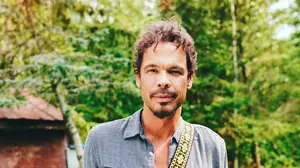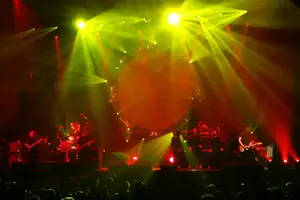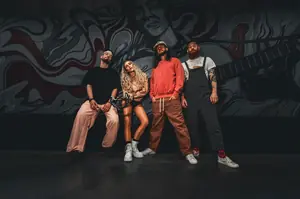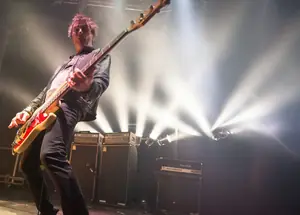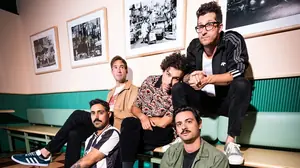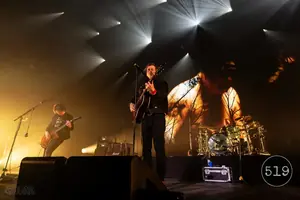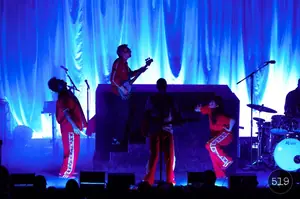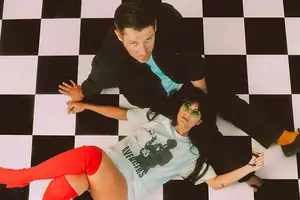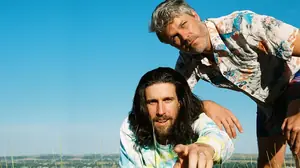
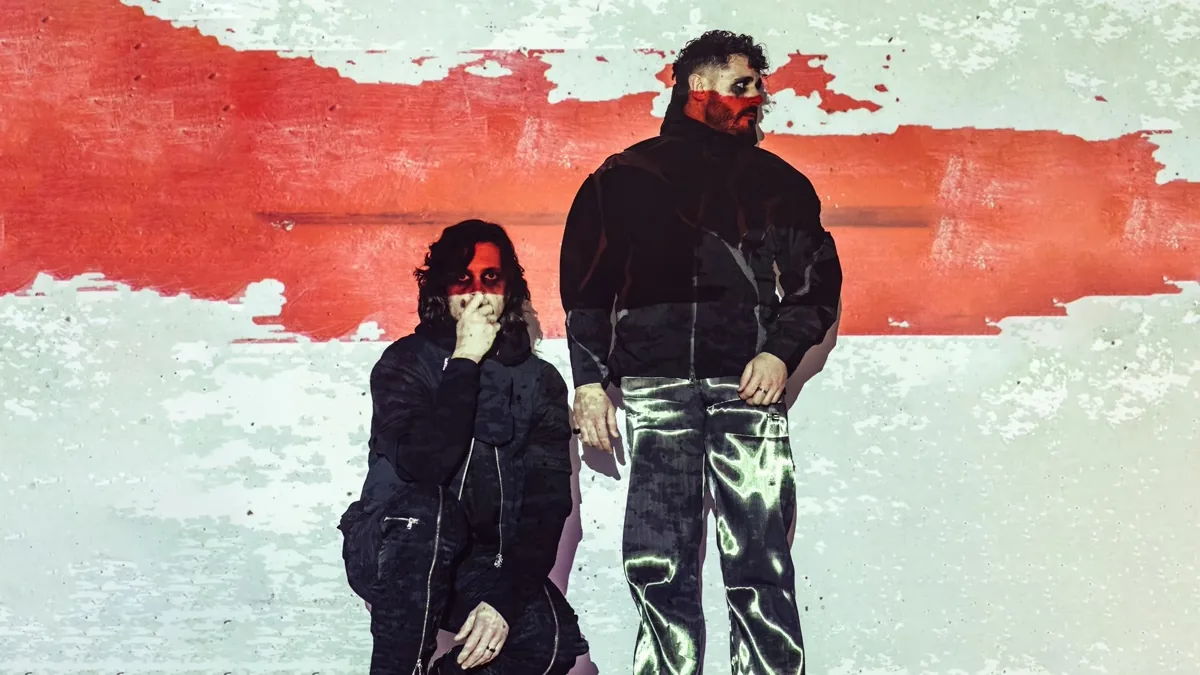

Looking at the raw transcripts from our Dec. 12, 2018 conversation with Tarek Jafar is like opening a time capsule. It captures The Blue Stones at the precise moment the fuse was lit but before the explosion. Their album Black Holes had been out for just under two months and the ink on their deal with eOne was still fresh. The hometown buzz in Windsor was palpable but the rest of North America was only just beginning to catch on. This was the precipice.
The band wasn't popping champagne in a Los Angeles high-rise on release night. Instead they were characteristically Canadian and grounded, holed up in a Toronto hotel room after a SiriusXM session. Jafar recounts the moment with an understated cool. “We went on Instagram live and we were just kinda spending time answering questions from fans, having a couple of drinks. And then once the album dropped, we, you know, sort of were there for the release with everybody else on Instagram.” It’s a thoroughly modern scene that bypasses old industry gatekeepers for a direct-to-fan celebration.
But the real story was always Windsor. For years The Blue Stones were a fixture of the local scene, a known quantity grinding it out in a city that’s always had to fight for its cultural identity. Jafar understood the long game. He says “We've played the scene for years. It took a long time obviously for us to get to this point but that's sort of the whole grind of it all.”
And now that grind was paying off. The charts were noticing. The industry was noticing. And for Jafar it was a chance to put the city on his back. “It's just nice to be able to be on this large platform now and be charting… and be able to be like, 'Yeah. We're from Windsor.' It's kinda nice to be able to rep your city while doing these things.” This wasn't just a win for the band; it was a win for the 519.
The major catalyst for this shift was their signing with eOne in July 2018. It was a swift and decisive move that validated their years of independent work. Jafar notes the label’s immediate impact. “The nice thing about them is they sort of hit the ground running with us which we really enjoyed. They had a plan for our album and we set a plan for the singles and how they wanted to portray us.” This wasn't a tentative indie gamble. This was a calculated professional launch.
Remarkably this entire world-conquering sound was forged in a small apartment in Windsor. The origin story for Black Holes is almost mythically humble. “Every song actually that's on that album was written while we were in Windsor. We were living together at the time near Ottawa Street… we would write the songs every day in the basement and work them out.” You can almost hear the Gladstone Avenue floorboards shaking. It’s a testament to the idea that massive arena-rock anthems can be born from the most unassuming circumstances.
When asked about specific Windsor references in the lyrics Jafar is artfully vague suggesting the city’s influence is more atmospheric than literal. He says there are “definitely references to things that we had done while we were in Windsor.” The album isn’t a map of the city but it’s a detailed diary of the lives they lived within it. It’s in the grit, the ambition and the feeling of being on the edge of something bigger.
We're kinda proud to be able to be like, this is the city that built us, you know, made us who we are, and it's it's nice to know that there's such a strong support.
One of the most revealing details is the album’s oldest track “Rolling with the Punches.” It’s an artifact from their earlier days, a song Jafar estimates was written around 2011 or 2012. “When we were working with the label… they wanted to continue to keep that song for this release as well because they just thought the song was so good.” Its inclusion is significant. It shows the label wasn’t trying to reinvent the band but rather amplify the powerful core that had existed for years. It was a bridge from their past to their future.
That sense of history is what makes the local support so fierce. Windsor fans didn’t just discover a hot new band; they watched them evolve from the ground up. The feeling was a kind of regional vindication. “Windsor has been supportive from the start,” Jafar confirms. “We have such a great community there that really promotes their artists, and we use that as a launching pad. We're kinda proud to be able to be like this is the city that built us, you know, made us who we are.”
Even with their growing success there was no rush to pack up for Toronto or Los Angeles. Jafar seemed perfectly content with the idea of staying put, a notion that felt almost radical in an industry built on geographic hubs. “In this age of music and the way the industry is now you can really do it from anywhere. So I don't really see a need for me to move.” Looking back from today’s vantage point he was right. They proved that talent and connectivity could trump postcodes.
The sonic signature of Black Holes is its sheer scale. It sounds enormous, far bigger than a two-piece band has any right to. The secret Jafar reveals was in the recording process. “We recorded the base track for every single one of the songs live in the studio floor… at the foundation of every song is Justin and I playing the songs in a room the way we'd normally play them live.” This technique captures an energy and a raw authenticity that meticulous overdubbing often sterilizes. It’s the sound of a band in a room pushing air and electricity. No tricks.
He’s adamant about that authenticity. The live-off-the-floor approach ensures there’s no bait-and-switch between the record and the stage. It’s about not “being conned into hearing something that might not be what we actually sound like.” This commitment to honest representation is the bedrock of their sound and their bond with their audience.
The album’s title track serves as its thematic core, a perfect mission statement for the band at that time. It was born from a period of profound uncertainty. “We both graduated from our university programs and we were cast out into the real world for the first time… Black Holes is an oath to that decision-making time and to really anybody who's having trouble choosing between something that might be the safe route and something that's a little riskier.” They chose the risk. The album is the reward.
There’s also a deep cinematic quality woven into their music, a sense of storytelling and grand visual scope. It’s no surprise that Jafar is a huge movie fan citing films like The Disaster Artist and Ready Player One. That influence is all over their work, translating into songs that feel like self-contained narratives complete with rising action and dramatic crescendos.
As the conversation wound down, Jafar looked ahead to 2019 teasing a tour with grandson and a slate of festivals. In retrospect those plans were the first steps of their international takeover. The grandson tour in particular was a perfect pairing of two rising forces in Canadian alternative rock, cementing their status as major contenders. Everything he hinted at came to pass and then some.
This 2018 interview is a snapshot of pure potential. It’s the sound of a band that has done the work, built the foundation and is now standing at the door ready to kick it down. They were still the Windsor kids from Gladstone Avenue but they had crafted an album with a sound and a message big enough for the entire world.
519 Magazine Archive: We are thrilled to officially unearth the 519 Magazine Digital Vault. This isn't just a re-post; it's a high-fidelity restoration of a pivotal era in music journalism. By pairing original print dates with modern retrospectives, we’re bridging the gap between historical rock-and-roll grit and the lightning-fast performance of today’s web. These stories—once locked in physical print and lost URLs—are now back, fully searchable, and optimized for a new generation of fans.
Get Tickets



We are thrilled to officially unearth the 519 Magazine Digital Vault. This isn't just a re-post; it's a high-fidelity restoration of a pivotal era in music journalism. By pairing original print dates with modern retrospectives, we're bridging the gap between historical rock-and-roll grit and the lightning-fast performance of today's web. These stories—once locked in physical print and lost URLs—are now back, fully searchable, and optimized for a new generation of fans.