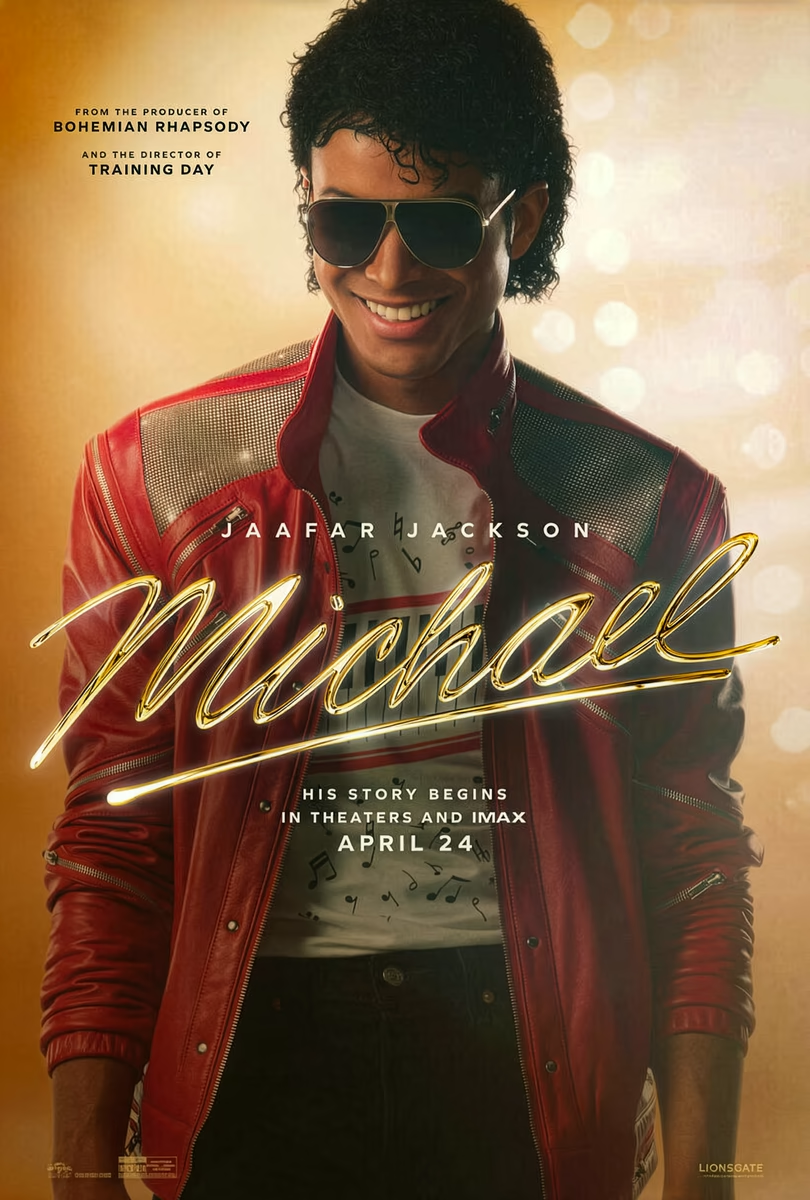
The man in the mirror is missing. Antoine Fuqua's Michael gives you the moonwalk, the Wembley roar and the full $155 million production apparatus — and quietly, deliberately removes every reflection that might show you Michael Jackson as he actually was: complicated, contradictory and strange in ways that made him as compelling off-stage as on it. This is the most expensive airbrushing job in cinema history. It is also, frustratingly, a great film. The estate got exactly what it paid for. Jaafar Jackson gave them something more than they probably deserved. The question the film leaves you with, driving home, is whether you're comfortable with that transaction.
Visually, the production runs on controlled excess. The colour grading shifts from warm amber in the Jackson 5 sequences to a cooler, lacquer-bright sheen as Michael's solo career accelerates — a subtle formal choice that tracks the transition from family business to global phenomenon without stating it outright. Fuqua came up as a music video director before features, and that muscle memory is all over this film: every frame is composed for maximum impact, every cut lands with a degree of intention you don't usually get in this genre. It's slick. Sometimes too slick. But for a subject who calibrated his own image with obsessive precision, the over-production stops feeling like a flaw and starts feeling like a formal argument.
The score is doing real structural work here, not just filling silence. The extended instrumental arrangements carry that specific analog warmth on the low-end — wide stereo imaging, that particular 1980s room sound — in a way that functions as an emotional layer underneath the drama rather than floating over it. Think of the way Quincy Jones's orchestration on Off the Wall operates as subtext underneath the groove. Same principle. This is a film demanding Dolby Atmos and a large-format screen, and it knows it. See it anywhere smaller and you're doing yourself a disservice.
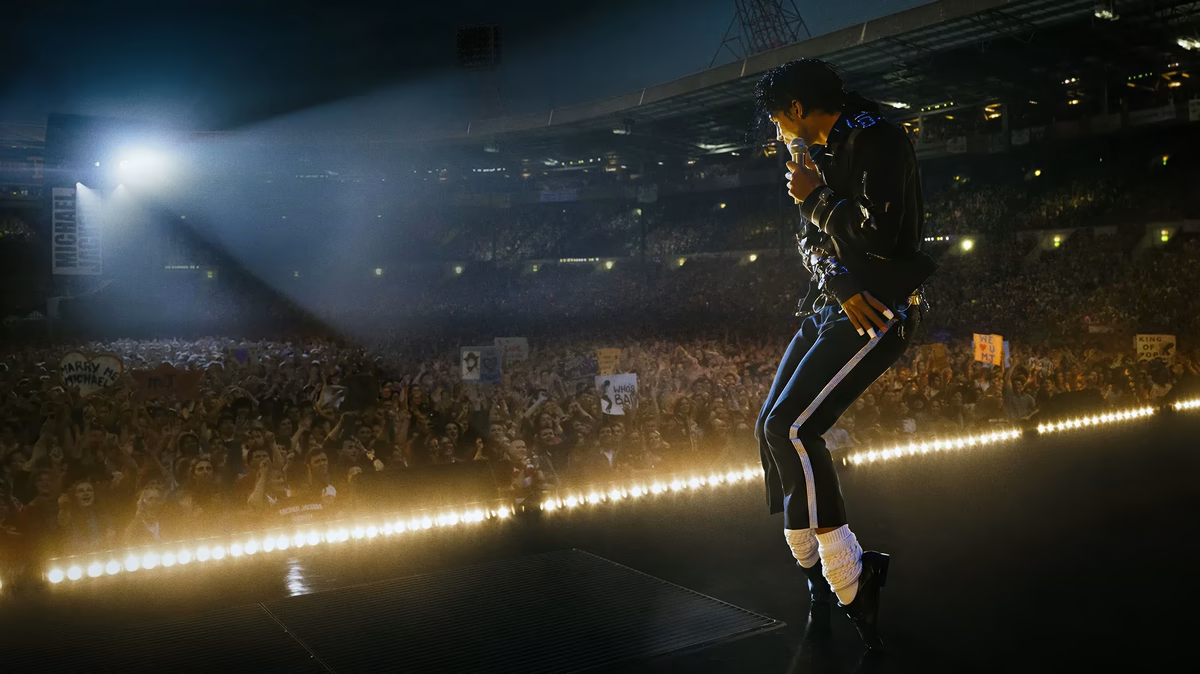
But none of it matters if Jaafar Jackson doesn't deliver, and he does — with a totality that is genuinely difficult to explain to someone who hasn't seen it. This is not a celebrity impression or a technical exercise from a 29-year-old with zero prior acting credits. He gets the soft-spoken register right, the childlike vulnerability, the steel underneath it. What's genuinely striking is the choreography: not just the Moonwalk or the Toe Stand but the specific muscular snap and loose-limbed fluidity that made Michael Jackson's movement style unrepeatable. In the moments before the Bad finale, when Jaafar turns toward the stage under full production lighting, the entire theatre gasps. It's one of those involuntary collective moments that reminds you why people still go to the cinema.
And unlike so many biopics that treat performance footage as connective tissue, Michael gives the concert sequences genuine scale and time. The Motown 25 recreation, the Victory Tour, the Wembley sequences — they breathe. Full-song runs of "Human Nature" and "Bad" are presented without apology, as events rather than references. This is where the film fully justifies its budget and its IMAX release. Standing in front of 72,000 people rendered with this level of production intensity, Jaafar doesn't disappear into Michael Jackson. He becomes him.
The cleanliness is the film's fatal compromise. Michael ends strategically with the 1988 Bad World Tour — years before the allegations that would define the second half of Jackson's life. The epilogue card, "His story continues," is doing an enormous amount of work for four words. It's a legal and moral escape hatch dressed up as a promise. Even within what the film does choose to show, the script sands off the eccentricities, the contradictions, the specific human weirdness that made Jackson as compelling off-stage as on it. Paris Jackson has said publicly that the film caters to a fan base that lives in the fantasy, and that criticism doesn't miss.
The single most glaring creative failure is the absence of a physical Eddie Van Halen during the Thriller sessions. For a film this proud of its production authenticity, reducing that collaboration to a needle-drop is an outright surrender. The "Beat It" recording wasn't a session — it was the moment the King of Pop and the King of Rock sat across from each other and engineered a sound that obliterated radio formatting. The analog bleed on that guitar track, Van Halen improvising the most famous solo in pop history, the improvisational chaos of rearranging a track mid-session to accommodate a heavy metal legend — gone. The film could have shown two perfectionists from entirely different worlds creating something neither could have made alone. It chose not to, and that absence echoes throughout.
The best performance in the film isn't Jaafar's — it's Colman Domingo's Joe Jackson, and the argument for it is simple: he vanishes into the role in a way that makes you forget you're watching an actor. What Domingo finds in Joe is the muddied love of a man corrupted by his own power — controlling and volcanic, but with enough flickers of something softer to make the whole dynamic genuinely difficult to sit with. His scenes carry a grey, suffocating weight the rest of the film never quite matches. KeiLyn Durrel Jones as lifelong bodyguard Bill Bray is quietly excellent in a role most critics have ignored. Janet Jackson's total absence, though, is a gap that never stops showing, and the Jackson 5 brothers are so underwritten they barely register as people.
Michael is a film worth seeing in a cinema, arguing about in the lobby and feeling genuinely conflicted about on the drive home. It is, by design, a tribute to the artist that keeps the man at a careful distance — honest enough about that choice to be frustrating rather than insulting. Fuqua and the estate got the celebration they wanted. Jaafar Jackson gave them something more than they probably deserved. The legend holds. So does most of the film. The liner notes, though — those are gone.