Revisiting this conversation from mid-2018 with Toto’s Steve Porcaro is a stark reminder of the quiet genius who shaped the sonic architecture of an era. While David Paich was the primary songwriter and Steve Lukather the guitar hero, Porcaro was the band’s synthesist and texturalist. He was the man behind the curtain pulling the levers on the orchestral flourishes and futuristic sounds that elevated Toto from a killer session band into a global phenomenon.
Looking at the raw transcripts from this era, Porcaro’s excitement about the band’s origin story remains palpable. It wasn’t a foregone conclusion. His older brother Jeff Porcaro and the prodigious David Paich were already kings of the Los Angeles studio scene. The risk was that they’d become too comfortable being the industry’s most sought-after sidemen. “My big brother Jeff and David Paich, my hero, were finally doing their own band,” Porcaro says. “I was afraid that they would never do their own band, you know, because they were doing so well just being freelance studio musicians.”
But they went for it. And they brought in the younger guns Porcaro and Lukather. The result was a sound that defied easy categorization. It was pop but it was also prog. It was rock but it was also R&B and jazz. This wasn’t an accident. It was a deliberate strategy to embed their sophisticated musicality inside pristine pop structures. They refused to dumb it down.
“The trick was always to just not lower ourselves musically, to get a hit record, to try to be exactly who we were, be the best version of ourselves, and hopefully, people would like that,” he notes. This philosophy is the very core of Toto’s DNA. It explains why their catalogue has not only endured but has been critically re-evaluated. The songs possess a depth that rewards repeated listening a quality often absent in the disposable pop of the day.
Porcaro was the key to so much of that depth. As the band’s primary synth wizard, he and Paich were sonic pioneers. In an age before presets and plugins, they were crafting sounds from the ground up on hulking modular systems. “Keyboard sounds have always been inspiring to us,” Porcaro explains. “Sometimes just getting a new sound up that you’ve never heard before just totally will dictate what you’ll play.” This wasn’t just colour; it was the catalyst for creation itself.
Nowhere is his contribution more evident than on the iconic solo for “Rosanna”. It wasn’t an improvised moment of fleeting inspiration. It was a meticulously constructed piece of music a miniature symphony of synthesized brass stabs Moog leads and cascading arpeggios. It was Porcaro making a statement. “The Rosanna solo was my baby,” he says with pride. “It was me really wanting to show everybody what I could do.”
He draws a sharp distinction between his method and that of his bandmates. “Most of the guys in the band are such incredible musicians, and they’re such great improvisers. Luke can do a guitar solo in two minutes, and it’s amazing,” he admits. “I’ve never been a good improviser, but what I love to do is to kind of compose solos, you know, make these events that are very, very much thought out. To show what the synthesizers could do in certain hands.” It was compositional a deliberate narrative arc built with oscillators and filters instead of notes on a page.
The guys were really wanting to go after a much simpler sound. They kept talking about how, on the next album, there’s gonna be a lot less synths, a lot less of the orchestral kind of interludes, and a lot less of really everything that I was about in the band.
That dedication to craft started in a purely analog world. The first Toto records were committed to two-inch tape at studios like Studio 55 a process that feels ancient by modern standards. But Porcaro is no luddite. He fully embraces the digital revolution. “Absolutely love it,” he says of modern recording technology. “Love to exploit it. Love having unlimited tracks. Love not having to align tape machines. Love all of it.”
Still he maintains his vast collection of vintage hardware. It’s a classic artist’s paradox. The old gear has an inimitable soul but the new tools offer limitless freedom. He speaks of his modular synth with a kind of reverence for its untamable nature. “It’s kind of catching lightning in a bottle,” he says. “And you gotta hit record then while you have it up because you may never get it quite like that again. You know, there’s no save button.” The modern workflow with its recallable plugins allows for endless tweaking a crucial advantage for a self-described tinkerer.
This very dedication to sonic layering eventually led to his departure from the band after the 1986 album Fahrenheit. The industry was changing. The pressure from the record company was mounting. And the rise of the Seattle grunge scene made Toto’s polished sound seem out of step. “The guys were really wanting to go after a much simpler sound,” Porcaro recalls. “They kept talking about how, on the next album, there’s gonna be a lot less synths, a lot less of the orchestral kind of interludes, and a lot less of really everything that I was about in the band.”
The split was amicable. There were no dramatic fights. It was simply a creative divergence. Porcaro moved into film scoring and continued to contribute to every subsequent Toto album as a session player a testament to their enduring brotherhood. But it was a different brotherhood that brought him back into the fold full-time in 2010: the illness of his brother and Toto bassist Mike Porcaro. Lukather called him for a summer tour to benefit Mike’s family and it just stuck. The vibe had changed. The old creative tensions were gone replaced by a mutual respect. “I think we all started, with all this much time passing, really began to appreciate each other and just what it was that we individually brought to the table,” he says.
Of course no conversation with Steve Porcaro is complete without discussing his work on the biggest album of all time Thriller. He co-wrote “Human Nature” one of the record’s most elegant and enduring tracks. The song’s origin is a beautiful piece of rock lore born from a conversation with his young daughter. “She had had a rough day at school. Some boy had bothered her,” he recounts. “She just kept asking me why. And it just kinda stuck in my head. All of a sudden, the phrase ‘human nature’ pops in my head.”
He wrote the verse and chorus in a single sitting at the studio piano while the rest of Toto was in the control room mixing “Africa”. He passed the demo to Quincy Jones who loved it. Porcaro is quick to give credit to lyricist John Bettis for refining his original words into a compelling narrative but the musical soul of the track is his. It’s a perfect blend of melancholy and hope a sound that could only have come from the hands of a master synthesist.
Working with Michael Jackson was a lesson in artistic instinct. Porcaro describes a talent so immense it transcended songwriting itself. “If it was any of these artists these days, they would demand songwriting credit because of what they brought to the table,” he says of Jackson. “Michael, that was just what he did on any song he sang. He just so made it his own. All of a sudden, he would start singing parts in between sections that you never thought of in a million years that just would totally be hooky and elevate the music.”
Porcaro was an essential part of the Thriller team contributing his synth programming to “Beat It” “P.Y.T.” and “The Girl Is Mine”. Yet even in the midst of its creation no one grasped the cultural tsunami they were about to unleash. “No one had that idea,” he states flatly. “No one thought it would have those kind of legs. It just was crazy.”
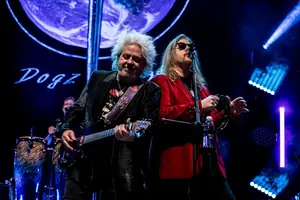
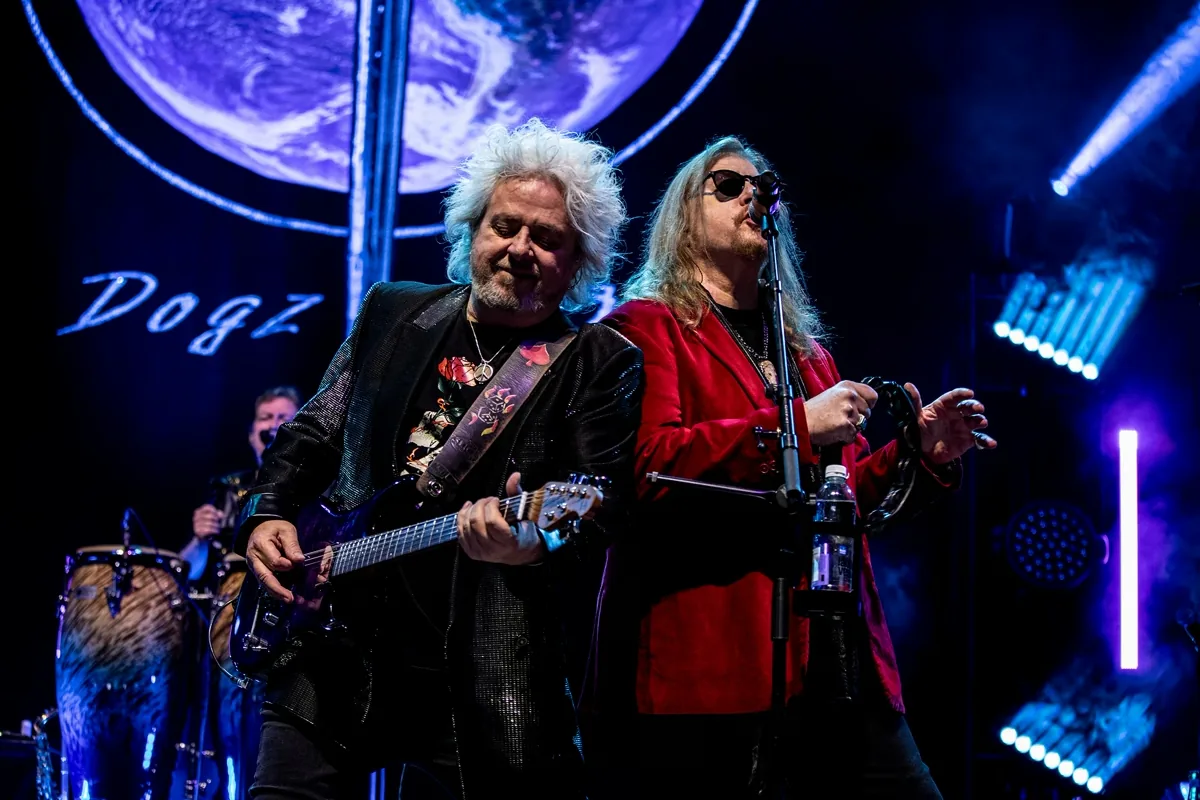
Back in 2018 Porcaro was looking forward to a stop in Windsor, Ontario. He was particularly energized about the tour format. For years Toto had been doing co-headlining bills which meant truncated greatest-hits sets. This tour promised a full two-hour-plus show for the faithful. “It’s really a concert for Toto fans,” he said. “Of course all the hits will be there, but there’ll be some new stuff and some very deep cuts that we’re very excited to share with everybody.”
It was a promise to deliver the full Toto experience a journey through the hits the deep cuts and the sophisticated musicianship that defined them. It was a celebration of a legacy built not on trends but on talent. And at the centre of it all was Steve Porcaro the composer of solos the architect of atmospheres and the quiet force who helped give pop music its human nature.
519 Magazine Archive: We are thrilled to officially unearth the 519 Magazine Digital Vault. This isn't just a re-post; it's a high-fidelity restoration of a pivotal era in music journalism. By pairing original print dates with modern retrospectives, we’re bridging the gap between historical rock-and-roll grit and the lightning-fast performance of today’s web. These stories—once locked in physical print and lost URLs—are now back, fully searchable, and optimized for a new generation of fans.
We are thrilled to officially unearth the 519 Magazine Digital Vault. This isn't just a re-post; it's a high-fidelity restoration of a pivotal era in music journalism. By pairing original print dates with modern retrospectives, we're bridging the gap between historical rock-and-roll grit and the lightning-fast performance of today's web. These stories—once locked in physical print and lost URLs—are now back, fully searchable, and optimized for a new generation of fans.