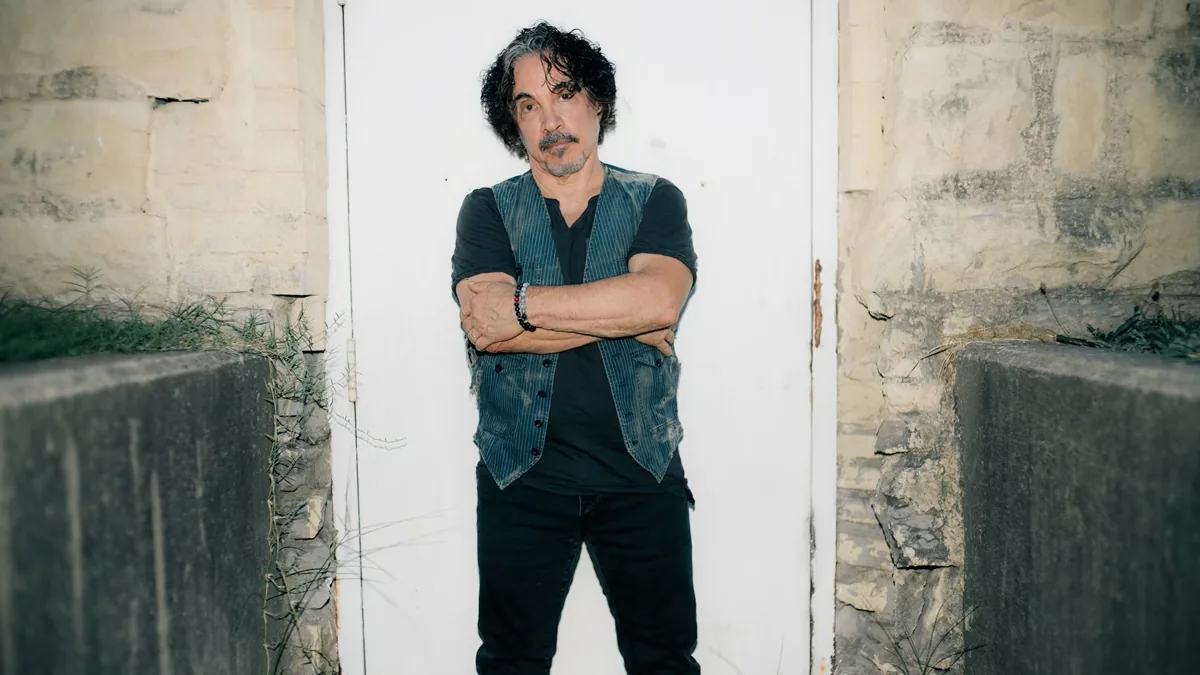
Looking back at these archival tapes from our Aug. 28, 2013 sit-down with John Oates feels like unearthing a time capsule. The industry was on the precipice of the full-blown streaming apocalypse and Oates, speaking from his Colorado home, sounded less like a legacy artist resting on his laurels and more like a sharp-eyed strategist plotting his next move. He was a man with one foot firmly planted in the bedrock of pop history and the other testing the waters of a digital future nobody had quite figured out yet.
His solo project at the time, a single-a-month release schedule dubbed Good Road to Follow, was the central topic. And listening now, his rationale was incredibly prescient. He wasn't just throwing content at the wall; he was dissecting the new consumption habits of listeners with a producer's precision. He saw the album, the format that made him a global superstar, becoming an anachronism for a new generation.
He was watching the kids. He’d been producing and writing with younger acts and saw their struggle firsthand. “I've been seeing how the newer bands are approaching the modern world of the music business and trying to market and sell themselves,” Oates says, his voice a mix of empathy and clinical observation. “And it's, you know, as you would know, pretty difficult.”
This observation led him to dismantle the very structure of a release. Why labour over a 12-song cycle when the audience’s attention span had evaporated? “I said, ‘Well, how can I do a musical project where I can try to keep people's attention over a longer period of time and at the same time, satisfy the way people listen to music?’ And so this idea of releasing a single a month seemed to make big sense,” he explains.
It was a direct response to the playlist culture that was about to dominate everything. He saw the divide forming, the fault line between two distinct audiences. “I think the younger generation is more oriented toward the idea of just picking and choosing singles to create their personal playlist,” Oates says. “And there's an older generation who still appreciate what an album means and pacing and flow and continuity.” He was trying to serve two masters, a problem the entire industry still grapples with.
But here’s the one place where his crystal ball was a little cloudy. While correctly diagnosing the album’s decline in the mainstream, he couldn’t have fully foreseen the vinyl revival’s explosive power. That “older generation” he mentioned, along with a new cohort of collectors, would turn the physical album into a premium, tangible art piece. The very thing he was moving away from became a new status symbol. It’s a fascinating wrinkle, a testament to the unpredictable nature of nostalgia and commerce.
The conversation then pivots to the studio, the creative centre. Oates reveals a pragmatism that only comes from decades of making records. He’s no analog purist, nor is he a digital zealot. He sees the studio for what it is: a toolbox. The goal is to get the job done right.
“It's all one thing. You use what you need,” he says, cutting through any romanticism about the process. “It's just like you don't use a screwdriver to hammer a nail.” It’s a simple but profound take, dismissing the gear-fetishism that can bog down so many artists. For him, Pro Tools and a vintage tube preamp are equal partners in the service of the song.
From the time we shook hands to the time we finished the record, was about four and a half hours. We wrote the song, recorded it, and I performed it.
This philosophy bled directly into his collaborations for the project. He wasn't just hiring session players; he was embedding himself in other artists' worlds. He wanted to absorb their processes, from the pop machinery of Hot Chelle Rae to the Nashville authenticity of Vince Gill. And his experience with Ryan Tedder of OneRepublic was a masterclass in modern pop production.
The story is incredible. Tedder built a track from scratch while Oates, unable to even hear what was being created, just started writing. “I just wrote a bunch of lyrics that I thought was cool because we had a title,” Oates recalls. “And when he turned around and said, ‘Check this out,’ and played it over the speakers, I just looked at my lyrics and started figuring out how to make those phrases and those particular sets of words fit into this thing that he had created.”
Think about that. It’s a completely deconstructed way of writing, lyric and melody created in separate vacuums and then slammed together. “From the time we shook hands to the time we finished the record was about four and a half hours,” he says. That wasn't just a session; it was a glimpse into the hyper-efficient, beat-first world of 21st-century hitmaking.
And yet, the Hall & Oates machine was humming along louder than it had in years. In 2013, they were playing over 50 shows a year, a significant uptick. The most fascinating part was the crowd. It wasn't just the baby boomers reliving their youth. A new, younger audience was showing up, drawn in by shout-outs from bands like The Killers and Phoenix and, of course, Daryl Hall's groundbreaking web series.
Oates saw the shift from the stage. “Little by little, they realized, wait a minute. These guys are for real,” he says of the new converts. “Our fan base has completely changed. So now when we play, I would say way more than 50% of our audience is 30 years old. It's a complete transformation.” It proved that great songwriting and killer grooves are generation-proof.
This dual existence—pioneering a solo digital strategy while fronting one of the most successful legacy acts on the road—was possible because of the unique dynamic he shares with Daryl Hall. He describes it as familial, almost telepathic. “We've known each other so long and so well that we don't really hang out,” he admits. “But when we're together, it's like we have this seamless relationship that is very, very easy and works very well.”
That separation allowed for their individual creative pursuits, which in turn kept the main act fresh. It’s why he was so definitive when asked about a new Hall & Oates album, even back then. He saw no reason for it, believing his single-a-month model was the only template that made sense in a world bombarded with information.
Ultimately, the tape reveals an artist acutely aware of his place in the pantheon. He knows the duo occupies a singular space in music. “We exist on our own musical island. We are who we are,” Oates states with quiet confidence. “We've created a style of music that is unique to us. No one else does what we do, and that's it.”
There's no arrogance in his tone. It’s a simple statement of fact. That unique blend of Philly soul, rock swagger and pop polish created a catalogue of songs that have woven themselves into the cultural fabric. Songs that, as he notes, saved people during hard times.
And for him, it all comes back to one song in particular. The one that started it all. The one that defines their entire ethos. “‘She's Gone’ is the one that put us on the map,” he confirms. “It's the one that describes us musically, I think, in its most pure form. It's this blending of acoustic and urban R&B with unique lyrics and a certain type of harmonies and a groove that is unique to us.”
Forty years after its release, that song still felt new every night he played it. That’s the bar. That’s the whole game. Listening to this old recording, it’s clear John Oates understood the rules of that game better than almost anyone. He respected the past, but he wasn’t afraid to write a new playbook for the future.
519 Magazine Archive: We are thrilled to officially unearth the Rockstar Weekly Digital Vault. This isn't just a re-post; it's a high-fidelity restoration of a pivotal era in music journalism. By pairing original print dates with modern retrospectives, we’re bridging the gap between historical rock-and-roll grit and the lightning-fast performance of today’s web. These stories—once locked in physical print and lost URLs—are now back, fully searchable, and optimized for a new generation of fans.
We are thrilled to officially unearth the 519 Magazine Digital Vault. This isn't just a re-post; it's a high-fidelity restoration of a pivotal era in music journalism. By pairing original print dates with modern retrospectives, we're bridging the gap between historical rock-and-roll grit and the lightning-fast performance of today's web. These stories—once locked in physical print and lost URLs—are now back, fully searchable, and optimized for a new generation of fans.