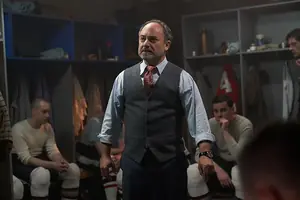
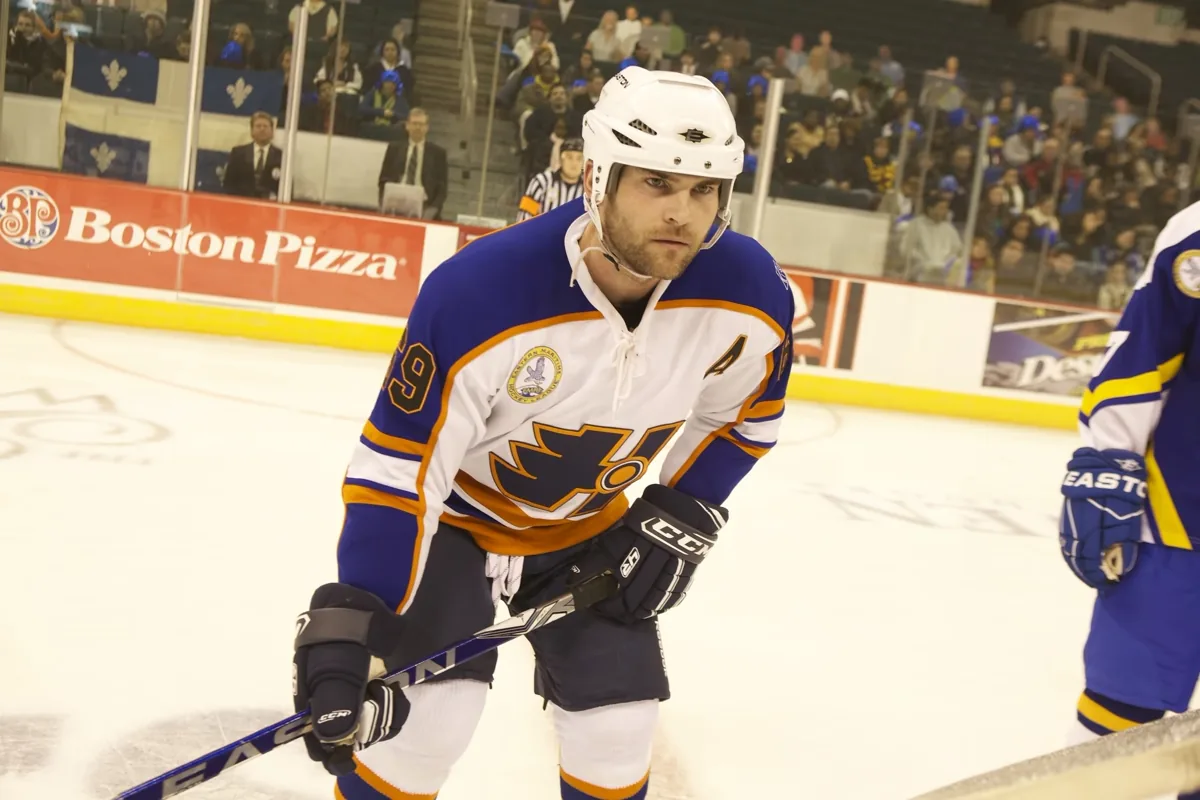
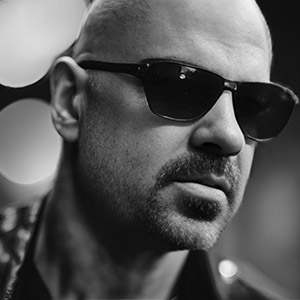
Listening back to this raw 2012 tape with Michael Dowse, just as Goon was about to drop, is a lesson in pre-release clarity. There’s no marketing spin here. Just the unvarnished perspective of a director who knew exactly what kind of cinematic haymaker he was about to land on the chin of Canadian cinema. He understood the DNA of the film because it was his own.
The project didn’t start with him. It was born, as many great Canadian comedies are, in the minds of Jay Baruchel and Evan Goldberg. Dowse makes that clear from the jump. “It came from the mind in the bedroom of Jay Baruchel and Evan,” he says, detailing how Baruchel, already cast in another potential Dowse project, slid him the script. The connection was immediate. A gut reaction. “I hadn't really *had it* in my mind that I have to make a hockey film, but as soon as the opportunity presented itself, I felt like I had to make a hockey film.”
And thank God he did. Because anyone else would have missed the point. They would have made a hockey movie. Dowse made a movie about the beautiful, violent and deeply human losers who just happen to play hockey.
It’s impossible to talk about Dowse without talking about FUBAR. The two are spiritually linked. He saw it himself, a throughline of authentic, blue-collar Canadian identity. “They're definitely in the same wheelhouse, those two films in terms of sort of blue collar guys, and this is a blue collar league in Canada,” Dowse notes. “I think the characters in Goon would probably be fans of the Fubar guys.”
But the industry context was entirely different. FUBAR was a true underground phenomenon, a film that clawed its way to cult status. Goon arrived with a different kind of pressure. It had a budget, it had stars and it had hype. Dowse, however, saw the advantage of its Canadian production model. It was the sweet spot. Big enough to look slick, but small enough to protect the vision.
“What's nice about working in Canada is that there's less cooks in the kitchen, and you can really maintain your voice and your brand of humor and your tone of humor through the process of making the film,” he explains. This wasn't a studio picture by committee. This was Dowse’s show, and that auteurial control is baked into every frame.
Shooting the actual hockey was a masterstroke of practical filmmaking. Dowse speaks about it with a craftsman’s enthusiasm, seeing opportunity where others would see obstacles. The ice wasn’t a limitation. It was a tool. “It's like one big dolly track. The light is perfect always. There's always a beautiful bounce.” His primary directive was simple but profound: capture the sheer velocity of the game. “Our principal rule was, you know, never get in front of the puck or never do anything that impedes the speed of the game.”
That kinetic energy is what separates Goon’s on-ice sequences from the sluggish, poorly staged action of so many other sports films. You feel the speed and you feel the impact. Violently so.
As soon as he slammed the door to his own car and drove off, we all just turned to each other and like, 'That's Doug, that is Doug. Like, we're done, we don't need to look at anything else.'
And let’s talk about that violence. The film is brutal. The fights are not the cartoonish brawls of Slap Shot. They are visceral, bloody and jarring. It caught the interviewer off guard, and Dowse’s defense of it is telling. “The violence is a bit, could be classified as extreme, but it's a story about a hockey pugilist,” he says. “I thought we might wanna make it as authentic as we can.”
Authenticity. That’s the key. But it’s a stylized authenticity. The interviewer astutely points out the final fight feels like a ballet, a comparison Dowse embraces, referencing the Puccini opera track written directly into the script. The fight isn’t just a fight. It’s a character climax set to classical music, an ultraviolent opera that feels more like Kubrick than the CBC. It’s a bold, brilliant choice that elevates the entire picture.
Of course, none of this works without the right man in the centre of the storm. Casting Seann William Scott as Doug “The Thug” Glatt was a stroke of genius that, on paper, looked like a massive gamble. This was Stifler, the avatar of late-90s bro comedy. But Dowse and Baruchel saw something deeper. “Initially, I had the 'Oh, it's Stifler' thing,” Dowse admits. “And then you watch Sean's films and you see this guy's a really good actor.”
The conviction was sealed the moment they met him. “It was one of those experiences where, you know, 20 seconds into shaking his hand and saying hello, you're just like, I don't even need to talk... as soon as he slammed the door to his own car and drove off, we all just turned to each other and *were* like, ‘That's Doug, that is Doug. Like, we're done.’”
Dowse knew the film’s success, especially south of the border, would hinge on Scott’s performance, not the hockey. “The great surprise of Goon is just the heart that the film has, and that's all a testament to Sean's performance,” he says. “Sean gives a really nice, understated, soft, beautiful performance.” He was right. Scott’s portrayal of Doug’s sweet, simple nature is the anchor. He’s a character of profound decency whose only skill is horrific violence. That dichotomy is the entire movie.
The supporting cast, from Baruchel’s hilariously profane Pat to Marc-André Grondin’s Xavier Laflamme and a terrifyingly intense Liev Schreiber as the legendary Ross “The Boss” Rhea, is perfect. Schreiber’s involvement, a mere six or seven-day commitment, adds a layer of heavyweight credibility. He’s the ghost of hockey future, the grizzled veteran Doug is destined to become.
The production itself sounds like its own kind of hockey fight: a brutal grind in the dead of a Winnipeg winter. Dowse recounts a punishing schedule dictated by the scarcity of ice time during hockey season. “It dictated a really brutal shooting schedule where we were shooting from 11 p.m. to 11 a.m. every day. And you're just not meant to work like that at all.” That sleep deprivation and sheer logistical chaos of coordinating teams, refs and extras adds another layer of verité to the film’s gritty aesthetic.
If there’s one minor critique to be made, it’s that the film’s narrative structure does follow some familiar sports movie beats. The rise of the underdog, the final showdown, the romantic subplot. But it’s the execution and the specificity that make it feel fresh. The Quebec sequence, for instance, is a perfect slice of Canadiana that feels lived-in and real, a nod from a director who, as an Anglo in Quebec, understood that cultural landscape intimately.
Looking back, Goon stands as a high-water mark for modern Canadian film. It’s unapologetically Canadian without being parochial. It’s a comedy with real stakes, a sports movie with soul and a character study with broken teeth and a heart of gold.
At the end of the tape, Dowse mentions his next project would be a romantic comedy called The F Word. It was a pivot, a move to show a different kind of range. But listening to him talk about Goon, you hear the voice of a director completely in his element, a filmmaker who found the perfect story to tell. And he told it perfectly.
519 Magazine Archive: We are thrilled to officially unearth the Rockstar Weekly Digital Vault. This isn't just a re-post; it's a high-fidelity restoration of a pivotal era in music journalism. By pairing original print dates with modern retrospectives, we’re bridging the gap between historical rock-and-roll grit and the lightning-fast performance of today’s web. These stories—once locked in physical print and lost URLs—are now back, fully searchable, and optimized for a new generation of fans.
We are thrilled to officially unearth the 519 Magazine Digital Vault. This isn't just a re-post; it's a high-fidelity restoration of a pivotal era in music journalism. By pairing original print dates with modern retrospectives, we're bridging the gap between historical rock-and-roll grit and the lightning-fast performance of today's web. These stories—once locked in physical print and lost URLs—are now back, fully searchable, and optimized for a new generation of fans.