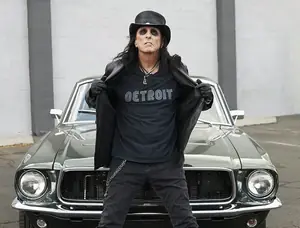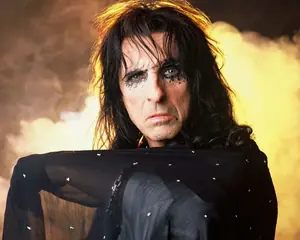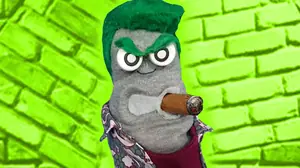
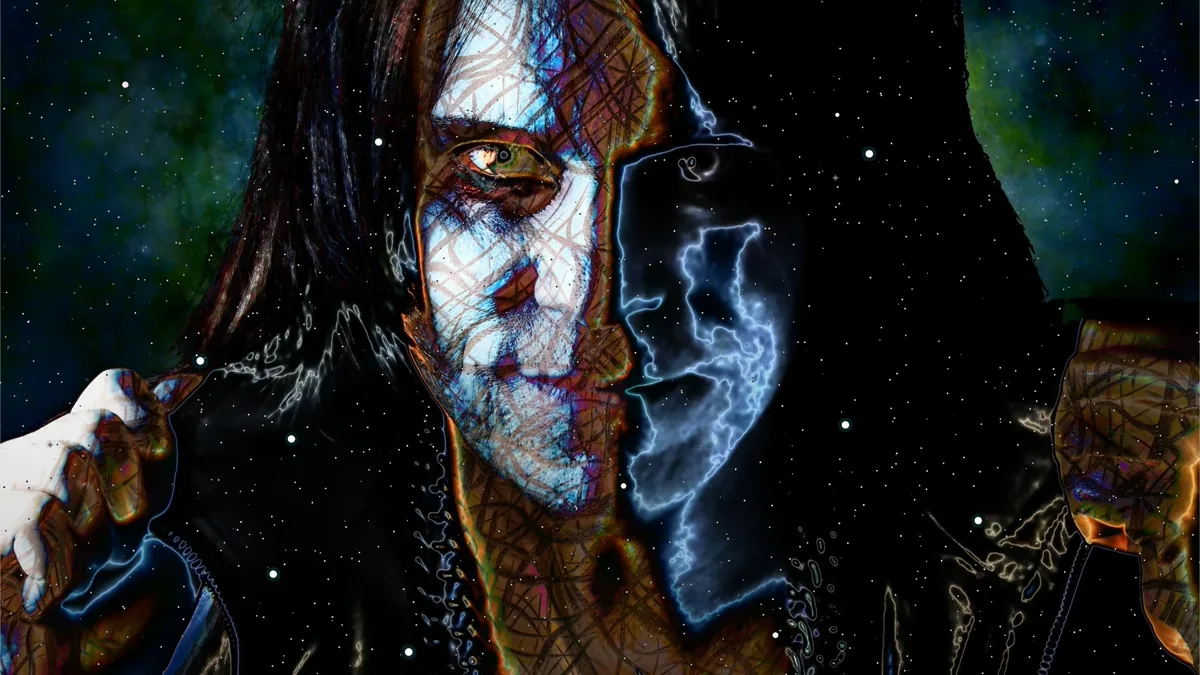
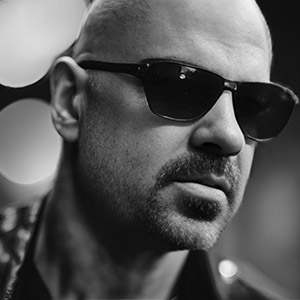
Looking at the raw transcripts from this Mar. 26 2021 conversation offers a fascinating snapshot. Here was Lizzy Borden, a shock rock titan whose entire career was built on a foundation of theatricality, diving headfirst into his first proper acting role. The vehicle was Die Influencers Die, a low-budget horror flick that landed on Amazon Prime during a time when the world was starved for any kind of new content. It felt less like a career pivot and more like a logical, if not chaotic, next step for an artist who has always treated the stage like a film set.
Borden admits the whole affair was remarkably spontaneous. He was on the road, missed the table reads, and essentially showed up cold. But that lack of preparation, he argues, was the secret ingredient. "We kind of just sporadically put this character together and it all came together really well," he says. "And it was one of those things that I think if we put too much thought into it, we would've ruined it. But the fact that we were kind of going off the cuff, it kind of worked out really well." It’s a classic artist’s gambit. Trust the gut over the script. And for a performer as seasoned as Borden, it’s a gamble that paid off.
The film itself tackles the very modern anxiety of social media overkill, a theme that resonated deeply with Borden. He doesn't offer a simple condemnation but a more measured take on the digital landscape. He sees the value in tech tutorials and shared experiences but also recognizes the peril. "If you're skeptical, you're all right. But if you're not skeptical and you're gullible, then that's when it becomes a huge problem," he explains. This is the core tension of the movie, a modern morality play wrapped in splatter film aesthetics.
And those aesthetics are no accident. Borden is a true student of the genre. His passion for the grimy, no-budget horror of the '70s and '80s is palpable. He name-checks his first-ever video rental as the notorious I Spit on Your Grave, a formative experience for any budding horror aficionado. He sees a direct line from the ingenuity of films like The Evil Dead to his own project. "A lot of things were invented when you don't have the money," he notes. "So that's why I thought, that's why I love those films, and this film had that flavour to it."
This philosophy informed his on-screen character, a figure he describes as being "on 10 the whole time." It was a departure from his stage persona, where he famously breaks the fourth wall to engage the audience directly. For this role, he channeled the legends who stayed relentlessly in character: David Bowie, Alice Cooper, Gene Simmons, and Fee Waybill of The Tubes. They were his blueprint for a performance that required sustained intensity without the release of audience interaction.
The most fascinating aspect of his performance was its signature vocal delivery, a creepy, insidious whisper. It was an intuitive choice born from studying his acting heroes. "My favorite people are Christopher Walken and Nicolas Cage and Jack Nicholson and all that stuff where they're just at a peak of anger, but they bring it down into a whisper," Borden says. "It's like a snake slithering up very slowly, and you don't know when it's gonna strike, and it just does." By bringing the volume down, he amplified the menace, turning what could have been a screaming caricature into something far more unsettling.
This reliance on intuition is a thread that runs through Borden’s entire creative process. He came to the set without an acting coach, having missed the script in his junk mail folder until just days before shooting. The director Gary Orona was apparently so floored by his first unrehearsed take that he got angry he hadn't been filming. From then on, every rehearsal was captured on camera. This mirrors Borden's approach to recording vocals for his album My Midnight Things, where he often kept the very first take. It's about capturing a raw, immediate energy that can be lost through repetition.
My favorite people are Christopher Walken and Nicolas Cage and Jack Nicholson and all that stuff where they're just at a peak of anger, but they bring it down into a whisper, and you just don't it's like a snake slithering up very slowly, and you don't know when it's gonna strike, and it just does.
Of course, this intuitive method is a double-edged sword. It worked perfectly for this specific role, a one-dimensional agent of chaos in a film that thrives on raw energy. But it’s fair to question if that same approach would translate to a role requiring more subtlety or a complex emotional arc. The very thing that makes his performance so electric in this context—his unfiltered persona—could be a limitation in another. It's an authentic approach, but not necessarily a versatile one.
The lack of familiarity with his co-stars, including Tabitha Stevens and Katie Morgan, only fueled his performance. Not knowing them personally made it easier to channel the character's utter disdain. "I'm glad I didn't know anybody," he admits. "If I'm too familiar with someone, then I couldn't bring out that disdain he's supposed to have. It would be more like acting, and I didn't want to act. I wanted it to be real."
The synergy between film and music became explicit with the video for the title track from My Midnight Things. The process of selecting the song was a testament to the album's cinematic quality, with the director, the label head, and Borden's co-star all picking different tracks as potential singles. Ultimately, Orona settled on the title track, creating a music video that served as a companion piece to the film, shot in the same studio and utilizing the same aesthetic.
While Borden is known for his elaborate stage effects, he embraced a stripped-down approach for the film. His long-time collaborator Ralis Kahn, who crafts his stage masks, was on hand, but they realized the character needed something more raw. The final piece of the puzzle came from the hairstylist. "She just took all this goop, this gel, and just dumped it on my head, and it made the character," he recalls. It was a simple physical touch that solidified the entire persona, proving that sometimes the most effective special effect is the least complex.
The conversation then shifts to his musical catalogue, specifically the release of Best of Lizzy Borden Vol. 2. It was a pragmatic move designed for the streaming era. Recognizing that his biggest streaming album was the first best-of compilation, he curated a new one to represent his later work. "I wanted to represent the last three albums because we do songs off of those... they encompass maybe three-quarters of my set," he says. It was a smart way to guide new listeners through his evolution beyond the initial '80s shock-rock phase.
At the heart of that evolution is 1989's Master of Disguise, an album Borden rightfully considers his definitive work. It was a wild artistic leap featuring a "grand piano, a horn section, a 40-piece orchestra, and three backup singers." Released on the cusp of the grunge movement, it was completely out of step with the stripped-down zeitgeist, a maximalist statement in an era of minimalism. It was commercial suicide and an artistic triumph.
The key to understanding that album’s ambition lies in one name: Bob Ezrin. The legendary Canadian producer was Borden’s North Star. He gave producer Elliot Solomon a stack of Ezrin’s records—KISS’s Destroyer, Alice Cooper’s Billion Dollar Babies, Pink Floyd’s The Wall—as a mission statement. "Bob did that very cinematic for an album," Borden explains with reverence. "When you're a 14-year-old kid and you hear that... it's mind-blowing." Ezrin didn’t just record bands; he magnified their personalities, turning them into larger-than-life characters. That was the blueprint for Master of Disguise.
Fortunately, Brian Slagle, the head of Metal Blade Records, shared Borden's musical DNA and supported the ambitious vision without question. That freedom allowed Borden to follow his artistic muse, much like his hero David Bowie, constantly reinventing his sound. He knew it was a risk. "You lose fans, you gain fans," he reflects. "But I've had people say, 'Well, I didn't like Master of Disguise before... But now I absolutely love it. I had to grow into it.'"
The Best Of collection also features two telling cover songs. The first, Blue Öyster Cult’s “Burnin' For You,” was a track he’d wanted to record for years. Instead of reinventing it, he chose to deliver a faithful, powerful version. The other, the Ramones' “Pet Sematary,” was a live staple that the audience loved. Its inclusion was a perfect full-circle moment, a song from a classic horror film capping off a conversation about his own foray into the genre.
Ultimately, this 2021 interview reveals an artist whose creative instincts remain as sharp as ever. His venture into acting wasn't a whim but an extension of a career built on character, narrative, and a cinematic worldview. Whether on stage, in the studio, or on a film set, Lizzy Borden remains a master of disguise, guided by the raw power of intuition and the grand theatrical visions of his heroes.
519 Magazine Archive: We are thrilled to officially unearth the 519 Magazine Digital Vault. This isn't just a re-post; it's a high-fidelity restoration of a pivotal era in music journalism. By pairing original print dates with modern retrospectives, we’re bridging the gap between historical rock-and-roll grit and the lightning-fast performance of today’s web. These stories—once locked in physical print and lost URLs—are now back, fully searchable, and optimized for a new generation of fans.
We are thrilled to officially unearth the 519 Magazine Digital Vault. This isn't just a re-post; it's a high-fidelity restoration of a pivotal era in music journalism. By pairing original print dates with modern retrospectives, we're bridging the gap between historical rock-and-roll grit and the lightning-fast performance of today's web. These stories—once locked in physical print and lost URLs—are now back, fully searchable, and optimized for a new generation of fans.